





Could White Holes Solve the Mystery of the Big Bang?
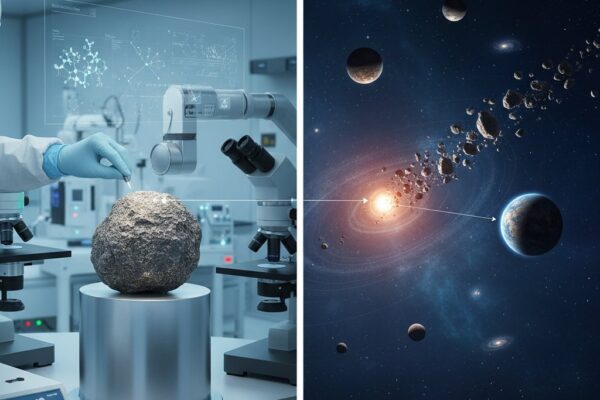
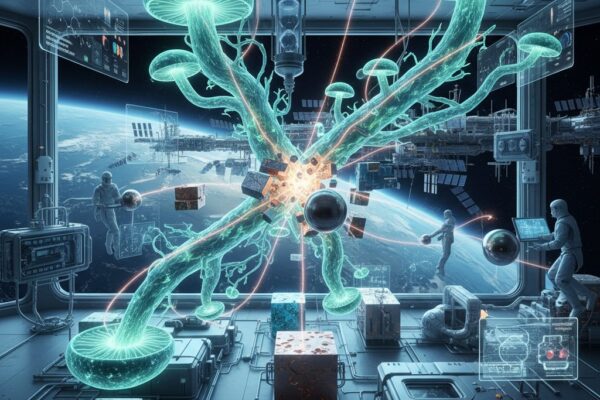
Could white holes—objects that only spit out matter—explain the Big Bang? Theoretical physicists explore a cosmic bounce from a previous universe’s black hole.
Rediscovered megalodon vertebrae reveal growth rings, warm-bloodedness, and giant pups. A lost fossil from Belgium is rewriting the life story of the prehistoric shark.
Expedition 73 crew shares stories of science, teamwork, and life in orbit at Space Center Houston. Discover the experiments, challenges, and human moments from their six-month ISS mission.
A 70-gene genomic test can identify which early-stage breast cancer patients can safely skip chemotherapy, sparing millions from toxic side effects.
NASA’s Hubble Space Telescope released a stunning July Fourth image of globular cluster NGC 6652, showing red, white, and blue stars that look like a cosmic sparkler. Learn the science behind the spectacle.
Artemis II crew captures stunning Moon terminator photo. Discover what the half-lit lunar surface reveals about geology, moonquakes, and our cosmic perspective.
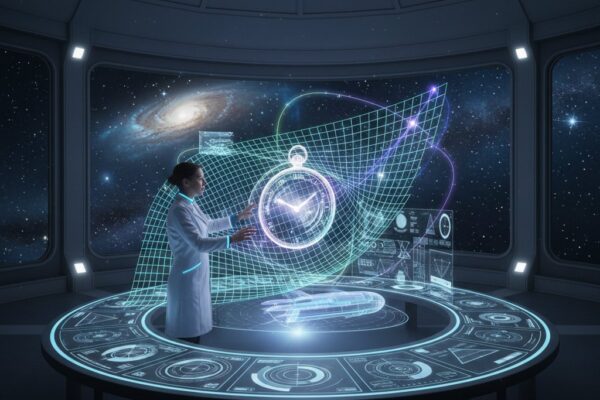
A new free interactive app, Relativizer, lets anyone explore Einstein’s special relativity visually. Drag objects to near-light speed and see time dilation, length contraction, and more.
A groundbreaking study reveals how high-quality childcare in infancy alters brain structure, boosting cognitive and emotional development. Learn what this means for parents and policymakers.
The Large Hadron Collider shuts down Monday for a four-year upgrade to boost collision rates in the hunt for dark matter. Here’s what the HL-LHC means for physics.
NASA launches a daring rescue mission to save the Swift telescope. A robotic spacecraft will boost the aging observatory to a higher orbit, extending its life by a decade.
Dark matter may not be a cosmic loner. New theoretical models suggest a hidden dark force could slow the growth of galaxies and clusters, challenging standard cosmology and the S8 tension.
NASA has named the Artemis III crew, but a rocket explosion at Cape Canaveral throws US Moon landing plans into turmoil. What happens next?