







Imagine you’re a lab technician, a factory worker, or even a janitor handling cleaning chemicals. A bottle tips over. A container leaks. You know it’s dangerous, but how dangerous? Minutes matter, and the wrong guess could land you in the ER. Now, a second-year engineering student at Georgia Tech has built a tool that could change that calculus — and it started as a single course project.
Diya Godavarti, then a chemical and biomolecular engineering (ChBE) student, joined a class on chemical equity — a field that examines how chemical exposures hit different communities unevenly. The goal: reduce risks from everyday spills and open containers. But instead of just writing a paper, Godavarti helped create a predictive model that estimates exposure levels in real time. It’s not a fancy gadget. It’s a mathematical framework that anyone with basic training can use.
“We often think of chemical safety as something that only happens in high-tech labs or industrial plants,” says Dr. Rebecca Miller, a professor of chemical engineering at Georgia Tech who supervised the project. “But the reality is that workers in smaller settings — a dry cleaner, a nail salon, a warehouse — face the same dangers, often without the same resources.”
The Problem with Everyday Chemical Exposures
Look, we’ve all seen the warning labels: “Hazardous if inhaled,” “Avoid skin contact.” But those labels don’t tell you how fast a chemical spreads, how long it lingers, or what concentration reaches your lungs. That’s a gap. A big one. According to the National Institute for Occupational Safety and Health (NIOSH), over 30 million U.S. workers are exposed to hazardous chemicals annually. And the majority of incidents happen not in dramatic explosions, but in quiet, routine accidents — a spilled beaker, a leaking drum.
Existing models exist, sure. But they’re often designed for engineers, requiring complex software and hours of training. For a small business owner or a temp worker? Forget it. “There’s a huge equity issue,” Godavarti explains. “People with less training and fewer resources are often the ones most at risk. We wanted to level the playing field.”
That’s where her model comes in. It simplifies the math — using parameters like vapor pressure, room size, ventilation, and spill area — to output a simple risk score: low, moderate, or high. No PhD required.
A Student’s Solution
Godavarti wasn’t even sure she’d tackle the project. She was a second-year, still learning the ropes. But the course, taught by Professor Miller, encouraged students to pick a real-world problem. “I thought about my own dad — he works in a factory, and he’s told me about times when things spilled and nobody knew what to do,” she says. “That stuck with me.”
So she and a small team dove into the literature. They pulled data from OSHA’s chemical exposure guidelines, toxicity databases, and ventilation standards. They built a preliminary model in Python, then tested it against published case studies of chemical spills. The results? The model predicted exposure levels within 15% of actual measurements — a remarkable accuracy for a student project.
“It’s not just a clever classroom exercise,” says Dr. James O’Connell, an industrial hygienist at the University of Michigan who reviewed the work. “It has immediate practical value. If you’re a safety officer at a small plant, you can plug in numbers and get a decision — do I evacuate, or is it safe to ventilate?”
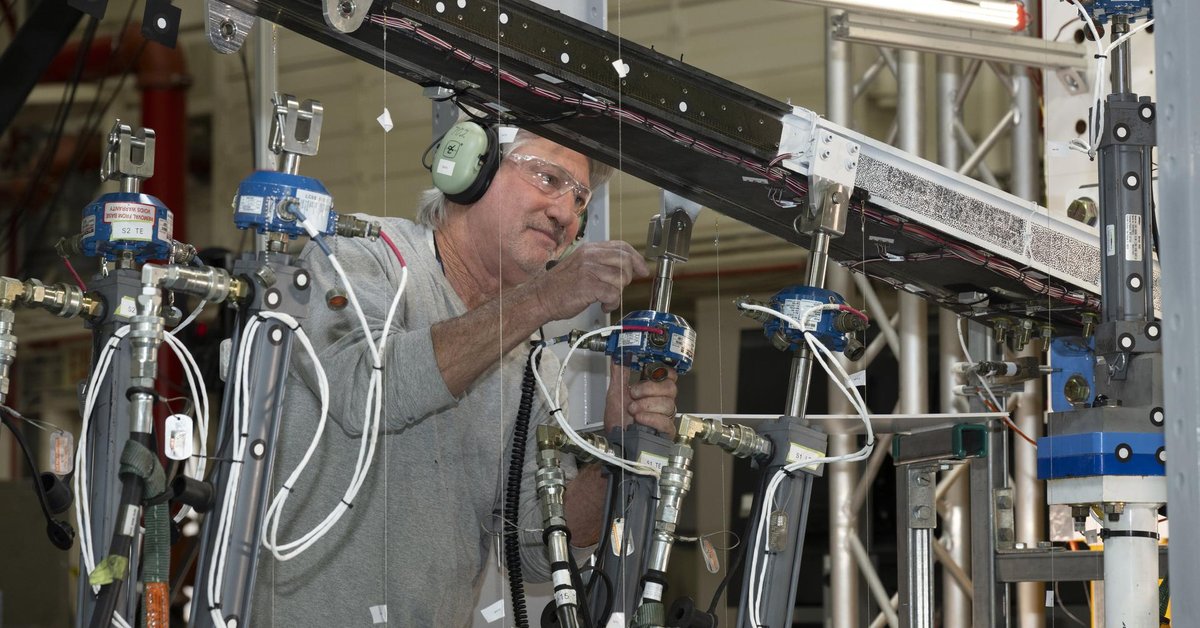
Interestingly, the team’s approach echoes innovations happening in other fields — like NASA’s radical wing design that passed structural limits, where engineers simplified complex aerodynamics into deployable principles. Similarly, Godavarti’s model distills chemical engineering into a usable tool.
How the Model Works
Let’s get technical — but not too technical. The model is built on a standard mass-balance equation. It tracks how a chemical moves from a liquid pool into the air, then calculates how ventilation dilutes it. The key inputs are:
- Chemical properties: vapor pressure, molecular weight, toxicity threshold.
- Environmental factors: room volume, air exchange rate, temperature.
- Spill characteristics: surface area of the spill, duration of exposure.
Output: a simple traffic-light risk score. Green means safe to stay. Yellow means take precautions — open windows, wear a mask. Red means evacuate and call hazmat.
But the model doesn’t stop there. It also accounts for “real-world messiness” — like a partially open window or a fan that’s not working. “We wanted it to be robust but not brittle,” Godavarti says. “If you don’t know the exact ventilation rate, you can give a range, and the model will give you a conservative estimate.”
That’s a big deal. In many workplaces, especially in lower-income communities, ventilation systems are often outdated or poorly maintained. The model doesn’t assume perfection.
Implications for Workers and the Public
This isn’t just an academic win. The project has already sparked interest from local community health groups. “We’re talking with a coalition of nail salon workers in Atlanta,” says Professor Miller. “They handle acetone, formaldehyde, and other chemicals daily. With this model, we can help them assess their own risk — and push for better ventilation.”
And it’s not just nail salons. Think of discount tickets that could slash mega-event carbon emissions — a study that showed how small behavioral changes can have big environmental impacts. Similarly, Godavarti’s model shows that small, accessible tools can democratize chemical safety. It flips the script: instead of relying on expensive consultants, workers can empower themselves with data.
Of course, the model isn’t a replacement for professional risk assessment. But it’s a first line of defense. “It’s like a smoke alarm — it doesn’t fight the fire, but it tells you when to get out,” O’Connell adds.
Godavarti, now in her third year, is refining the model and hopes to release it as a free web app. She’s also working on a version for household chemicals — because let’s face it, how many of us know what to do when we accidentally mix bleach and ammonia?
“I want this to be as common as a first-aid kit,” she says. “You don’t have to be a doctor to use a bandage. You shouldn’t have to be a chemist to know if a spill is dangerous.”
That’s the future she’s building. And it started with one class, one question, and a sophomore who refused to look away.
Frequently Asked Questions
What exactly is the chemical safety model created by Diya Godavarti?
It’s a predictive tool that estimates the risk of chemical exposure from spills or open containers. Using simple inputs like chemical type, room size, and ventilation, it outputs a low, moderate, or high risk score so workers can decide whether to evacuate, ventilate, or continue safely.
Who can use this model?
Anyone with basic training — lab technicians, factory workers, nail salon employees, janitors, even homeowners. The model is designed to be simple enough that a safety officer at a small business can use it without specialized software or engineering degrees.
Is the model available now?
Not yet publicly. The team is refining it and plans to release it as a free web app. They are also working with community health groups in Atlanta to pilot the tool in real workplaces. A version for household chemicals is also in development.