Altermagnetism: The Third Magnetic Force Reshaping Physics
The 2026 Europhysics Prize honors altermagnetism, a third magnetic class that could revolutionize data storage, quantum computing, and energy efficiency.








The 2026 Europhysics Prize honors altermagnetism, a third magnetic class that could revolutionize data storage, quantum computing, and energy efficiency.

Korean researchers unveil a room-temperature single-photon source in a compact 19-inch rack device. No cryogenics needed. Plug-and-play operation for quantum applications.
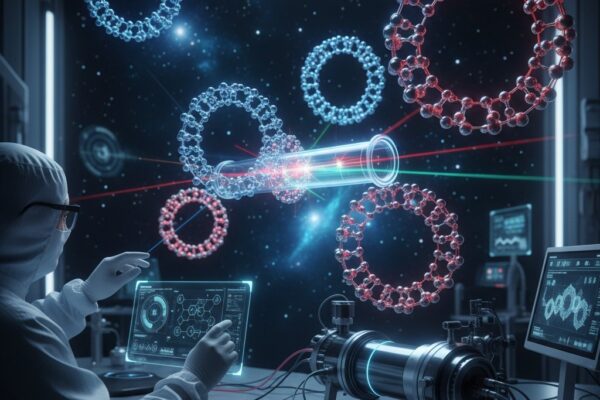
Computational study reveals lithium-doped carbon nanorings boost nonlinear optical response 15x, paving way for faster, flexible photonic devices. DFT calculations show record hyperpolarizability.

The Large Hadron Collider shuts down Monday for a four-year upgrade to boost collision rates in the hunt for dark matter. Here’s what the HL-LHC means for physics.
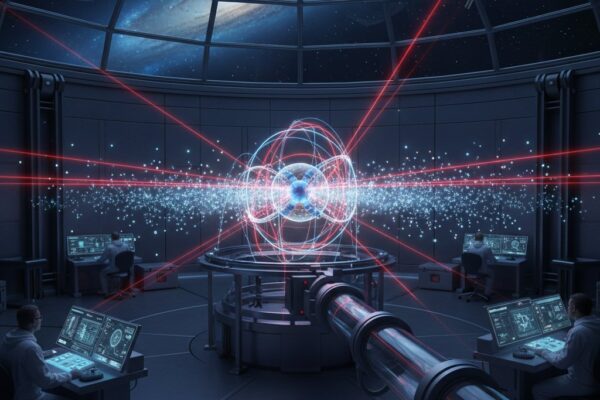
Physicists trap calcium monohydride molecules with laser light, achieving millikelvin temperatures. This breakthrough could lead to ultracold hydrogen and new tests of fundamental physics.
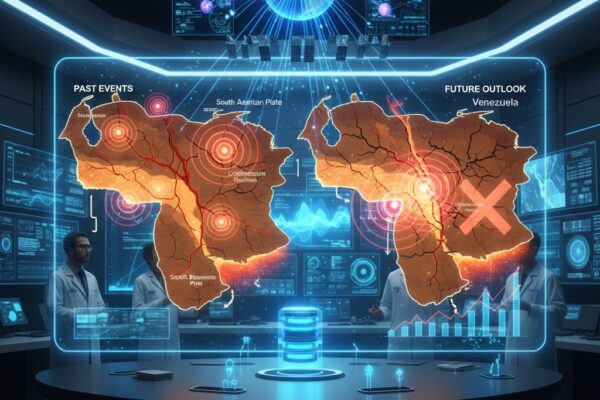
Venezuela was hit by rare twin earthquakes within hours. Here’s the science behind the doublet, the tectonic plates involved, and what seismologists predict for aftershocks.

Seismometers in Bergen recorded vibrations during Norway’s World Cup match against Iraq, with a clear signal when Erling Haaland scored. Scientists explain the phenomenon and its implications for urban monitoring.
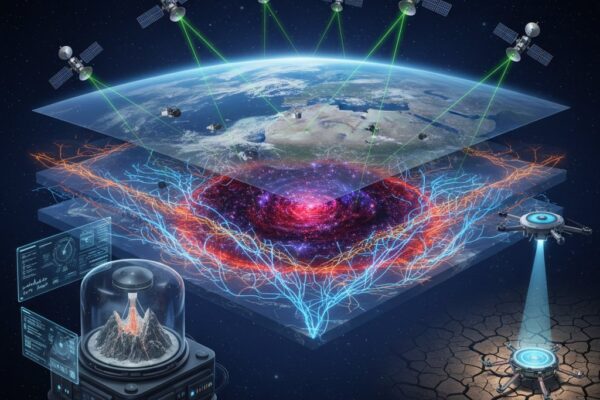
GFZ researchers uncover hidden seismicity patterns that precede large earthquakes using machine learning. A new approach could improve earthquake forecasting and preparedness.
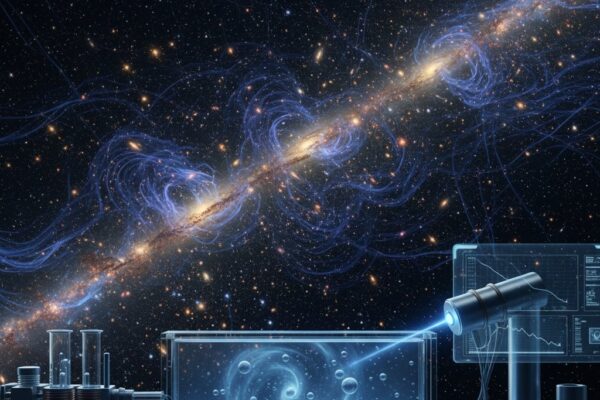
Dark matter may not be a cosmic loner. New theoretical models suggest a hidden dark force could slow the growth of galaxies and clusters, challenging standard cosmology and the S8 tension.

NTU Singapore scientists revive the 200-year-old Poisson spot phenomenon to create stable, hedgehog-like optical skyrmions. Simple setup, big implications for light manipulation.
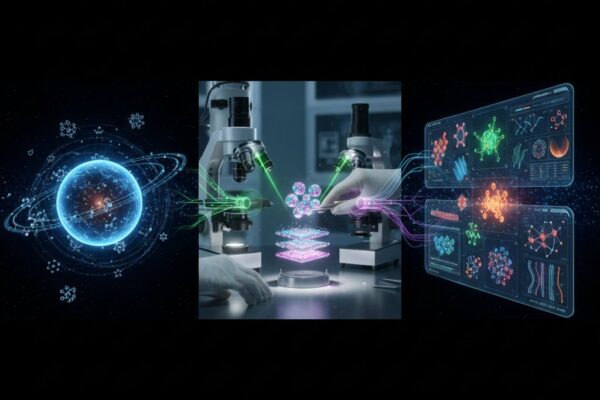
New ultrasensitive instruments from University of Cincinnati allow scientists to watch atoms move in real time, promising breakthroughs in batteries, medicine, and quantum materials.
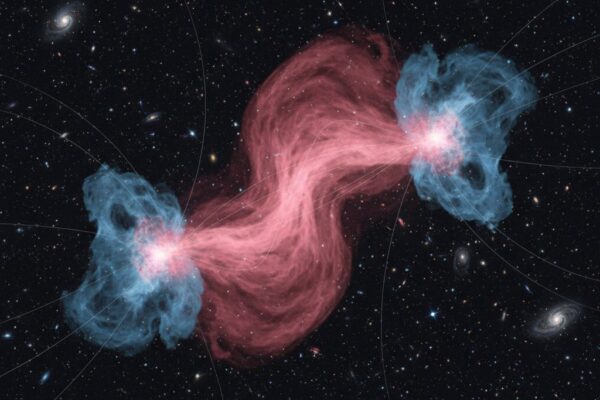
The 2006 Bullet Cluster study revealed dark matter by showing gravitational mass separated from ordinary gas with 8 sigma certainty. Here’s why it still matters.