







Of the 18 new Phase I awards NASA just handed out under its Innovative Advanced Concepts program, at least half read less like aerospace proposals and more like the table of contents from a mid-century science fiction anthology. That’s not a criticism—it’s the whole point. The NIAC program exists precisely to fund ideas that are too speculative for traditional grant cycles but just rigorous enough that a handful of PhDs can sketch a plausible path to reality. The 2026 cohort, announced in late February, totals $3.2 million, with each team receiving up to $180,000 to spend nine months turning a wild premise into a technical paper, a proof-of-concept bench test, or a polite admission that physics still says no.
But here’s what jumps out if you’ve been watching this program for a while: the center of gravity has shifted. Earlier NIAC classes leaned heavily on materials science and in-situ resource utilization—think self-healing spacecraft skins or 3D-printed habitats from Martian regolith. The 2026 slate is dominated by propulsion architectures and orbital mechanics tricks. My read is that NASA is quietly signaling that the next big push isn’t just getting to Mars, but getting there faster, cheaper, and with the ability to come back.
Pulsed Plasma and the Promise of Days-Long Mars Transits
The headliner, at least in terms of sheer audacity, is a proposal from a team at the University of California, Santa Barbara that aims to develop a pulsed plasma rocket capable of accelerating to velocities that would make a chemical rocket blush. The concept, which the researchers call “Pulsed Plasma Propulsion with Inertial Confinement Fusion,” borrows principles from fusion energy experiments: tiny pellets of deuterium-tritium fuel are ignited by high-powered lasers inside a magnetic nozzle, producing a series of directed micro-explosions. Each pulse delivers a specific impulse measured in tens of thousands of seconds—compared to roughly 450 seconds for the best chemical engines. If the math holds, a trip to Mars could shrink from nine months to about 45 days.
That’s not just a comfort issue for astronauts. Shorter transit times mean dramatically less exposure to cosmic radiation, less need for exercise countermeasures against muscle atrophy, and—crucially—a simpler life-support system. The team’s Phase I deliverables include a detailed neutronics model and a small-scale test of the magnetic nozzle in a vacuum chamber. Which is, I should say, a long way from strapping a fusion bomb to a spaceship. But the NIAC track record suggests that some of these concepts do graduate: the original NIAC-funded study on solar sails led directly to the LightSail missions, and a 2016 award on beamed-energy propulsion is now the basis for a NASA subcontract with the startup Escape Dynamics.
Gravitational Slingshots Without the Planet
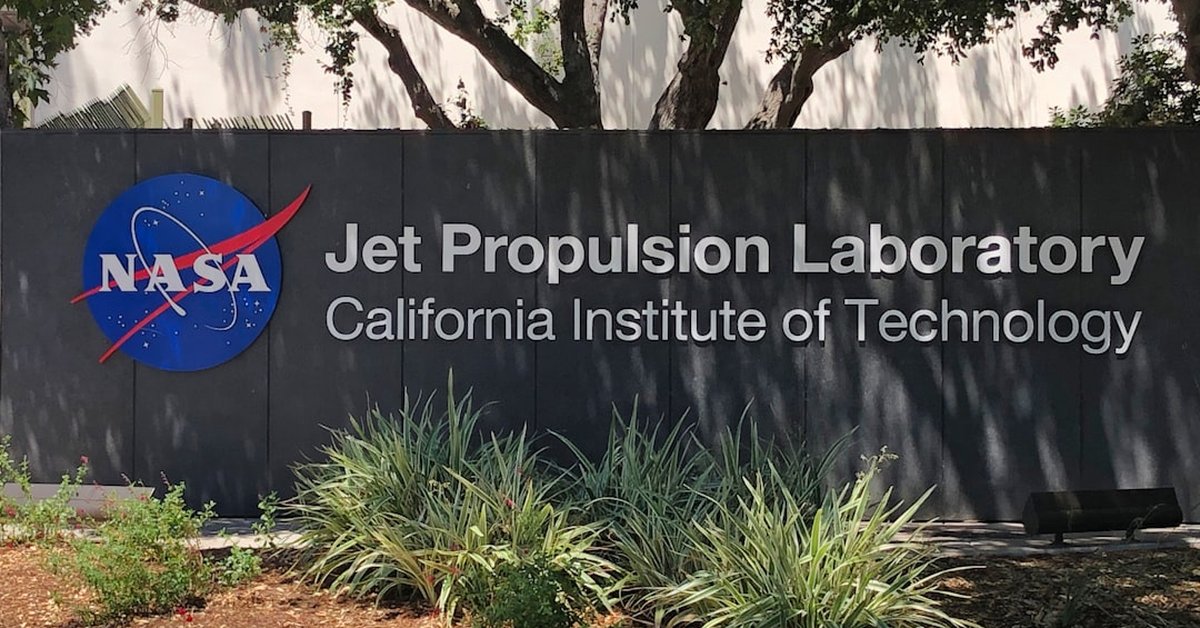
Another proposal that caught my eye comes from a group at the Jet Propulsion Laboratory that wants to replace traditional gravity assists with something they call “photonic momentum exchange.” The idea is to bounce a high-powered laser off a reflective sail attached to a small spacecraft, transferring enough momentum to alter the craft’s trajectory without ever flying past a planet. In effect, it’s a gravity assist you can generate on demand, anywhere in the solar system. The team estimates that a ground-based laser array, similar in scale to the one used by the Breakthrough Starshot initiative, could give a 10-kilogram probe a delta-v of roughly 5 kilometers per second—enough to redirect it from an Earth-orbiting parking lot to a Venus flyby in under a week.
The practical implications are enormous. Mission planners currently spend years hunting for planetary alignments that provide useful gravity assists; a photonic momentum exchange system would decouple trajectory design from orbital mechanics. You could, in theory, launch a fleet of small probes to different destinations on a single rocket and then redirect each one using a ground-based laser. The Phase I study will focus on pointing accuracy and atmospheric distortion at the laser site—two problems the astronomy community has already tackled for adaptive optics. It’s not a stretch to imagine a future where the same infrastructure used for deep-space laser communications also serves as a traffic cop for interplanetary cargo.
What the Smart Money Will Watch
But let’s be honest: most of these 18 projects won’t fly. That’s the nature of NIAC. The program’s own data shows that roughly one in ten Phase I awards eventually leads to a funded flight mission. The value isn’t in the hardware; it’s in the intellectual hedging. The 2026 cohort also includes a proposal to grow radiation shielding from fungal mycelium on the lunar surface, a plan to use quantum entanglement for instantaneous—yes, faster-than-light—communication (the team is careful to call it “non-local signaling,” but the implication is clear), and a scheme to extract water from Venus’s atmosphere using a fleet of autonomous balloons. The fungal shielding idea, in particular, has strong second-order implications: if it works, it would eliminate the need to haul heavy polyethylene or lead composites from Earth, and it could be combined with the kind of in-situ agriculture that analogous projects on Earth are already testing for bioremediation and carbon capture.
The program also funds concepts that never pan out as propulsion systems but end up solving unrelated engineering problems. The pulsed plasma research, for instance, could yield better pulsed-power switches for terrestrial fusion reactors. The photonic momentum work could improve laser guide-star technology for ground-based telescopes. NASA knows this; that’s why the Phase I reports are public and the intellectual property stays with the researchers. It’s a cheap way to generate spillover innovation.
What does this mean for the average reader? Two things. First, the timeline for human Mars missions keeps shrinking. The 45-day transit figure from the pulsed plasma team, if validated, would make a 2030s crewed mission politically and logistically feasible in a way that the current 500-day round-trip estimates are not. Second, the shift toward reusable launch infrastructure—think SpaceX Starship, Blue Origin’s New Glenn, and Europe’s new independent launch capabilities—creates a market for these advanced propulsion concepts. Cheap, frequent launches mean you can afford to test risky drives on dedicated small satellites. The 2026 NIAC class is betting that the next decade will be defined not by bigger rockets, but by smarter engines.
I’ll be watching the September 2026 Phase I symposium presentations closely. That’s when the teams present their results, and that’s when the real weeding-out happens. A few of these ideas will get Phase II funding—typically around $500,000 for two years of development. A couple might make it to Phase III, which means a flight demonstration. And one or two, if history is any guide, will quietly disappear into the footnotes of someone else’s dissertation. But that’s the beauty of a program that’s willing to fail fast and fail cheap. The winners don’t just change NASA’s roadmap; they change what we think is possible.
Frequently Asked Questions
How does the NIAC program differ from NASA’s regular research grants?
NIAC specifically funds high-risk, high-reward ideas that are too speculative for standard NASA research solicitations. Phase I awards are small ($180,000) and short (nine months), designed to test whether a concept has any technical merit before committing larger sums. The program explicitly encourages “visionary” concepts that could transform aerospace capabilities if successful, even if the probability of success is low.
What happens to NIAC projects that don’t lead to flight missions?
Many NIAC studies produce spin-off technologies or fundamental research that benefits other fields. For example, pulsed-power research from propulsion studies has advanced terrestrial fusion experiments, and optical communication work has improved telescope instrumentation. The Phase I reports are publicly available, and NASA retains no exclusive rights to the intellectual property, so researchers can commercialize their findings independently.
When could the pulsed plasma rocket concept actually fly?
The Phase I study runs through late 2026. If it advances to Phase II (2027–2029), a ground-based prototype could be tested by 2030. A flight demonstration would likely require Phase III funding and could happen in the early 2030s. However, the technology faces significant engineering hurdles—particularly in containing the plasma pulses and managing the heat load—so a crewed mission using this drive is unlikely before the 2040s, even under optimistic scenarios.