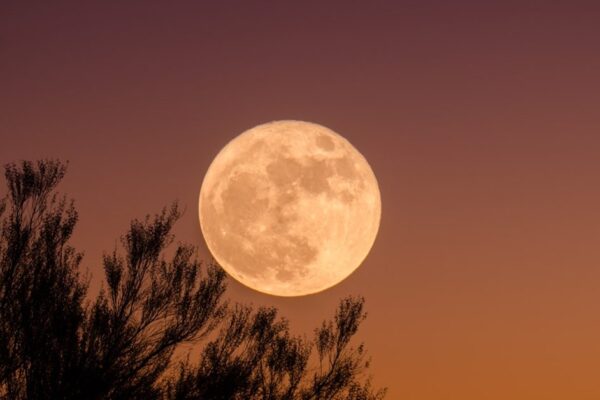
Why the Buck Moon and Belt of Venus Are Your Best Bet for Seeing Earth’s Shadow
Discover how the August Buck Moon and Belt of Venus reveal Earth’s shadow. Dr. Olivia Grant explains the science behind this stunning celestial duo.






Discover how the August Buck Moon and Belt of Venus reveal Earth’s shadow. Dr. Olivia Grant explains the science behind this stunning celestial duo.
Dark nebulae like the Dark Doodad are star nurseries, not empty voids. Discover the science behind the APOD image of NGC 4372 and the Dark Doodad, and how to see it yourself.
NASA’s 2026 NIAC awards fund radical propulsion concepts, including a pulsed plasma rocket that could cut Mars travel time to 45 days. Analysis of the 18 Phase I winners and what they mean for space exploration.

Germany’s Bundeswehr is exploring a dedicated launch facility for military satellites. What this means for European space defense, strategic autonomy, and the future of security in orbit.

Two of Link’s three reaction wheels fail, leaving the Swift rescue mission spinning. Analysis of the crisis, its implications for space servicing, and what it means for you.

The UK’s iconic Jodrell Bank Observatory faces funding cuts that could shut down the Lovell Telescope and e-MERLIN, threatening a generation of radio astronomers. What this means for science.
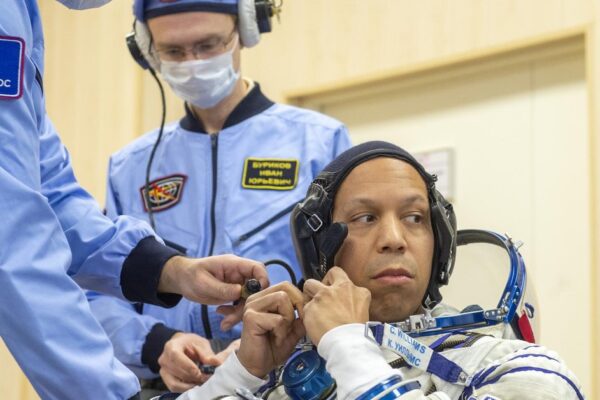
NASA astronaut Chris Williams returns from 8 months on the ISS. Beyond the landing, the real story is the microgravity science that could change medicine and materials back on Earth.
NASA’s ESCAPADE spacecraft captures Earth and Moon in visible and thermal infrared from 363,000 miles. Why this calibration image matters for Mars exploration and small satellite tech.
Hubble spots spiral galaxy NGC 4654 with one bright arm and one dim arm. Ram pressure stripping and gravitational encounters explain the lopsidedness — and it may preview the Milky Way’s future.
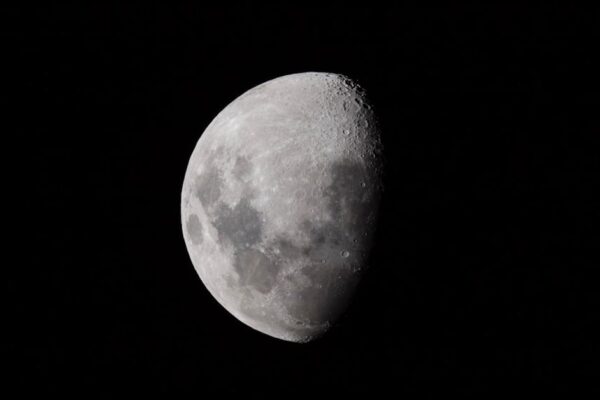
As lunar missions multiply, scientists argue for protected zones to preserve the Moon’s pristine environment for future research. Should we designate ‘research reserves’ on the Moon?
A century-old mystery of Theta Eridani’s changing brightness is finally explained: the star pulsates with a 95-year cycle. Ancient astronomers were right all along.
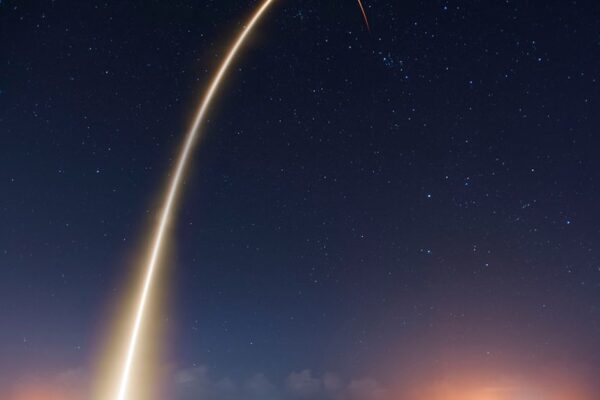
Skyroot Aerospace’s Vikram-1 rocket launched on Saturday, carrying synthetic diamonds and a microsatellite. The flight marks India’s first private rocket and a shift toward commercial space access.