






NASA’s Radical Wing Design Passes Structural Limits Test — and It Holds
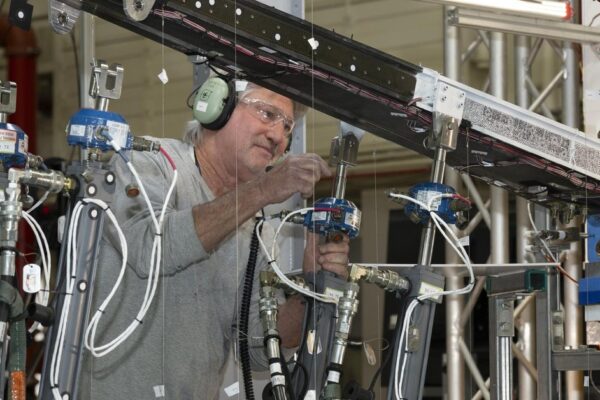
NASA’s new thin, lightweight wing design built with a truss-braced structure survived brutal stress tests far beyond design limits, promising fuel-efficient, quieter planes.
NASA opens media accreditation for the Nancy Grace Roman Space Telescope launch on May 5, 2025. The wide-field observatory will study dark energy and exoplanets.
A daytime bolide exploded over Cape Cod Bay, Massachusetts, producing a sonic boom and a confirmed meteorite fall. NASA and eyewitnesses weigh in.
Curiosity rover’s latest blog post from Sols 4947-4953 reveals how Gale Crater has changed since 2012. Discover the science, the surprises, and what’s next.
NASA transfers 105 acres of forest at Goddard Space Flight Center to Patuxent Research Refuge, creating a wildlife corridor and demonstrating how space agencies can lead in conservation.
NASA Administrator Jared Isaacman flew his personal F-5 Tiger jet over the National Mall on July 4, 2026, celebrating America’s 250th birthday with a unique flyover that symbolizes a new era of commercial space.
NASA’s Hubble captures a stunning crimson nebula NGC 1333, sparkling with white and blue stars. A window into star formation and our cosmic origins.
NASA launches a daring rescue mission to save the Swift telescope. A robotic spacecraft will boost the aging observatory to a higher orbit, extending its life by a decade.
NASA’s robotic spacecraft has launched to rescue a decaying X-ray telescope before it burns up in Earth’s atmosphere. Here’s how the daring orbital catch works.
NASA’s Artemis II mission drew 149.4 million views across its live streams, breaking the agency’s all-time record. Here’s how they did it and what it means for space exploration.
NASA’s James Webb Space Telescope reveals how a Jupiter-like planet survived its star’s death, migrated to a tight orbit around a white dwarf, and what this means for Earth’s future.
NASA’s LINK spacecraft will attempt the first robotic boost of the Swift Observatory, extending its life by a decade. Launch set for July 2 from Kwajalein Atoll.