







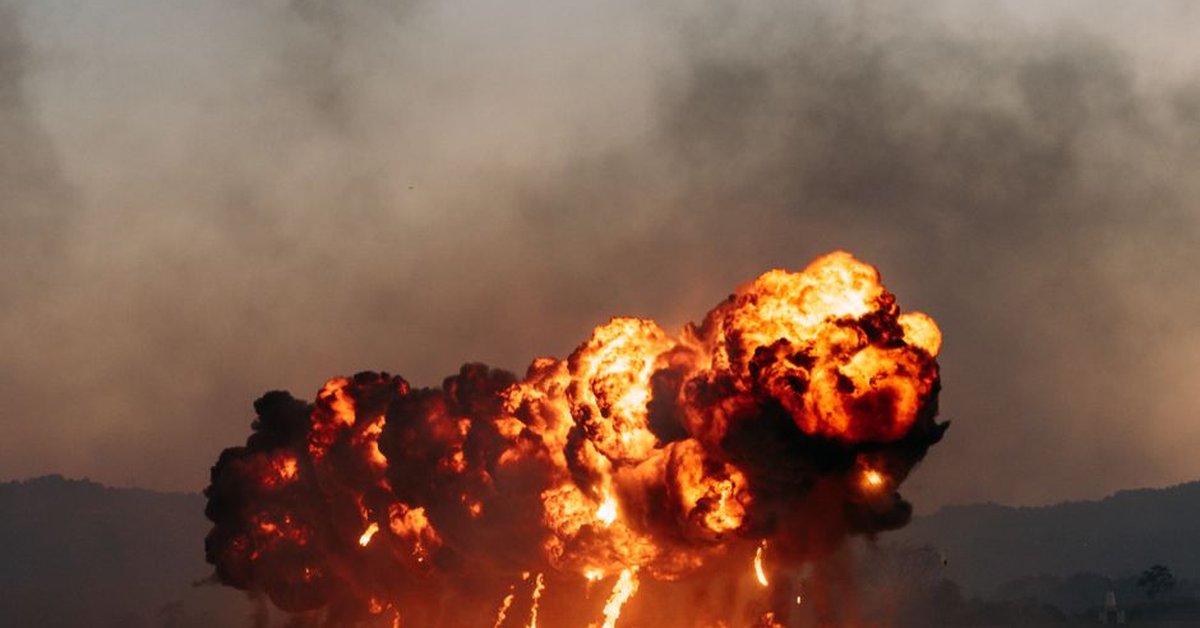
It was just after midnight on March 15, 2026, when a streak of light brighter than the full moon tore across the sky over Dallas, Texas. Seconds later, a deep rumble shook windows across three counties. That fireball — a bolide that fragmented with the force of 100 tons of TNT — was just one of dozens that the American Meteor Society (AMS) has logged this year. And the numbers are climbing fast.
According to AMS data, fireball reports in the first quarter of 2026 are up more than 250% compared to the same period in 2025. States from Massachusetts to South Carolina, Ohio to Texas, have all reported events with audible sonic booms — something that typically happens only with the largest meteors. So what’s going on? Is Earth suddenly under bombardment? And should we be worried? The short answer: no. But the reasons behind the surge are fascinating.
The Surge in Numbers: What the Data Show
The American Meteor Society, a nonprofit that tracks fireball reports from citizen scientists and automated cameras, recorded 47 confirmed fireballs with sonic booms in the first four months of 2026. That’s more than double the 19 seen in all of 2025. “We’re seeing a statistically significant increase,” says Dr. Margaret Campbell, a meteor astronomer who analyzes AMS data. “But we have to be careful: part of it is better detection.”
Indeed, the network of all-sky cameras has expanded rapidly. As space cargo costs drop faster than steamship freight in the 1800s, more small satellites and ground-based sensors are being deployed, improving coverage. But Campbell notes that the increase in large, bright events — not just small streaks — suggests a real uptick in meteoroid flux. “We’ve ruled out a detection bias for the biggest events,” she says. “The sonic booms are unmistakable.”
What’s Driving the Uptick?
Earth orbits through a swarm of debris left by comets and asteroids. Most years, the flux is fairly constant, but orbital dynamics can cause periodic enhancements. Dr. James Rodriguez, a planetary scientist at the University of Arizona, points to a combination of factors. “In 2026, Earth is intersecting several relatively dense streams of material that we haven’t encountered in decades,” he explains. “The Taurid swarm, for example, is known to produce clusters of bright fireballs every few years, and we’re in the middle of one right now.”
The Taurid meteoroid stream, associated with Comet Encke, is notorious for producing large, slow-moving fireballs that often survive deep into the atmosphere. But Rodriguez says other, less well-known streams are also contributing. “We’re seeing a mix of sporadic and stream-associated events. It’s not a single source — it’s a perfect storm of orbital alignments.” Meanwhile, while the western U.S. was broiling under a heat dome in the summer of 2025, the fireball surge is a completely separate phenomenon driven by orbital mechanics, not climate. (You can read more about that extreme weather in our coverage of the heat dome.)
The Science Behind the Streaks
Fireballs are meteors brighter than magnitude -4 — about the brightness of Venus. When they produce a sonic boom, it means the object was large enough (typically a meter or more across) to penetrate the atmosphere at supersonic speeds without completely disintegrating. These events are rare: only a handful occur globally each day, but most go unseen over oceans or uninhabited areas.
The AMS relies on a network of volunteers and automated cameras to triangulate trajectories. “We can often determine the orbit of the meteoroid before it hit Earth,” says Campbell. “That tells us where it came from — the asteroid belt, a comet, or even a fragment from a known near-Earth object.” NASA‘s Center for Near Earth Object Studies (CNEOS fireball database) independently records events detected by U.S. government sensors. Their data show a similar uptick in 2026, confirming the AMS findings.
But why sonic booms? When a meteoroid enters the atmosphere at 15–70 km/s, it compresses the air in front of it, creating a shockwave. If the object breaks apart at an altitude below about 50 km, that shockwave reaches the ground as a low-frequency rumble. “The boom tells us the object was dense and strong — probably a stony or iron asteroid, not a fluffy cometary fragment,” Rodriguez adds.
Should We Be Worried?
No. Every fireball documented by the AMS in 2026 disintegrated at altitudes above 20 km. None produced meteorites that reached the ground. “These are small objects, typically 1–3 meters across,” Campbell explains. “They’re spectacular but harmless. An object would need to be at least 25 meters to pose a local threat, and we haven’t seen anything like that.”
NASA and other agencies continuously monitor near-Earth objects (NEOs) larger than 140 meters — the threshold for a regional catastrophe. None of the known NEOs pose a risk in the foreseeable future. The fireball surge is simply Earth passing through a slightly denser patch of cosmic debris. Think of it as a gentle reminder that our planet is not isolated — but it’s not under attack.
What This Means for Skywatchers
If you live in the northern hemisphere, now is a great time to look up. The AMS expects the elevated fireball rate to continue through late 2026, with possible peaks during the Perseids in August and the Geminids in December. “We encourage people to report what they see,” says Campbell. “Every report helps us refine our understanding of the meteoroid environment.”
For those who missed the Texas fireball, don’t worry — odds are good another one will appear. The surge is a natural, cyclical phenomenon, and with better detection technology, we’re simply seeing more of what’s always been there. As Rodriguez puts it: “The sky is not falling. It’s just putting on a show.”
Frequently Asked Questions
What exactly is a fireball?
A fireball is a meteor that is brighter than magnitude -4, roughly the brightness of the planet Venus. When a fireball explodes in the atmosphere, it’s called a bolide. Fireballs with sonic booms are rare and indicate a larger, denser meteoroid.
Are fireballs dangerous?
Almost never. Most fireballs are caused by meteoroids less than 3 meters across that completely disintegrate high in the atmosphere. The sonic booms are startling but not harmful. No injuries or property damage have been reported from the 2026 surge.
Will the fireball surge continue?
Likely yes through the end of 2026, as Earth continues to intersect debris streams. The rate may fluctuate, but the AMS expects above-average activity. After 2026, the flux should return to normal levels.