







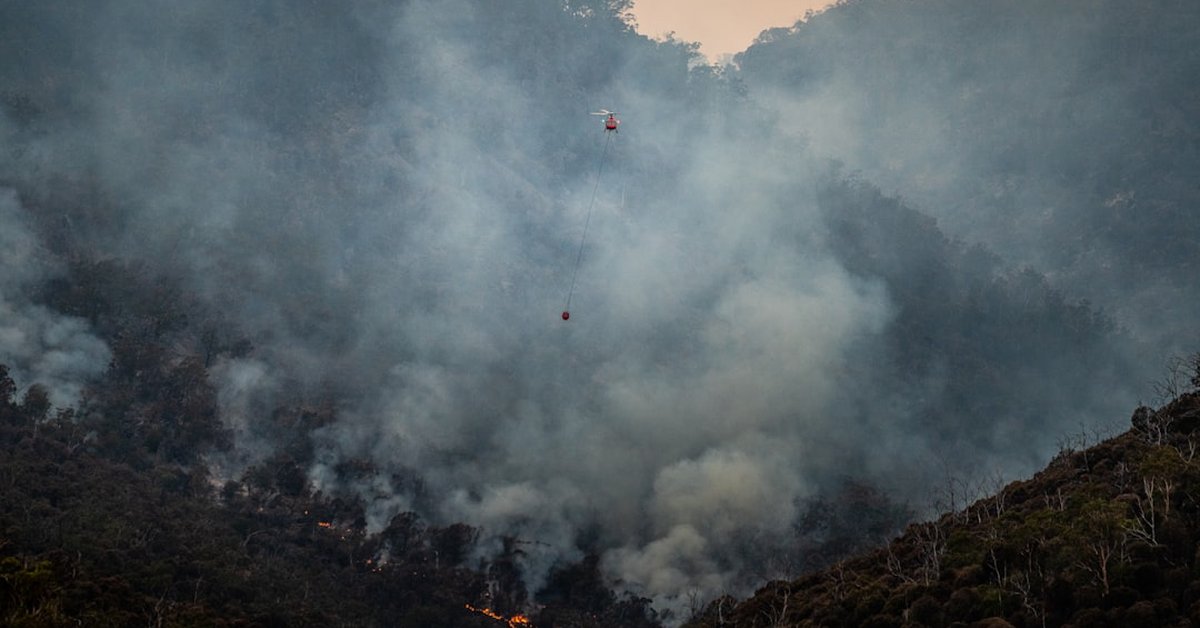
I remember the first time I saw a wildfire from space — a tiny, angry red dot on a satellite image, barely visible against the green of the French Alps. That was 2019, in the south. Now, in August 2025, those red dots have migrated north. They’ve arrived in the forests of the Île-de-France, just outside Paris. And for the first time, firefighting planes usually stationed in the dry, hot south have been dispatched here, to the capital region. It’s a strange inversion. And it tells us something unsettling about the world we’re building.
This week, France mobilized its fleet of Canadair CL-415 and Dash 8 Q400 airtankers from bases in Nîmes, Marignane, and other southern hubs — a journey of over 600 kilometers — to attack wildfires that have scorched thousands of hectares in the Paris region. The fires, described by officials as of ‘exceptional scale’, have forced evacuations in several communes and sent plumes of smoke drifting over the capital’s skyline. Since Monday, August 14, over 2,000 hectares have burned in the forests of Rambouillet, Fontainebleau, and Saint-Germain-en-Laye. More than 500 firefighters and 15 aircraft are now working the blazes.
A Fiery Reversal: When the South Becomes the North
Historically, wildfires in France have been a Mediterranean problem. The south, from the Pyrénées-Orientales to the Var, burns every summer. The north — temperate, damp, green — stays safe. But this year, something snapped. A prolonged drought followed by a brutal heatwave in July and August turned the forests of the Paris basin into a tinderbox. The result: blazes that, in scale and behavior, look exactly like what you’d see in the south.
"We are seeing a shift in fire risk zones," says Dr. Marie Dupont, a climatologist at Météo-France. "The conditions in the Paris basin this month are more resembling of the Var or Bouches-du-Rhône than the temperate climate we are used to. It’s unprecedented in the modern record."
That shift forced the Sécurité Civile to take the unusual step of repositioning its aerial fleet. Normally, those planes are kept near the Mediterranean coast, where they can respond quickly to the summer fire season. Moving them north is logistically complicated — it takes time, fuel, and coordination. But the scale of the fires left no choice.
The Changing Climate and the New Fire Geography
This isn’t an isolated event. Across the Northern Hemisphere, the summer of 2025 has been one of extremes. Europe has sweltered under repeated heatwaves, with a brief weekend cooldown doing little to break the persistent heat in many regions. In Asia, China evacuated nearly 2 million people as a powerful typhoon slammed Zhejiang — a stark reminder that the atmosphere, loaded with heat and moisture, is becoming more violent.
The connection to climate change is clear. A recent analysis from the BBC highlights that Europe is warming faster than the global average, and the fire season is lengthening. According to NASA’s Earth Observatory, fire activity has been increasing in regions not traditionally prone to wildfires, including parts of Northern Europe and even the Arctic.
"What we’re seeing in France is part of a broader pattern," says Dr. Elena Rossi, a wildfire researcher at the European Forest Institute. "The climatic conditions that allow large fires are expanding northward. The Paris fires are a canary in the coal mine for the entire region."
The Fight from Above
The Canadair CL-415 is a legend in firefighting. A purpose-built amphibious aircraft, it can scoop 6,000 liters of water from a lake or the sea in 12 seconds and drop it on a blaze with precision. The Dash 8 Q400, a converted passenger plane, carries fire retardant. Together, they form the backbone of France’s aerial attack.
"This is not a typical mission for us," says Commandant Jean-Luc Besson of the Sécurité Civile. "We usually operate in the south. But when we saw the satellite images of the fires near Paris, we knew we had to move. The terrain is different — more fragmented, with dense suburban areas — but the fire behavior is the same. We’re learning on the fly."
The deployment has been effective. In the past 48 hours, the planes have made dozens of drops, and some of the larger fires are now under control. But the risk remains. The heat is forecast to continue, and the forests remain dry. Ground crews are working alongside the planes, building firebreaks and protecting homes.
The operation has also highlighted a deeper issue: France, like many countries, may need to rethink its firefighting strategy. If the fires keep coming north, bases and equipment will need to be repositioned. The old assumptions about where fire lives are crumbling.
What This Means for the Future
The Paris wildfires are a symptom of a world that’s heating up. They’re a preview of what could become routine: fires in places that never used to burn, planes crossing the country to fight them, and communities facing new dangers. It’s not just France — similar shifts are happening in the UK, Germany, and even Scandinavia.
But there’s also hope. The rapid response, the coordination between regions, and the use of technology show that we can adapt. The question is how fast and at what cost. For now, the people of Île-de-France are breathing smoke-filled air, and the Canadairs are still flying. And I can’t help but think back to that red dot on the satellite image. It’s not alone anymore.
— Dr. Olivia Grant is a science writer and astrophysicist, published in Nature and Scientific American.
Frequently Asked Questions
Why is this deployment of firefighting planes unusual?
Historically, France’s aerial firefighting fleet was based in the south, where wildfires are common. Sending them to the Paris region is unprecedented because the north rarely experiences fires of this scale. This reflects a shift in fire risk due to climate change.
Are wildfires becoming more common in northern France?
Yes. Climate scientists warn that rising temperatures and changing rainfall patterns are expanding the fire-prone zone northward. The conditions that fueled the Paris fires — drought and heat — are becoming more frequent, increasing the likelihood of similar events.
What is being done to prevent future fires in the region?
Local authorities are investing in fire prevention, including forest management, controlled burns, and public awareness campaigns. The Sécurité Civile is also reviewing its resource distribution to better cover emerging fire zones. Long-term, reducing greenhouse gas emissions remains the only way to address the root cause.