








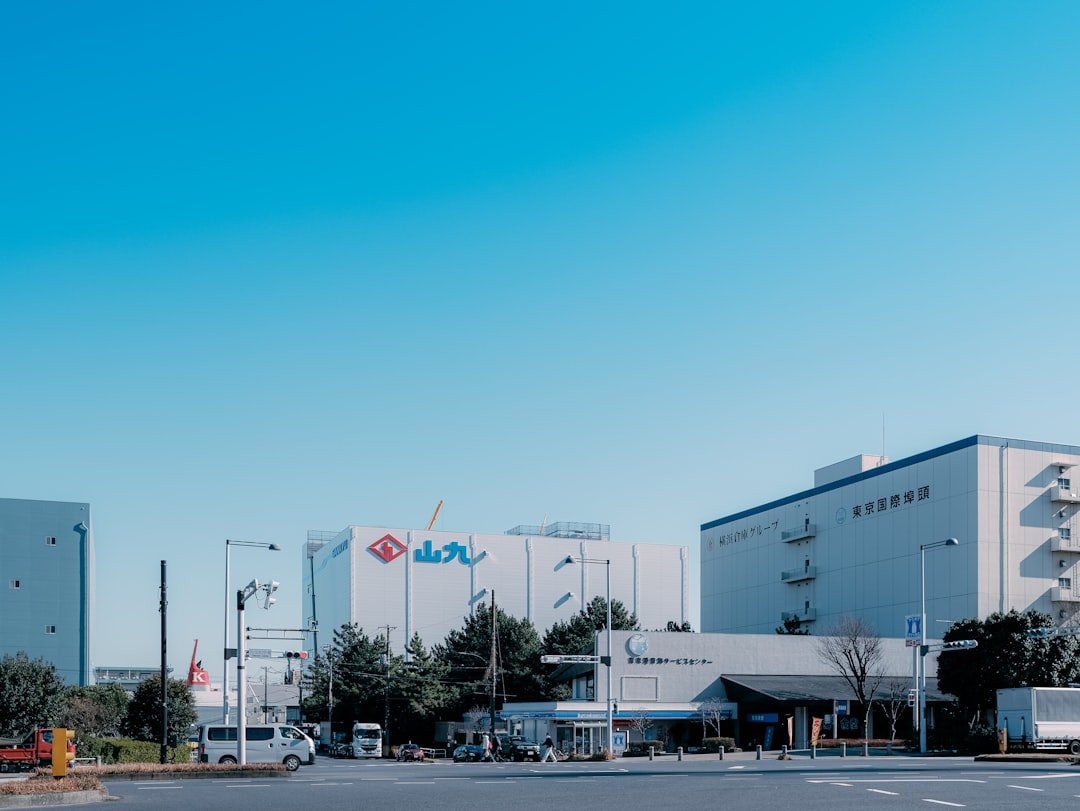
Nobody is talking about the unassuming two-story building in Takasaki City, Gunma Prefecture. It looks like a cross between a community center and a Starbucks — white walls, floor-to-ceiling windows, a bicycle rack out front. But this single facility has quietly achieved what decades of urban planning policies in Japan have failed to do: it’s pulling people back from sprawling shopping malls into the suburban city core.
Called the Miyako Central Community Station, it opened in April 2021 with a radical premise — instead of a single function, it offers a dozen. A children’s library. A co-working space. A small clinic. A cooking studio. A cafe. A post office. A drone delivery pickup point. A play area for toddlers. A rooftop garden. And a public square that hosts weekly farmers markets. Nothing about it is flashy. But the data coming out of Takasaki is making urban planners around the world sit up.
The Slow Death of Japanese Suburbs
Japan’s suburban city centers have been bleeding life for three decades. As the population aged and young families moved to car-oriented shopping malls on the edge of towns, downtown strips turned into ghost corridors of shuttered shops and empty benches. According to Japan’s Ministry of Land, Infrastructure, Transport and Tourism, the average foot traffic in suburban commercial districts dropped by 27% between 1995 and 2019. By 2023, nearly 40% of suburban shopping streets in cities under 300,000 people had at least one vacant storefront for every two occupied ones.
The usual response has been more malls — or tax breaks to lure a big box retailer. But that only accelerates the hollowing out of the historic center. “We’ve been trying to compete with the malls on their own terms, and we’ve been losing,” says Dr. Yuki Tanaka, professor of urban sociology at the University of Tokyo. “The mall offers one-stop convenience. The downtown offers fragmented, disconnected shops. You can’t win that fight unless you change the logic.”
Enter the concept of urban catalytic projects — a handful of strategically placed facilities designed to trigger broader regeneration. The Miyako station is arguably Japan’s most successful example yet.
A Building That Does Everything
The genius of the Miyako Central Community Station is that it doesn’t force people to choose between errands and leisure. A parent can drop off a child at the play area, grab a coffee, pick up a package, attend a free yoga class, and then browse the children’s books — all without leaving the building. The average visit duration? 72 minutes. Compare that to the typical 6 minutes spent in a traditional post office or 12 minutes in a library.
“What we’re seeing is a fundamental shift in how people allocate their time in public spaces,” explains Hiroshi Sato, director of the Urban Revitalization Institute, a Tokyo-based think tank that monitored the project. “People are lingering. They’re not just transiting through the city center — they’re staying, interacting, buying local. That’s the kind of behavior that sustains small businesses.”
And the numbers back him up. Since the station opened, foot traffic on the adjacent shopping street — which had been declining at 4% per year — increased by 31% in 2022 and held steady in 2023. New businesses have opened in nine previously vacant storefronts. Property values within a 500-meter radius rose by an average of 8.2% over two years, according to data from the Gunma Prefecture government.
“We’ve been trying to compete with the malls on their own terms, and we’ve been losing. The mall offers one-stop convenience. The downtown offers fragmented, disconnected shops. You can’t win that fight unless you change the logic.” — Dr. Yuki Tanaka
It’s not just about economics. A survey of 800 residents found that 63% reported feeling a stronger sense of community since the station opened. Just as NASA’s Artemis II mission captured global attention with 149 million streaming views, this humble building in Takasaki is quietly drawing local eyes back to the civic heart — but for an entirely different reason: it makes daily life easier and more communal.
The Data Doesn’t Lie
The Miyako station isn’t an isolated experiment. Similar multifunctional facilities have appeared in at least a dozen Japanese cities — in Kashiwa, Nagoya, and Akita — but Takasaki is the first where researchers have rigorously tracked both behavioral and economic changes. The pattern is consistent: where a single such facility is placed, average time spent in the surrounding area doubles. Where two or more are clustered, the whole district sees a 15–20% bump in foot traffic.
Think of it as the urban equivalent of a lab-made SpudCell that scientists are baffled by — something that seems to behave as if it were alive, but in this case the “organism” is a building, and its effect is to make a dead zone suddenly pulse with activity.
So why isn’t every suburb building one? The main obstacle is cost and coordination. Miyako station cost ¥1.2 billion (about $8 million) to build, with funding split between the national government, Gunma Prefecture, and a local foundation. The operating deficit — about ¥40 million per year — is covered by tenant rents and a small municipal subsidy. For many cash-strapped towns, that’s a steep upfront investment, even if the long-term return in tax revenue and local vitality is clear.
Still, the approach is gaining attention. In July 2023, the Japan Institute of Urban Planning published a detailed case study recommending the model for cities with populations between 50,000 and 300,000. The city of Toyota, Aichi Prefecture, broke ground on a similar facility in September 2024, and at least five other municipalities are in planning stages.
“What we’ve learned is that you don’t need a massive development to reverse decline,” says Sato. “You need the right kind of small intervention — one that recognizes that people today want convenience, but also connection. A building that offers both can rewrite the rules of where people linger.”
What This Means for Cities Everywhere
The Takasaki experiment arrives at a critical moment. Across Europe and North America, downtown suburbs are also struggling against the gravitational pull of big-box retail and online shopping. In the United States, the decline of suburban main streets has been extensively documented by organizations like the CDC’s Healthy Places program, which links walkable civic spaces to physical and mental health outcomes.
For urban planners, the message is subtle but powerful: don’t try to rebuild the entire downtown. Pick one block. One building. Give it multiple reasons for people to stay. Then watch the rest follow. “The catalyst doesn’t have to be a new stadium or a convention center,” Tanaka says. “It can be a place that simply makes it easier — and more pleasant — to run your daily errands together. That’s the infrastructure of community.”
The forward-looking implications are tantalizing. What if Aging suburbs could use these hubs to integrate health services and senior drop-in programs? What if they could double as emergency shelters? The Miyako station already has a backup generator and a small stockpile of supplies — a quiet resilience feature that proved its worth during Typhoon Khanun in August 2023, when 80 residents sheltered there. Next steps include adding a telemedicine booth and a small grocery cooperative.
As other countries, from South Korea to Italy, examine Japan’s demographic struggle, the Takasaki model offers a blueprint that’s affordable, replicable, and — most importantly — loved by the people who use it. It won’t make headlines. It won’t break streaming records. But it just might save the suburban city center, one lingering cup of coffee at a time.
Frequently Asked Questions
What exactly is a multifunctional facility like the Miyako Central Community Station?
It’s a single building that combines multiple public and commercial services — library, cafe, clinic, co-working, child care, post office, and event space — in one walkable location. The goal is to create a “third place” between home and work that encourages people to stay longer and interact.
How does such a facility reverse suburban decline?
By increasing the time people spend in the city center, it boosts foot traffic for nearby shops, makes the area feel safer, attracts new businesses, and raises property values. The effect is catalytic: one well-designed hub can trigger broader regeneration without massive infrastructure spending.
Can this model work outside Japan?
Yes — and it already is. Similar projects in the UK (Barking’s “Life Centre”) and Canada (Calgary’s “Central Library” with integrated services) show the same pattern. The key is adapting the mix of services to local needs. For U.S. suburbs facing downtown blight, the Takasaki case offers a low-cost, high-impact template.