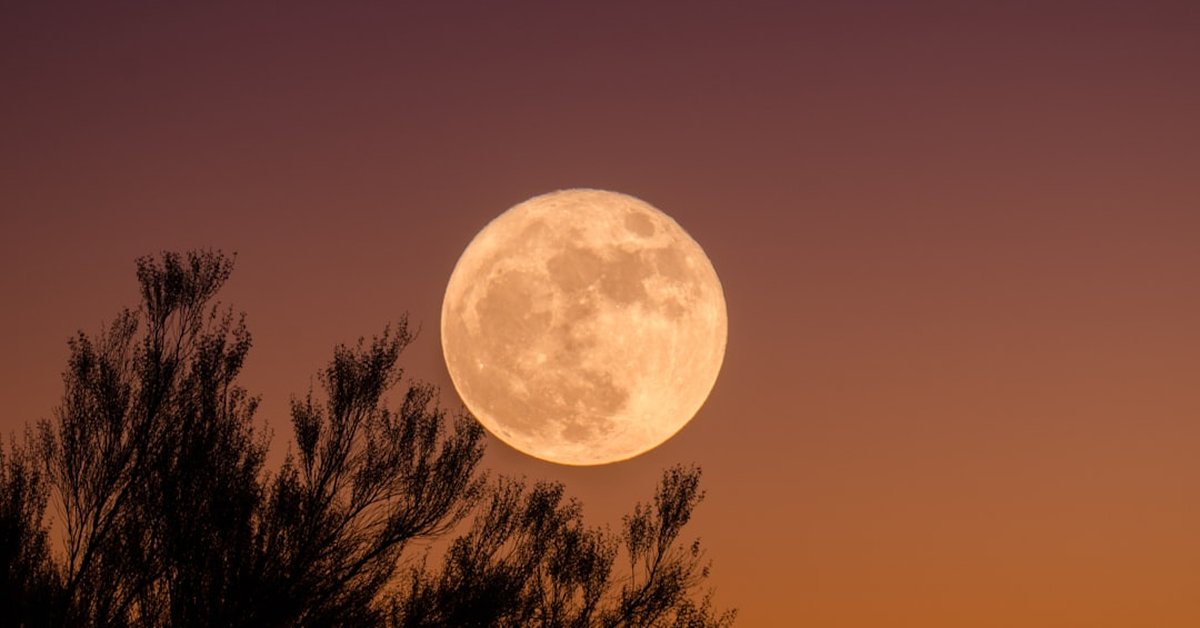









In a bold move that signals a renewed commitment to space exploration, Russia has announced plans for a series of ambitious lunar missions and the development of a new orbital station, aiming to reclaim its status as a major player in the cosmos. With the first mission, Luna-25, already launched in August 2023, and the next, Luna-26, slated for 2027, Moscow is charting a course that could reshape international space dynamics.
This isn’t just about planting flags. It’s about resources, science, and strategic positioning. The Russian space agency, Roscosmos, is targeting the Moon’s south pole, a region rich in water ice that could support future human outposts. For readers in the US, UK, and Canada, this development raises questions about competition and collaboration in an increasingly crowded space arena.
The Luna Program: A Lunar Renaissance
Russia’s Luna program, dormant since the Soviet era, is roaring back to life. Luna-25, which launched from the Vostochny Cosmodrome in the Russian Far East, aimed to be the first spacecraft to land at the lunar south pole. Although it crashed into the Moon’s surface due to an engine malfunction, the mission demonstrated Russia’s technical capability and determination. “The Luna-25 mission was a critical step, even in failure,” says Dr. Elena Petrova, a space policy analyst at the Moscow Institute of Physics and Technology. “It provided invaluable data on navigation and landing systems that will inform future attempts.”
Luna-26, scheduled for 2027, will be an orbiter designed to map the lunar surface and search for water ice deposits. This is followed by Luna-27, a lander that will drill into the regolith to analyze samples. These missions are not just scientific; they are geopolitical. By focusing on the south pole, Russia is entering a region also targeted by NASA’s Artemis program and China’s Chang’e missions. The race for lunar resources is heating up, and Russia wants a seat at the table.
Building a New Orbital Station: ROS
Beyond the Moon, Russia is planning to construct its own orbital station, the Russian Orbital Service Station (ROSS). This project, expected to begin deployment in 2027, will replace Russia’s involvement with the International Space Station (ISS), which is set to retire by 2030. ROSS will orbit at a higher latitude than the ISS, allowing it to monitor the Arctic region—a strategic priority for Russia as climate change opens new shipping routes.
“ROSS represents a shift from international cooperation to national autonomy,” explains Dr. Alexei Volkov, a former Roscosmos engineer now at the University of Toronto. “Russia wants to control its own destiny in space, especially as tensions with Western nations persist. The station will focus on scientific research, Earth observation, and testing technologies for deep-space missions.” For readers, this means a potential fragmentation of space partnerships, but also new opportunities for commercial and scientific ventures.
Nuclear-Powered Space Tugs and Beyond
Perhaps the most futuristic element of Russia’s space plans is the development of a nuclear-powered space tug, called Zeus. This spacecraft, equipped with a nuclear reactor, could transport cargo between orbits or even to the Moon and Mars. Roscosmos aims to test Zeus in the early 2030s, using it to tow modules to the lunar orbit or to service satellites. “Nuclear propulsion is a game-changer,” says Dr. Sarah Chen, a space propulsion expert at the University of Cambridge. “It could reduce travel times to Mars by months and enable missions that are currently impossible with chemical rockets. Russia is betting big on this technology.”
However, challenges abound. The technical hurdles are immense, and international concerns about nuclear safety in space persist. Russia’s space budget, while significant, is dwarfed by NASA’s, and sanctions have limited access to Western components. Yet, the country has a history of overcoming adversity, from Sputnik to the Mir space station.
What This Means for the Global Space Community
Russia’s renewed space ambitions are a double-edged sword. On one hand, they could spur innovation and competition, driving down costs and accelerating exploration. On the other, they risk deepening geopolitical divides. The ISS partnership, a symbol of post-Cold War cooperation, is ending, and new alliances are forming. China and Russia are collaborating on a lunar research station, while the US leads the Artemis Accords with allies.
For everyday readers, the implications are tangible. Space-based technologies—from GPS to weather forecasting—depend on international cooperation. A fragmented space environment could lead to duplication of efforts or even conflicts over orbital slots and lunar resources. Yet, it also opens doors for private companies and new partnerships. “The next decade will define the future of space exploration,” concludes Dr. Petrova. “Russia’s moves are a reminder that space is not just a scientific frontier, but a geopolitical one.”
As Russia pushes forward with its lunar missions, orbital station, and nuclear tugs, the world watches. Will these efforts succeed, or will they falter under technical and political pressures? One thing is certain: the cosmos is becoming a busier, more complex place, and Russia intends to be a major player in the new space race.