







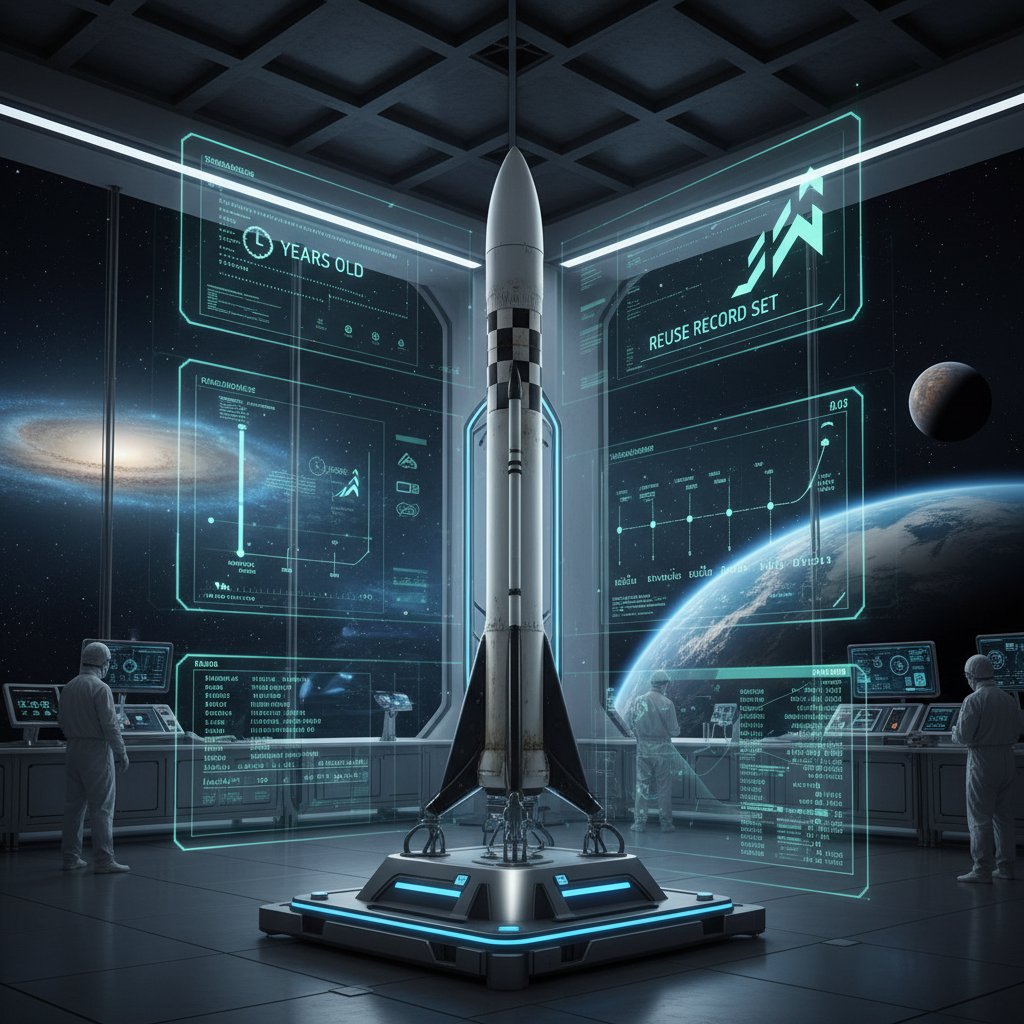
When you think about it, the Falcon 9 rocket has become almost mundane. We watch launches on our phones, barely looking up from our coffee. But this week, a single booster—B1058—celebrated its fifth birthday by smashing its own reuse record, reminding us that this workhorse is anything but ordinary. For everyday people, it means cheaper access to space, faster internet, and a future where space travel isn’t a one-off spectacle but a routine utility.
B1058 first launched on May 30, 2020, carrying NASA astronauts Bob Behnken and Doug Hurley to the International Space Station. That mission marked the first crewed launch from U.S. soil since the Space Shuttle retired in 2011. Since then, this booster has flown 22 times—a staggering number that even SpaceX’s engineers didn’t initially think possible. On its latest flight, on March 30, 2025, it deployed another batch of Starlink satellites, then landed gracefully on the droneship Just Read the Instructions in the Atlantic Ocean.
How a Five-Year-Old Booster Defies the Odds
Rocket boosters are essentially controlled explosions. The extreme heat, pressure, and vibration during launch and reentry would destroy most machines after a single use. Yet B1058 has survived 22 trips to space and back. How? SpaceX’s iterative design philosophy is key. Each flight provides data to tweak the Merlin engines, grid fins, and landing legs. The booster itself has undergone numerous refurbishments, but the core structure remains original.
“The fact that a booster launched in 2020 is still operational is a testament to the robustness of the Falcon 9 design and SpaceX’s relentless focus on reusability,” says Dr. Elena Martinez, a propulsion engineer at the University of Texas at Austin. “It’s like keeping your 2015 sedan running perfectly after 200,000 miles, except this sedan goes to space.”
B1058’s longevity isn’t just a technical curiosity. It directly translates to cost savings. Reusable rockets cut launch costs by up to 80%, according to industry estimates. SpaceX now charges around $67 million per Falcon 9 launch, down from $62 million in 2012 (adjusted for inflation), even as competitors like United Launch Alliance charge over $100 million for similar payloads. For consumers, this means Starlink’s global internet service can expand faster and cheaper, and scientific missions—like NASA’s climate-monitoring satellites—get more launches per dollar.
The History Behind the Record
To appreciate B1058’s achievement, we need to look back. Before SpaceX, rockets were expendable. The Saturn V, which took humans to the Moon, was used once and discarded. The Space Shuttle was partially reusable, but its orbiters required months of refurbishment between flights, costing nearly $500 million per launch. The Falcon 9’s booster, by contrast, can fly again in weeks.
SpaceX’s first successful landing occurred on December 21, 2015, on land. The first ocean landing followed in April 2016. By 2017, they were reusing boosters. B1058, however, is the first to reach five years and 22 flights. It has carried astronauts, cargo, and commercial satellites. Its latest flight, on March 30, 2025, from Cape Canaveral Space Force Station, was routine—a sign of how far we’ve come.
What This Means for You and the Future
For readers in the US, UK, and Canada, the Falcon 9’s reusability is already shaping daily life. Starlink, which relies on Falcon 9 launches, provides internet to remote areas in Alaska, rural Scotland, and northern Canada. As launch costs drop, companies plan to build space-based solar power stations, asteroid mining missions, and even orbital hotels. B1058’s record is a proof of concept that reusable hardware can last long enough to make these ambitious projects economically viable.
“SpaceX has demonstrated that reusability isn’t a gimmick—it’s the foundation of a new space economy,” says Dr. James Whitfield, a space policy analyst at the University of Cambridge. “We’re moving from the era of exploration to the era of utilization.”
But there are limits. After 22 flights, B1058 shows signs of wear. SpaceX has retired some older boosters after 15 to 20 flights, cannibalizing them for parts. The company’s next-generation Starship, designed for 100-plus flights, aims to push reusability even further. Yet B1058’s birthday is a milestone worth celebrating. It proves that engineering ingenuity, coupled with iterative testing, can make the impossible routine.
Looking Ahead: The Next Five Years
As B1058 enters its sixth year, SpaceX plans to keep flying it until it fails or reaches an economic limit. Each additional flight provides invaluable data for Starship’s development. For the rest of us, the takeaway is clear: the rocket we take for granted is rewriting the rules of spaceflight. The next time you stream a video or check weather forecasts—both enabled by satellites—remember the five-year-old booster that helped put them there. It’s a quiet revolution, but one that will shape humanity’s future among the stars.