





UK Heatwave: Longest Stretch Since 1976 Spreads North and West
UK’s third heatwave of 2025, longest since 1976, spreads north and west. Amber health alerts cover all of UK. Experts warn of climate change links.
Scientists develop a nanoscale circuit that generates and processes light-based information at room temperature, offering a path to ultrafast, energy-efficient optical computing.
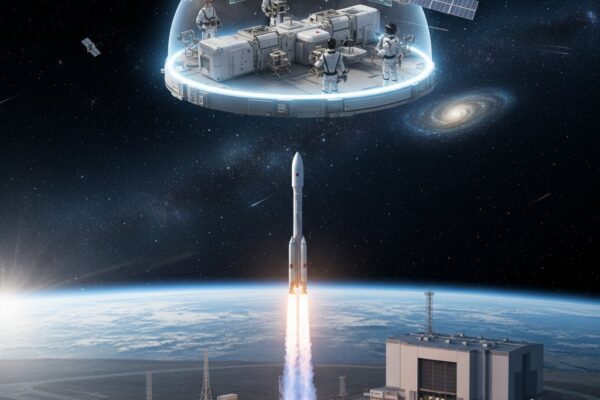
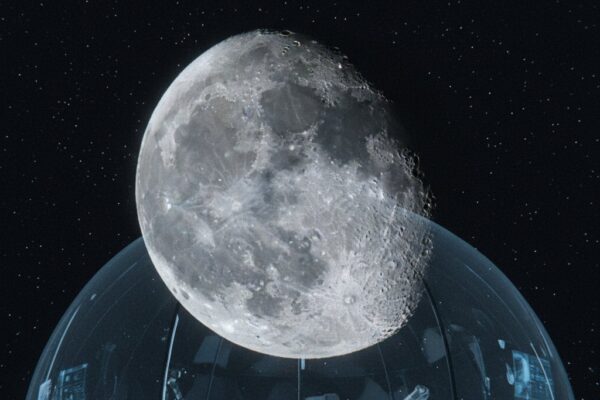
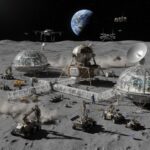
NASA selects Blue Origin for three uncrewed 2025 lunar missions, laying groundwork for a $20 billion moon base. Learn how these landings will enable sustained human presence.
NASA’s Roman Space Telescope launches August 30, eight months ahead of schedule. Its 300.8-megapixel camera captures 100 times more sky than Hubble in one shot.
Analysis of the 2025 A-level Physics Paper 2 reveals increased difficulty and conceptual demands. Educators and exam experts discuss implications for students and universities.
Dark matter may not be a cosmic loner. New theoretical models suggest a hidden dark force could slow the growth of galaxies and clusters, challenging standard cosmology and the S8 tension.
Healthy but sedentary people show a coordinated drop in muscle mitochondrial function that may silently precede cancer, diabetes, and Alzheimer’s. Research reveals how to reverse it.
Wales’ controversial Sustainable Farming Scheme finally launches with £1B budget after years of protests and delays. Here’s what it means for farmers and the environment.
A blistering heat wave has knocked out power for tens of thousands in France as Europe shatters temperature records. Experts warn the grid isn’t ready for climate change.
A climate scientist investigates the surge in GPS jamming over Europe, revealing its impact on aviation safety and climate research data, with origins traced to Kaliningrad.
NASA revises Artemis lunar lander plans with dual-SpaceX and Blue Origin approach. Learn how Starship and Blue Moon will enable sustainable Moon missions by 2026.
Astronomers capture the first direct image of two supermassive black holes orbiting each other in galaxy 0402+379, 4.4 billion light-years away.