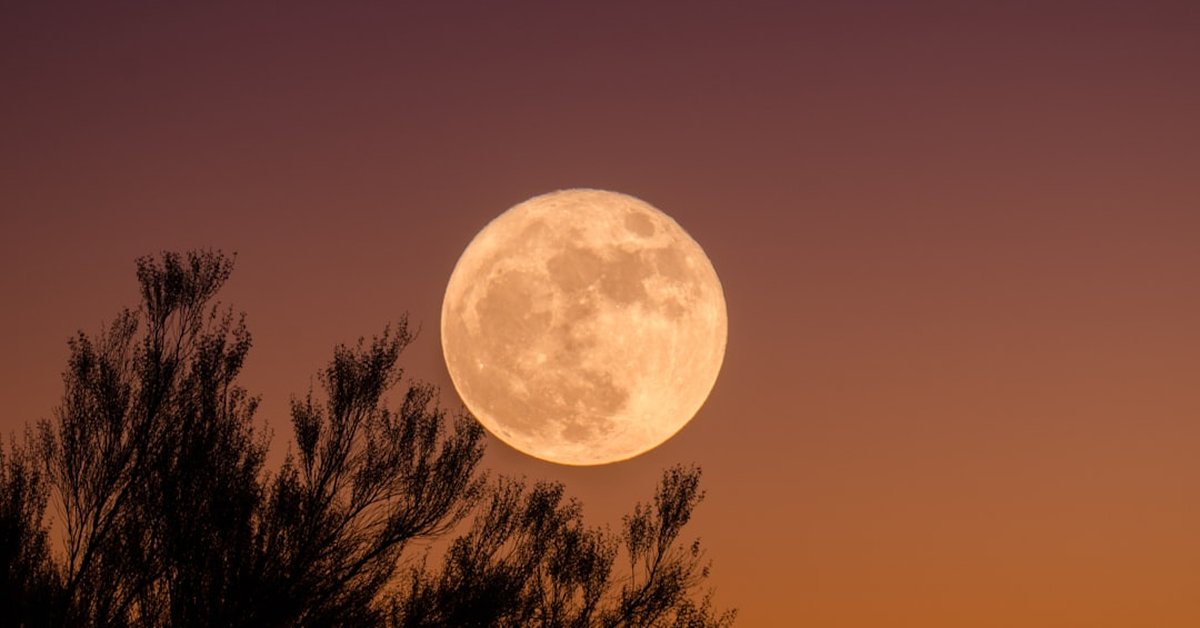
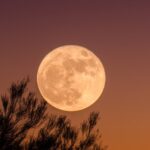





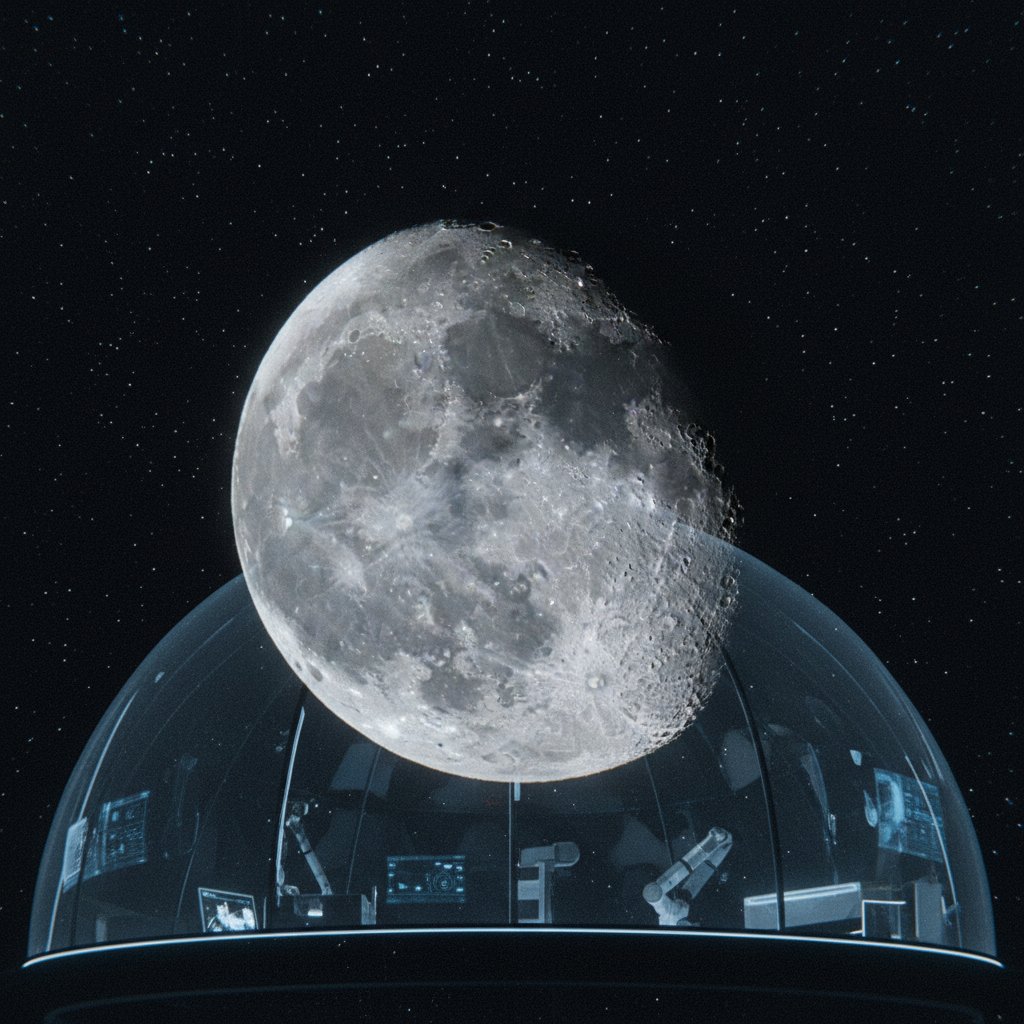
Nobody is talking about this, but the most profound science sometimes starts with a single, unedited snapshot. Last night in Southern California, under a crisp desert sky, someone pointed a camera at the moon. No fancy rig. No stacking software. Just a single exposure, cropped for composition. The result? A stunning waxing gibbous, its craters sharp enough to count, its terminator line a knife-edge of shadow and light.
And yeah, it’s beautiful. But here’s the thing: that photo is also data.
Every time an amateur astrophotographer captures the moon—especially during a specific phase like the waxing gibbous—they’re contributing to a global, crowdsourced record of our nearest neighbor. The moon’s face changes subtly night to night, not just in illumination but in the angle of sunlight hitting its surface. Over time, these images can help refine lunar topographic models, track transient lunar phenomena, or even support future landing site surveys for NASA’s Artemis program.
We just don’t talk about that enough.
The Waxing Gibbous: More Than Half Full
Let’s geek out for a second. A waxing gibbous moon occurs between first quarter and full moon—roughly 50% to 99% illuminated. Tonight’s version, captured in Southern California, sits right around 80% lit. That’s the sweet spot for photographers: the terminator (the day-night boundary) reveals incredible 3D detail of craters like Copernicus, Tycho, and the mighty Clavius.
But the phase also matters to scientists. “When the moon is waxing gibbous, the lighting conditions are ideal for studying crater morphometry,” says Dr. Sarah Chen, a lunar geologist at the University of California, Los Angeles. “Shadow lengths are long enough to measure depth, but not so long that they hide features. A single well-exposed image can feed into digital elevation models.”
Think about that. A single unedited shot—no post-processing, no HDR blending—can be used to calculate the height of a lunar mountain. It’s the kind of thing you’d normally associate with billion-dollar orbiters, not a camera on a tripod in Pasadena.
From Backyard Photo to Deep Space Mission
Here’s where it gets even cooler. NASA is quietly building the infrastructure to send humans back to the moon, and they’re leaning on citizen science in ways most people don’t realize. The 41 space tech projects recently selected by NASA include everything from lunar regolith processing to advanced navigation systems. But those systems need accurate maps. And maps improve when thousands of observers submit images of the same region under different lighting.
“Amateur astrophotographers are an untapped resource,” says retired NASA engineer Tom Okon, who now mentors high school students in astrophotography. “They capture details that even LRO (Lunar Reconnaissance Orbiter) might miss on a given pass because of orbital timing. A coordinated campaign during a waxing gibbous could fill in data gaps.”
And it’s not just about mapping. The moon is a dynamic body—it’s hit by meteoroids regularly, and flash events (brief impacts visible from Earth) are more likely to be caught by amateurs because professionals can’t point every telescope at the moon 24/7. A sharp image like this one, timestamped and geotagged, can help correlate visual sightings with seismic data from lunar seismometers left by Apollo missions.
What This Means for You (Yes, You)
So you’re sitting there with a smartphone or a DSLR. The moon is rising over your backyard. You snap a photo. Maybe you adjust the exposure, maybe you don’t. Congratulations—you’ve just become part of a tradition that stretches back to Galileo. But unlike Galileo, you have the internet, and you have tools like the Euclid space telescope peeling back the veil on the Milky Way’s chaos, and engineers like the one profiled in this story about a Central Coast engineer who built deep space signal systems. That same sort of dedication—pointing a lens upward—is what connects the amateur to the professional.
But here’s the kicker: that raw image, unedited, is more scientifically valuable than a heavily processed one. Why? Because algorithms that compare brightness levels need unadulterated pixel values. “The moment you apply a curves adjustment or sharpen, you’ve introduced artifacts,” explains Dr. Chen. “For quantitative analysis, a raw or minimally processed JPEG is what we want.”
So the photographer in Southern California did us all a favor by leaving the image untouched. They might not know it, but their single exposure could end up in a citizen science database helping plan where Artemis astronauts will land in 2026 or 2027. That’s a heck of a return on a 30-second shutter.
The Quiet Revolution in Lunar Science
Look, we’re not saying every moon photo will change the world. But the aggregate—thousands of images from thousands of observers—that’s a powerful dataset. And it’s growing. NASA’s Citizen Science program now explicitly encourages lunar imaging. The European Space Agency’s Moon Camp initiative does too.
Meanwhile, NASA’s development of orbital refueling technology is about to transform how we get to the moon and beyond. Imagine a future where lunar habitat refueling stations are supplied with propellant derived from water ice at the poles—mapped partially by amateur images. That’s the world we’re walking into.
And it started—at least in part—with a single exposure of a waxing gibbous taken in Southern California. No clickbait. No hype. Just a photograph that quietly, stubbornly, reminds us that the moon is still worth looking at. Worth photographing. Worth understanding.
So next time you see that silver sliver or pregnant gibbous, don’t just admire it. Fire up the camera. Take a shot. Don’t edit it. And send it somewhere that counts. You never know where your pixel will end up.
Frequently Asked Questions
- What is a waxing gibbous moon?
It’s the phase between first quarter and full moon, when the illuminated portion grows from about 50% to 99%. “Waxing” means increasing, and “gibbous” means more than half but not full. - Why is a single, unedited photo better for science?
Because editing—like adjusting contrast or sharpening—alters the raw pixel values. Scientists who analyze brightness, shadow length, or albedo need untouched data to make accurate measurements. - How can I contribute my moon photos to science?
You can upload them to NASA’s Citizen Science portal or join projects like the Lunar Impact Monitoring Program through the Association of Lunar and Planetary Observers (ALPO). Always include time, date, location, and camera settings.