







It begins with a headache that won’t quit. Or maybe a seizure that comes from nowhere. A few weeks later, the MRI reveals the nightmare: glioblastoma, the most aggressive brain cancer known to medicine. Patients given this diagnosis face a two-year survival rate below 30%. But researchers at Oregon State University have just unveiled a weapon that sounds almost too elegant to be true—sugar-coated nanoparticles that sneak past the brain’s defenses and deliver a killing blow to tumor cells.
Here’s the thing about glioblastoma: it’s a master of disguise. The tumors form a dense, tangled web of blood vessels and connective tissue that acts like a fortress wall. Even the most powerful chemotherapy drugs struggle to breach it. And when they do, the cancer cells often mutate and laugh off the attack. But the Oregon State team, led by pharmaceutical scientist Dr. Gaurav Sahay, has found a way to turn the tumor’s own biology against it.
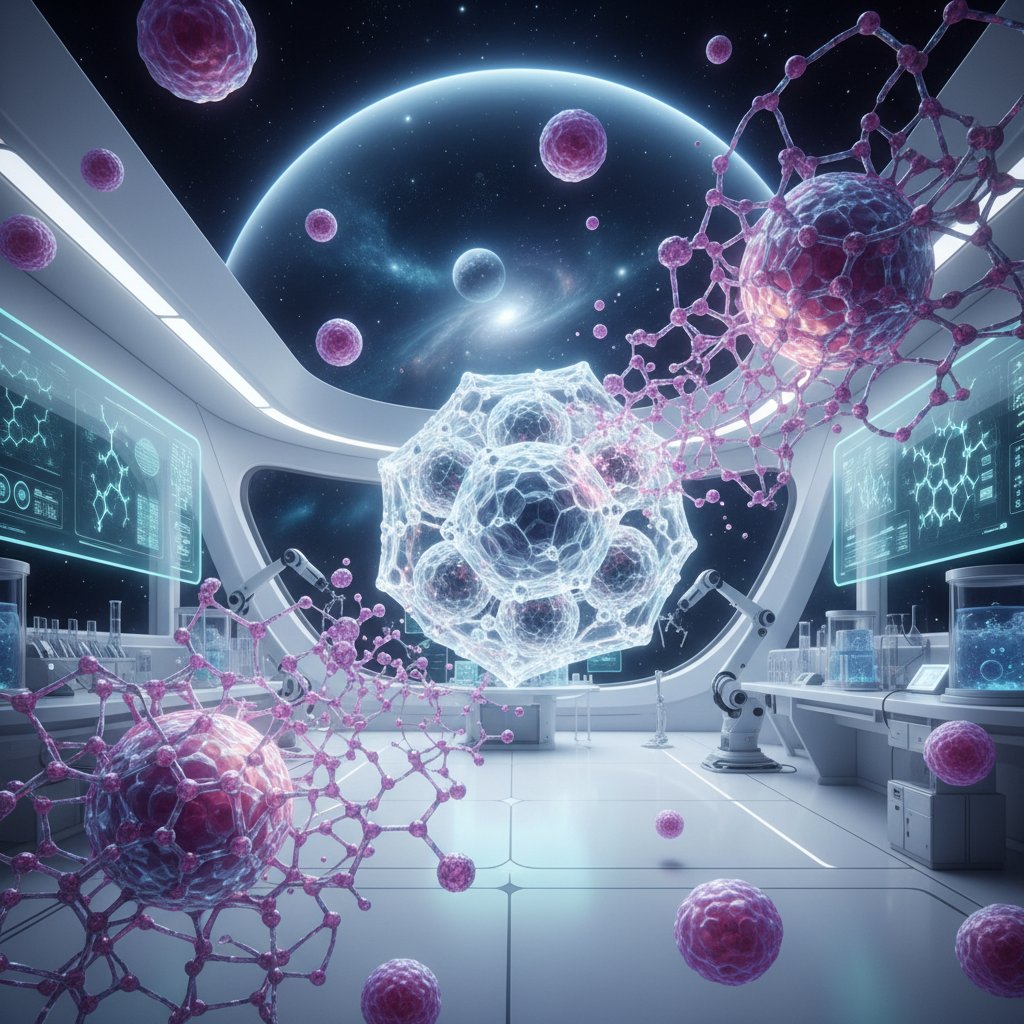
They’ve designed nanoparticles—tiny spheres just a few hundred nanometers wide—coated with a sugar molecule called hyaluronic acid. And yes, that’s the same stuff found in your skin creams and joint injections. But in this context, it’s not about anti-aging. It’s about deception.
The Sweet Spot: Why Sugar Works
Cancer cells are greedy. They consume massive amounts of glucose to fuel their uncontrolled growth. But glioblastoma cells have another sugar-related trick: they’re covered in receptors that latch onto hyaluronic acid. It’s like a key fitting a lock. The nanoparticles, coated in this sugar, are essentially waving a flag that says, “Eat me.” And the tumor cells oblige.
“The nanoparticles are designed to be taken up specifically by glioblastoma cells because these cells overexpress a receptor called CD44, which binds to hyaluronic acid,” explains Dr. Sahay in a recent press release. “Once inside, they release their therapeutic payload.”
That payload is a small interfering RNA (siRNA) molecule that shuts down a gene critical for tumor survival. Think of it as a molecular kill switch. In mouse models, the treatment shrank tumors and extended survival significantly. The study, published in the journal Small, marks the first time this approach has been tested against glioblastoma in a living animal.
Look, we’ve seen promising cancer treatments before—many that fizzled in human trials. But this one has a few things going for it. First, the nanoparticles are biodegradable and non-toxic. Second, they’re small enough to cross the blood-brain barrier, that notoriously picky filter that keeps most drugs out of the brain. And third, they’re specific: healthy cells don’t get caught in the crossfire.
A History of Heartbreak
Glioblastoma has been a graveyard for drug development. The current standard of care—surgery, radiation, and the chemotherapy drug temozolomide—hasn’t changed much since 2005. Median survival hovers around 12 to 15 months. Dr. Linda Liau, a neurosurgeon at UCLA who wasn’t involved in the study, puts it bluntly: “We desperately need new approaches. The biology of this tumor is incredibly complex, and we’ve been fighting it with 20th-century tools.”
And it’s not just about the tumor itself. The treatments are brutal. Radiation can damage healthy brain tissue. Chemotherapy causes nausea, fatigue, and immune suppression. Patients often spend their remaining months in and out of hospitals, not living, just surviving.
But here’s where the sugar-coated nanoparticles shine. Because they’re delivered intravenously and target only cancer cells, the side effects could be drastically reduced. It’s a precision strike, not a carpet bomb. And while the research is still in animal models, the team is already working on scaling up production for human trials. If all goes well, we could see first-in-human studies within two to three years.
The Bigger Picture: What This Means for You
This isn’t just about brain cancer. The same technology could be adapted to target other tumors that overexpress CD44—including breast, pancreatic, and lung cancers. The platform is modular: swap out the siRNA payload, and you’ve got a new treatment. Swap the sugar coating, and you can target a different receptor.
But let’s not get ahead of ourselves. The road from mouse to human is littered with failures. The immune system might react unpredictably. The nanoparticles might accumulate in the liver or spleen. And glioblastoma, true to its reputation, might find a way to evolve resistance. Still, the early data is compelling enough that the National Institutes of Health has awarded the team a $2.8 million grant to push the research forward.
Meanwhile, other scientists are exploring parallel paths. A new biofilm mechanism in Bacillus cereus recently revealed a weakness in food poisoning bacteria—a reminder that understanding the molecular details of disease can unlock unexpected treatments. And in a completely different arena, researchers are developing a ‘Prescription for the Planet’ to heal the environmental crisis, showing how interdisciplinary thinking can tackle seemingly intractable problems.
For now, the Oregon State team is focused on one thing: getting this treatment to patients. Dr. Sahay emphasizes that the work is far from finished. “We are cautiously optimistic. The nanoparticles have shown remarkable efficacy in preclinical models, but we need to confirm safety and efficacy in humans. That’s the next big hurdle.”
And it’s a hurdle worth jumping. Because for the 15,000 Americans diagnosed with glioblastoma each year, hope is in short supply. Sugar-coated nanoparticles might not be a cure—yet. But they’re the most promising lead we’ve had in years. And sometimes, that’s enough to keep the lights on.
Frequently Asked Questions
How do sugar-coated nanoparticles work against glioblastoma?
The nanoparticles are coated with hyaluronic acid, a sugar that binds to receptors (CD44) found in high numbers on glioblastoma cells. Once inside the cancer cell, they release a small interfering RNA (siRNA) that turns off a gene essential for tumor survival, effectively killing the cell.
When will this treatment be available for patients?
The research is currently in animal models (mice). The team at Oregon State University is working toward human clinical trials, which could begin in two to three years if regulatory approvals and funding are secured. It may take several more years before it becomes a standard treatment.
Are there any side effects?
Because the nanoparticles target only cancer cells, the treatment is expected to have fewer side effects than traditional chemotherapy. However, human trials are needed to fully assess safety. The nanoparticles are biodegradable and designed to be non-toxic to healthy cells.