







Seven weeks ago, four astronauts splashed down in the Pacific Ocean after completing humanity’s first crewed journey around the Moon since Apollo 17. The capsule was scorched, the data banks full, and the teams at NASA already racing to turn flight experience into engineering upgrades. Branelle Rodriguez, Orion Vehicle Manager for Artemis II, has spent every day since that November 2025 splashdown poring over telemetry, crew debriefs, and hardware inspections. “We validated so many assumptions, but we also found things we didn’t expect,” she told QuasarPost in an exclusive interview. “And those surprises are exactly what will make Artemis III and future Mars missions safer.”
What the Heat Shield Told Us
One of the biggest unknowns before Artemis II was how Orion’s heat shield — the largest of its kind ever built — would perform during a lunar-return reentry. The spacecraft hit the atmosphere at nearly 25,000 miles per hour, generating temperatures exceeding 5,000°F. Initial inspections showed the AVCOAT material charred exactly as predicted. But Rodriguez’s team found something more interesting: small, localized areas where the char layer was slightly thicker than expected. “That variation tells us about subtle differences in plasma flow around the capsule during different phases of descent,” she explained. “We’re now tweaking our computational fluid dynamics models to account for those real-world asymmetries.” The result? A heat shield design that can handle a wider range of entry angles — critical for Mars, where the atmosphere is thinner and the margin for error is razor-thin.
Life Support Under Real Conditions
Orion’s environmental control system performed flawlessly during the 10-day mission, maintaining comfortable cabin temperatures and breathable air. But the crew reported one oddity: a persistent faint odor resembling burnt electronics that lingered in the cabin for two days. Sensors showed no dangerous compounds, but the smell was distracting. “We traced it to a gasket material that off-gases slightly when heated,” Rodriguez said. “It’s not a safety issue, but for a 90-day Mars transit, little irritations become big problems.” The fix involves swapping that gasket for a different polymer blend — a change already being incorporated into the Artemis III capsule. Just as researchers are developing sugar-coated nanoparticles to target deadly brain cancers with pinpoint precision, NASA is applying the same philosophy: find the tiny issues before they metastasize into mission risks.
Navigation and the Human-in-the-Loop
Artemis II tested a new onboard optical navigation system that uses star trackers and horizon sensors to compute position without ground support. It worked, but not perfectly. During a critical maneuver behind the Moon, one star tracker took 47 seconds longer than expected to lock onto its reference stars. That delay wouldn’t cause a problem on a lunar mission, but on the way to Mars, where communication delays can stretch to 20 minutes, every second counts. “We’re now developing an autonomous correction algorithm that can handle these dropouts without ground intervention,” Rodriguez noted. The crew also performed a manual pointing exercise to prove that astronauts can take over if the computers glitch. “It’s like riding a bike with training wheels — except the bike is traveling at cosmic speeds and the training wheels are triple-redundant computers.”
These lessons are not just technical. They’re also shaping NASA’s long-term strategy. In the same way that investors reward companies that set ambitious climate goals, NASA’s transparent sharing of Artemis II data — including the glitches — is building confidence among international partners and commercial contractors who will build the Gateway station and the deep-space transport vehicles.
From Lunar Flyby to Mars Architecture
Rodriguez emphasized that Artemis II’s biggest contribution may be psychological. “We proved that a crew can live and work in Orion for more than a week, do complex maneuvers, handle emergencies, and come home safely,” she said. “That’s a huge leap from the uncrewed Artemis I flight in 2022.” The lessons are now being fed directly into the Block 2 version of Orion, which will feature upgraded life support for longer duration, a more powerful propulsion system, and a new docking system for the Lunar Gateway. The ultimate target? Mars. According to NASA’s current roadmap, the first human Mars mission could launch as early as the 2040s, using a vehicle derived from Orion’s proven design. “Every flight is a building block,” Rodriguez said. “Artemis II showed us the mortar between those blocks — and that mortar is just as important as the blocks themselves.”
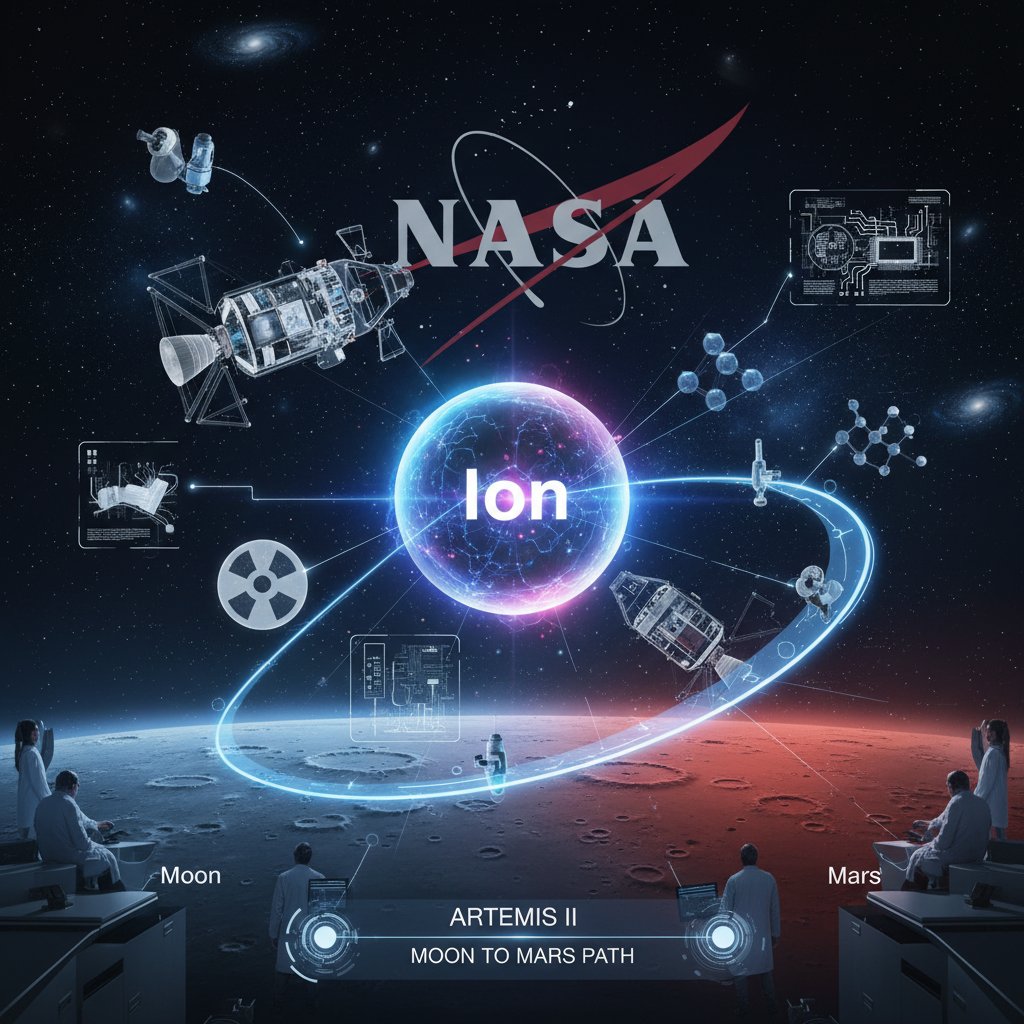
As the Artemis III crew — the first to attempt a lunar landing since 1972 — begins their training, they’ll be flying a spacecraft that is measurably better because of what four astronauts discovered just weeks ago. The journey from the Moon to Mars isn’t a straight line; it’s a spiral, and Artemis II was the loop that tightened the curve.
Frequently Asked Questions
How did Artemis II differ from Artemis I?
Artemis I was an uncrewed test flight that sent Orion around the Moon in November 2022. Artemis II carried four astronauts — the first crew to fly beyond low Earth orbit since Apollo 17. The crew tested life support, navigation, and manual controls, providing data that no uncrewed mission can capture, such as subjective comfort and human performance during high-stress maneuvers.
What specific hardware changes are being made based on Artemis II?
Key changes include: replacing the cabin gasket material that produced the burnt odor, refining the star tracker software to reduce lock-on time, and updating the heat shield manufacturing process to account for the observed asymmetric charring. These changes are already being implemented for Artemis III and the Block 2 Orion design.
How does this mission affect the timeline for sending humans to Mars?
Artemis II validated most of Orion’s systems for the ~10-day lunar mission profile. For Mars, NASA needs to extend life support, radiation shielding, and propulsion for months-long trips. The lessons from Artemis II directly inform the design of the Deep Space Transport vehicle, which is scheduled for its first uncrewed test in the early 2030s, with a crewed Mars flyby possible in the late 2030s.