





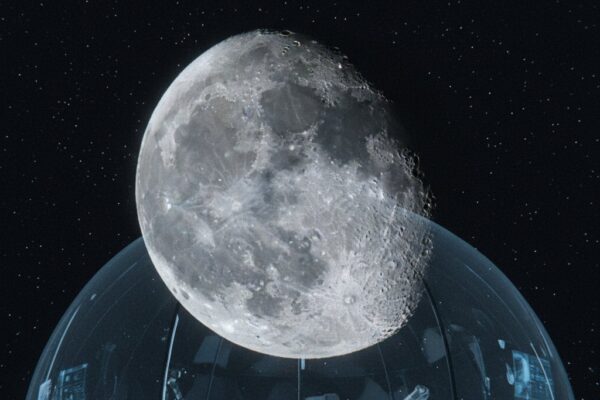
Artemis II Photo Reveals the Moon’s Harsh Terminator — What It Means
Artemis II crew captures stunning Moon terminator photo. Discover what the half-lit lunar surface reveals about geology, moonquakes, and our cosmic perspective.
NASA’s flight test program transforms bold ideas into real technologies. Learn how the X-59 and other experimental aircraft prove designs before they reach the public.
NASA brings its Hyperwall to ALA 2026 in Chicago. Live storytelling sessions from June 26-29 at Booth #2243. Librarians, get ready for Earth and space science like never before.
Reddit’s r/space weekly thread for June 14, 2026 reveals top public questions on Artemis delays, Mars sample return risks, exomoons, and alien contact.
Omega Centauri, the Milky Way’s largest globular cluster, may be the stripped core of a dwarf galaxy. New Hubble and JWST data reveal an intermediate-mass black hole and ancient stars.
Comet C/2025 R3 dazzles over New Zealand’s Remarkables in March 2025, offering a rare celestial spectacle and new insights into the solar system’s origins.
Russia’s space program is back with Luna moon missions, a new orbital station (ROSS), and nuclear-powered tugs. Explore the geopolitical and scientific impacts for global readers.
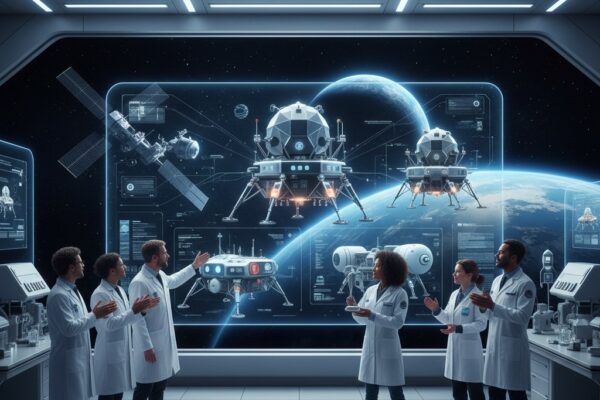
NASA revises Artemis lunar lander plans with dual-SpaceX and Blue Origin approach. Learn how Starship and Blue Moon will enable sustainable Moon missions by 2026.
Skeptics question Elon Musk’s ambitious 2050 Mars colony timeline, citing engineering hurdles, biological risks, and economic challenges. Is SpaceX’s vision realistic?
A new interactive website lets you simulate asteroid impacts anywhere on Earth, showing blast radius, tsunami zones, and local & global casualty estimates in real time.
Discover how the asteroid 215809 John Wayne was named after the legendary actor. Learn about its orbit, composition, and the IAU’s cosmic naming tradition.
Astronomer Austin Riley leads team discovering Gliese 667 Ee, a rocky exoplanet 23 light-years away in the habitable zone. Could this be the closest Earth twin yet found?