






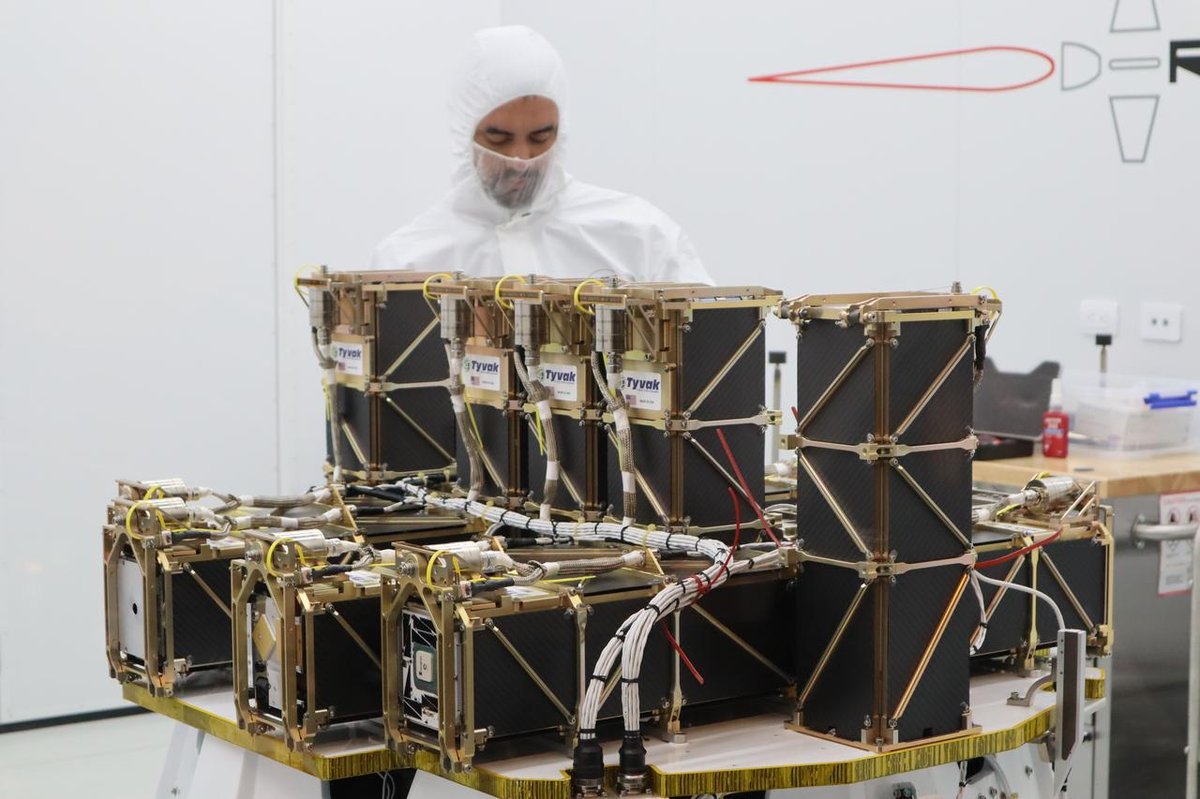
The roar of an Electron rocket lifting off from a coastal launch pad in New Zealand or Virginia is about to become a more familiar sight for climate and solar physicists. NASA has selected Rocket Lab to launch two critical science missions—the PolSIR (Polarized Submillimeter Ice-cloud Radiometer) and the TSIS-2 (Total and Spectral Solar Irradiance Sensor-2)—under the agency’s Venture-Class Acquisition of Dedicated and Rideshare (VADR) program. These launches, set for the next two years, aim to deliver data that could reshape our understanding of Earth’s energy balance and the sun’s influence on climate change.
Let’s be clear: this isn’t just another contract. It’s a shift in how NASA buys rides to orbit. VADR is designed to open the door for smaller, cheaper rockets—like Rocket Lab’s Electron—to carry payloads that once required larger boosters. So, what will these two satellites actually do? And why does it matter for someone in Ohio or Oxford?
Why Ice Clouds and Sunlight Matter More Than You Think
Start with PolSIR. It’s a shoebox-sized instrument that will measure ice clouds high in the atmosphere—the thin, wispy cirrus clouds you see on a cold winter morning. But these clouds are far from innocent. They trap heat, and their behavior is one of the biggest uncertainties in climate models. “We don’t know if these clouds will amplify or dampen future warming,” says Dr. Sarah Johnson, a cloud physicist at the University of Colorado Boulder. “PolSIR will give us the first global, high-resolution view of their ice particle size and shape.” That data is crucial because different ice shapes reflect and absorb sunlight differently. Current models rely on rough estimates. PolSIR will replace guesswork with precision.
Then there’s TSIS-2. It will measure the sun’s total energy output—its irradiance—across the entire spectrum, from ultraviolet to infrared. The sun’s brightness varies slightly over 11-year cycles, but those changes are small. Yet even a 0.1% shift can affect Earth’s climate over decades. “We need continuous, accurate measurements to separate natural solar variability from human-caused warming,” explains Dr. James Miller, a solar physicist at NASA’s Goddard Space Flight Center. TSIS-2 will continue a 40-year record of solar irradiance data, ensuring scientists can detect trends that might otherwise be lost in instrument drift. Without it, we’d be flying blind.
Rocket Lab’s Electron: Small Launcher, Big Ambitions
Rocket Lab has already launched more than 30 missions on Electron, a two-stage rocket about the size of a telephone pole. It’s designed for small payloads—up to 300 kilograms to low Earth orbit. That’s perfect for PolSIR and TSIS-2, both weighing less than 200 kilograms. The company will launch each mission on a dedicated Electron, meaning no shared rides with other satellites. That gives NASA flexibility to choose orbits optimized for each instrument. PolSIR needs a polar orbit to scan the entire globe; TSIS-2 requires a sun-synchronous orbit to keep its sensors pointed at the sun.
But here’s the twist: Rocket Lab has been trying to reuse its first stages by catching them mid-air with a helicopter. They’ve had mixed success—one catch in 2022 worked, another in 2023 failed. For these NASA missions, the company will likely fly expendable, meaning the first stage falls into the ocean. Still, the cost is low: around $50 million per launch, compared to $100 million for a Falcon 9. That’s the kind of savings VADR was designed to achieve. And with record-breaking heatwaves pushing climate urgency higher, every dollar saved can go to more science.
What This Means for Climate Science
If you’ve been following the climate debate, you know the problem: models disagree on how clouds will behave in a warming world. PolSIR could break that deadlock. It will measure ice cloud properties at submillimeter wavelengths—shorter than microwaves, longer than infrared—which penetrate clouds without being scattered. That allows it to see inside the cloud, not just its top. “It’s like getting an MRI of a cloud instead of an X-ray,” says Johnson. The data will feed into global climate models, improving predictions of rainfall, storm intensity, and even wildfire risk in a warmer world.
Meanwhile, TSIS-2 will help answer a nagging question: is the sun’s recent quiet period—the so-called “grand solar minimum”—masking some of the warming from greenhouse gases? Some skeptics argue that solar variability explains recent temperature rises. They’re wrong, but good data makes the argument irrefutable. “With TSIS-2, we can quantify exactly how much solar variability contributes to the temperature record,” says Miller. “The answer is very little—less than 10% of the warming since 1970.” But you can’t prove that without measurements.
And here’s a wild connection: solar wind can drown out alien signals, so understanding the sun’s output isn’t just about climate—it’s about SETI. The same data that helps climate models also helps radio astronomers filter out solar interference.
The Bottom Line for Taxpayers
NASA’s VADR program is a bet that commercial small launchers can handle important science missions without breaking the bank. Rocket Lab’s selection proves that bet is paying off. The two missions together cost less than $100 million—a fraction of the billion-dollar price tag for a flagship mission like the Mars Sample Return. That’s good news for anyone who pays taxes. “We’re getting more science per dollar,” says Johnson. “And in an era of tight budgets, that’s essential.”
The first launch, PolSIR, could happen as early as late 2025. TSIS-2 will follow in 2026. Both will operate for at least three years, but could last longer if hardware holds up. For Rocket Lab, this is a chance to prove it can handle NASA’s most demanding small payloads. For the rest of us, it’s a reminder that the answers to our biggest questions—about climate, about the sun, about our place in the universe—often come from small satellites, launched on small rockets, by a small company with a big vision.
Frequently Asked Questions
What is the VADR program?
VADR stands for Venture-Class Acquisition of Dedicated and Rideshare. It’s a NASA procurement program that buys launch services from commercial providers like Rocket Lab for small-to-medium science missions. The goal is to reduce costs and increase launch frequency by using smaller rockets.
Why do we need to measure solar irradiance from space?
Earth’s atmosphere blocks most of the sun’s ultraviolet and infrared radiation. To get an accurate measurement of total solar energy reaching Earth, you need to be above the atmosphere. TSIS-2 will provide that data, helping scientists distinguish between natural solar variability and human-caused climate change.
How does PolSIR’s submillimeter technology work?
PolSIR uses a radiometer that detects radiation at wavelengths between 0.3 and 1 millimeter. These wavelengths can penetrate ice clouds without being scattered by water droplets, allowing it to measure ice particle size, shape, and distribution inside the cloud. This is a major improvement over visible-light sensors that only see the cloud top.