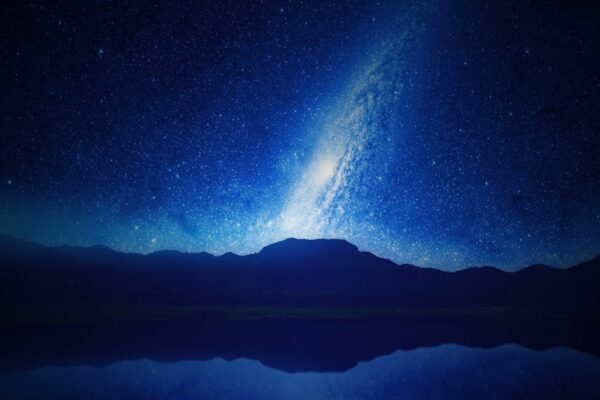
An Island of Calm at the Violent Heart of the Galaxy
Astronomers discover a calm gas filament near the Milky Way’s supermassive black hole, where stars are forming despite extreme turbulence. A quiet island in a cosmic storm.








Astronomers discover a calm gas filament near the Milky Way’s supermassive black hole, where stars are forming despite extreme turbulence. A quiet island in a cosmic storm.
NASA’s Chandra X-ray Observatory reveals the Milky Way’s outer spiral arms stretch much farther than thought, forcing a redraw of our galactic map and reshaping our understanding of the galaxy’s size and structure.

July 2026 skywatching tips from NASA: a predawn planetary meetup, returning Comet 13P/Olbers, prime Milky Way views, and Saturn’s rings at a new angle. No telescope required for most events.
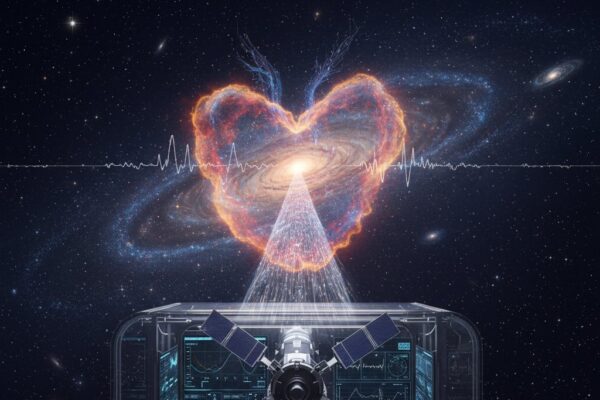
ESA’s Euclid mission releases a stunning new image of the Milky Way’s core, revealing millions of stars and setting the stage for NASA’s Roman Space Telescope.
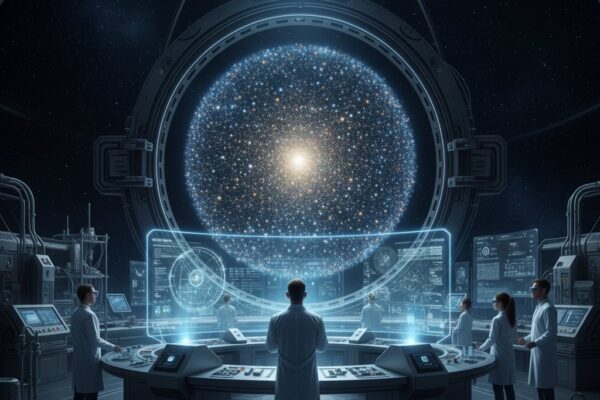
Omega Centauri, the Milky Way’s largest globular cluster, may be the stripped core of a dwarf galaxy. New Hubble and JWST data reveal an intermediate-mass black hole and ancient stars.
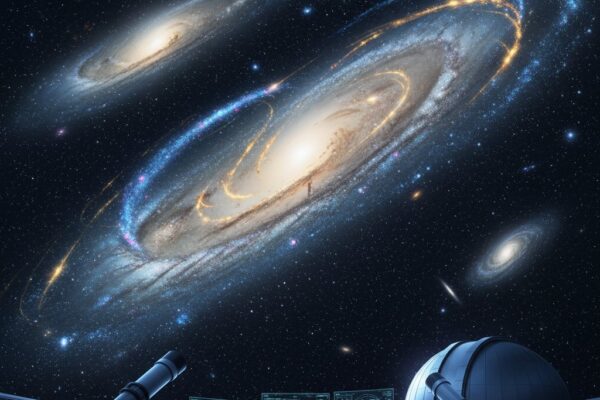
New research reveals the Milky Way’s ancient collision with Gaia-Enceladus rewired its structure. Now, the Andromeda Galaxy is on course to merge with ours in 4.5 billion years.

Discover why the Milky Way appears brighter and more spectacular from Australia. Explore best viewing spots, cultural significance, and astrophotography tips.

After a 20-year search, astronomers have traced mysterious radio pulses to a ‘vampire’ white dwarf draining its companion star. The discovery rewrites stellar death.