






Imagine Driving a Spaceship: Tesla and SpaceX Merger Talks Heat Up
What if your next car wasn’t just electric, but also built with technology refined in the vacuum of space? Rumors of a potential merger between Tesla and SpaceX have resurfaced, igniting excitement and speculation about the future of transportation and technology. Elon Musk, the driving force behind both companies, has reportedly discussed the possibility with close colleagues, according to inside sources. This wouldn’t just be a business deal; it could redefine how we travel on Earth and beyond.
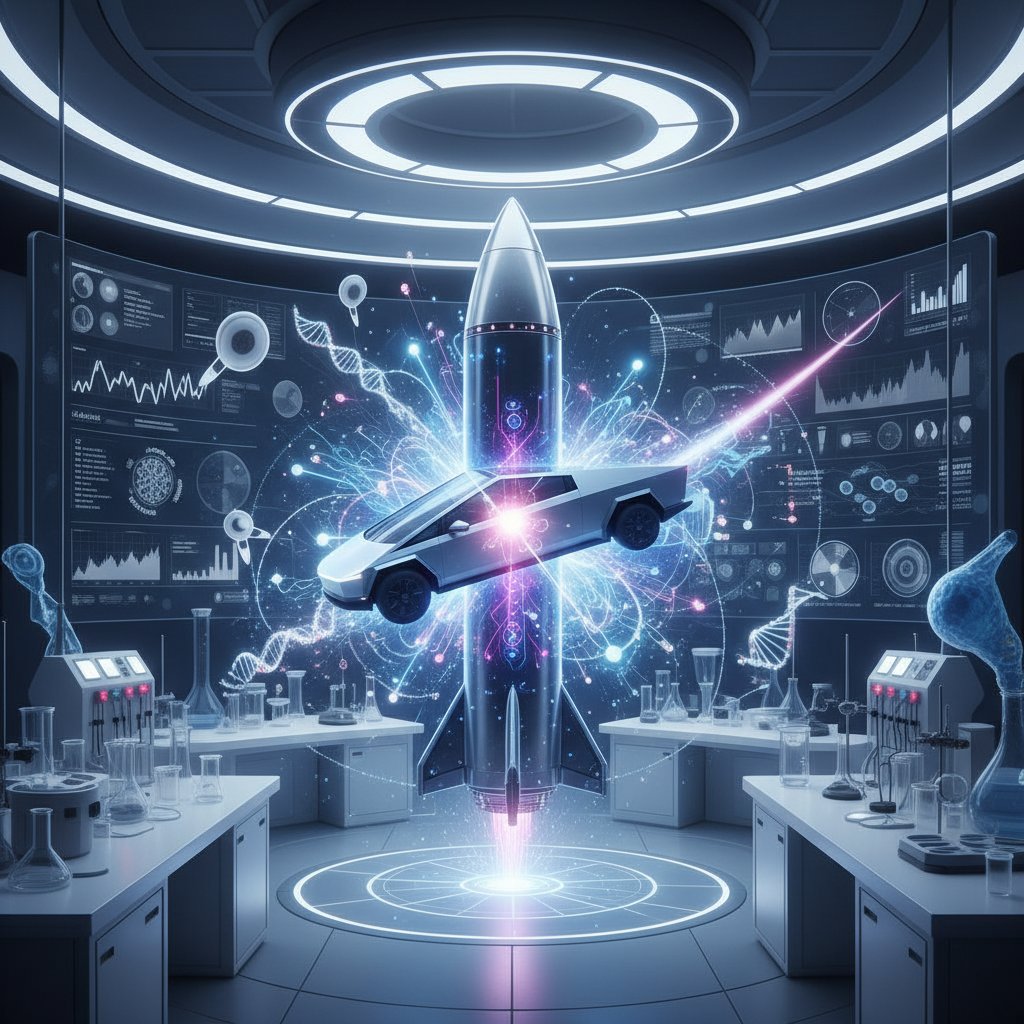
The potential synergy between Tesla’s expertise in electric vehicles, battery technology, and autonomous driving, and SpaceX’s advancements in rocketry, materials science, and space-based communication, is tantalizing. A combined entity could accelerate innovation in areas like advanced materials, energy storage, and artificial intelligence, leading to breakthroughs that benefit consumers worldwide. Folding the two firms together may streamline operations and improve access to capital.
A History of Innovation and Intertwined Visions
The idea of merging Tesla and SpaceX isn’t entirely new. Musk has long spoken of his ambition to make humanity a multi-planetary species, with both companies playing crucial roles. Tesla’s electric vehicles are intended to reduce our reliance on fossil fuels here on Earth, while SpaceX aims to establish a permanent human presence on Mars. A merger could be the ultimate expression of Musk’s vision.
Both companies already share significant overlap in technology and personnel. SpaceX has used Tesla batteries in its rockets, and Tesla has benefited from SpaceX’s expertise in materials science. This collaboration has produced several innovations. Many engineers and executives have worked at both companies, fostering a culture of cross-pollination and shared knowledge. The two companies also share a similar risk-taking and disruptive approach to innovation, challenging established industries and pushing the boundaries of what’s possible.
“The potential for synergy between Tesla and SpaceX is enormous,” says Dr. Emily Carter, a professor of Engineering at Princeton University. “Combining their expertise in energy storage, materials science, and AI could lead to breakthroughs that would benefit consumers and accelerate the transition to a sustainable future.”
Challenges and Opportunities
Despite the potential benefits, a merger would present significant challenges. The two companies operate in vastly different industries, each with its own unique regulatory landscape and market dynamics. Integrating their cultures, operations, and technologies would be a complex and time-consuming undertaking.
Moreover, some analysts question whether a merger would create a company that is too large and unwieldy, potentially stifling innovation and creating conflicts of interest. Others worry that it could distract Musk from his core focus on each company’s primary missions. “Musk’s attention is already divided between several ventures,” notes Daniel Ives, a tech analyst at Wedbush Securities. “A formal merger would require him to delegate even more responsibility to his executives, which could impact the pace of innovation at both companies.”
However, the potential rewards could outweigh the risks. A merged Tesla-SpaceX could leverage its combined resources to develop new technologies and products that neither company could achieve on its own. Imagine a future where electric vehicles are powered by space-based solar energy, or where autonomous driving systems are enhanced by satellite-based navigation and communication. The possibilities are endless.
The Road Ahead: What a Merger Could Mean for You
For consumers, a Tesla-SpaceX merger could mean access to more advanced and innovative products. Electric vehicles could become more affordable and efficient, while space travel could become more accessible. New technologies developed for space exploration could find their way into everyday applications, from advanced materials and energy storage to artificial intelligence and robotics.
The impact on the economy could also be significant. A combined Tesla-SpaceX would be a major force in the global technology landscape, creating jobs and driving innovation in multiple sectors. The merger could also accelerate the development of sustainable technologies, helping to address climate change and create a cleaner, more prosperous future.
The decision ultimately rests with Musk and the boards of directors of both companies. While the challenges are significant, the potential rewards are immense. As we look to the future, the prospect of a Tesla-SpaceX merger offers a glimpse into a world where technology knows no bounds and where the dreams of today become the realities of tomorrow. The next few months will be critical as we watch to see if this ambitious vision takes flight.