







You’ve heard the headlines — beheadings, mass graves, police ambushes. The Jalisco New Generation Cartel (Cártel de Jalisco Nueva Generación, or CJNG) sounds like something out of a dystopian thriller. But the reality is far more chilling, and far more sophisticated, than most people realize. This isn’t a ragtag gang of thugs. It’s a multinational criminal corporation, operating with military precision, advanced technology, and a business model that rivals some legitimate Fortune 500 companies.
CJNG has become Mexico’s most powerful and violent cartel, and its influence now stretches from the streets of Guadalajara to the capitals of Europe. How did a group that barely existed a decade ago become the world’s most prolific producer of fentanyl — a drug so potent it’s fueling the deadliest overdose crisis in American history? Let’s unravel that story.
The Rise of a Criminal Empire
CJNG officially emerged in 2010 as a splinter group from the Sinaloa Cartel, following the death of Sinaloa kingpin Ignacio “Nacho” Coronel. But its true architect was Nemesio Oseguera Cervantes, better known as “El Mencho.” A former police officer turned hitman, El Mencho built CJNG from the ground up. By 2015, it had displaced the Sinaloa Cartel as the dominant force in Mexico’s drug trade — a shift that the U.S. Drug Enforcement Administration (DEA) calls “the most significant power transition in the Mexican cartel world since the 1990s.”
The cartel’s home base is Jalisco state, centered around the city of Guadalajara. But its operations now cover at least 22 of Mexico’s 32 states, with a strong presence in key border states like Baja California and Sonora. CJNG didn’t just expand geographically — it diversified. While still trafficking cocaine, heroin, and methamphetamine, the cartel has become the dominant player in synthetic opioids, particularly fentanyl. According to the Reuters report, Mexican cartels — CJNG chief among them — now produce fentanyl in clandestine labs, smuggling precursor chemicals from China and shipping the finished product to the U.S. in quantities that have driven overdose deaths to over 100,000 annually.
But here’s what most people miss: CJNG isn’t just a drug cartel. It’s a paramilitary organization. Members undergo weapons training, use military-grade IEDs, and even operate drone surveillance. In 2015, the cartel shot down a Mexican army helicopter using a rocket-propelled grenade — the first time a cartel had ever downed a military aircraft. That’s not gangster stuff. That’s insurgency.
The Fentanyl Machine
If CJNG has a signature product, it’s fentanyl. The synthetic opioid is 50 times more potent than heroin, and it’s cheap to produce. A single pill can cost less than a dollar to make but sell for $20 on the street. The profit margins are astronomical — and so is the body count.
In 2022, the DEA seized over 50 million fentanyl pills in the U.S., the vast majority traced back to Mexican cartels. CJNG alone is estimated to control 60–70% of the fentanyl market. The cartel doesn’t just smuggle pills; it operates distribution networks in dozens of U.S. cities, from Los Angeles to Atlanta. “They’ve essentially outsourced retail sales to local gangs, but the supply chain is tightly controlled from Jalisco,” says Dr. Laura Calderón, a security analyst at the Wilson Center. “CJNG is like Amazon for opioids — efficient, ruthless, and constantly innovating.”
That innovation extends to chemical engineering. Cartel chemists constantly tweak fentanyl’s molecular structure to create new analogues that aren’t yet classified as illegal — a cat-and-mouse game with regulators. This is where the cartel’s sophistication stands out. “They’re not just cooks in a lab,” Calderón adds. “They have chemists with university degrees, using published research to stay ahead of the law.”
The human cost is staggering. In 2023, the U.S. saw more than 110,000 overdose deaths, with fentanyl involved in roughly 70% of them. For communities across the Midwest and Appalachia, this isn’t abstract. It’s a crisis that has overwhelmed emergency rooms, orphaned children, and stretched social services to the breaking point. Meanwhile, the cartel’s profits — estimated at $3–5 billion annually — fund weapons, bribes, and a sprawling network of informants.
Violence as a Business Tool
CJNG’s brutality is both a tactic and a brand. The cartel has become infamous for videos showing mass executions, beheadings, and dismemberment — often uploaded to social media to terrorize rivals and intimidate law enforcement. In 2018, they massacred 17 people at a wedding in Morelia. In 2021, they dumped 19 mutilated bodies on a highway in Michoacán. The message is simple: cross us, and this is what happens.
But the violence isn’t random. It’s calculated. “CJNG uses extreme violence to enforce territorial control and eliminate competition,” explains Dr. Miguel Treviño, a criminologist at the Autonomous University of Nuevo León. “But they also use it as a deterrent against informants. The fear of reprisal is so high that cooperation with authorities is rare, even among victims’ families.”
The cartel has also targeted journalists and human rights activists. In 2022, Mexico was the deadliest country in the world for journalists, with 15 killed — many in Jalisco state. CJNG is suspected in several of those murders, part of a campaign to suppress reporting on cartel activities. This climate of fear has made it nearly impossible for independent investigators to operate in the region.
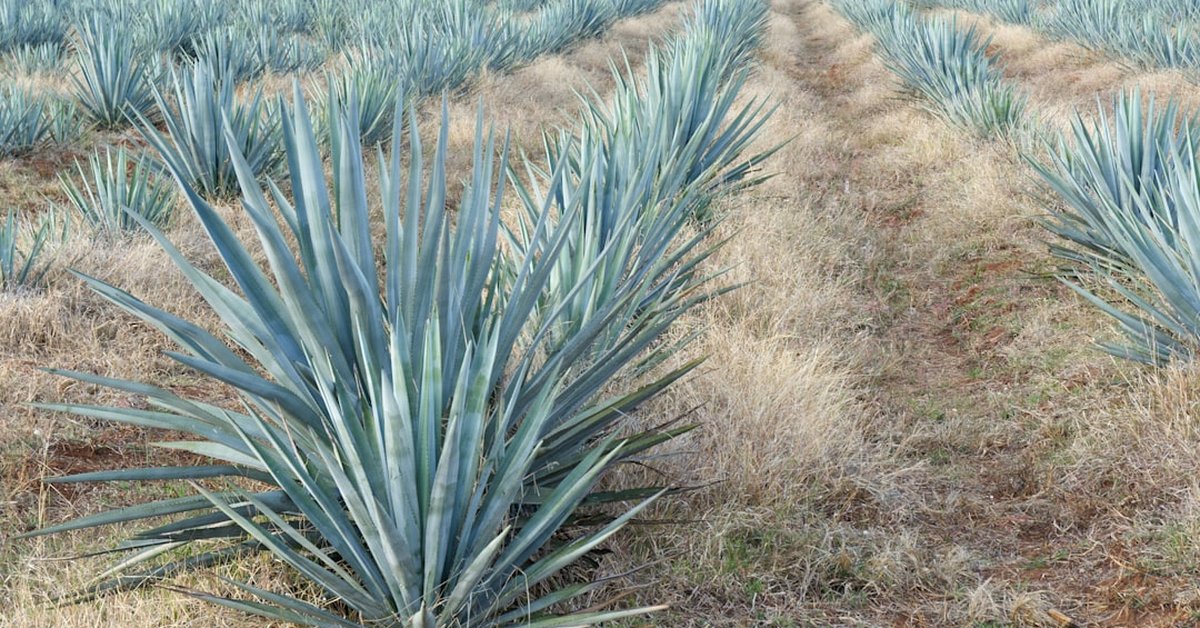
One area where the cartel’s reach extends beyond drugs is its involvement in legitimate business. CJNG has laundered money through real estate, mining, avocado farming, and even tequila production — Jalisco’s world-famous spirit. The cartel has been known to force farmers to sell land at gunpoint, then use the land to grow avocados or agave, which are exported legally to the U.S. and Europe. It’s a slick operation: the same trucks that ship avocados to California could be bringing back cash or weapons. This level of economic integration makes CJNG hard to dismantle — you can’t simply cut off their funding when it’s intertwined with the legitimate economy.
Interestingly, the cartel’s technological savvy also extends to unconventional areas. For instance, there have been reports of cartel members using encrypted messaging apps and even cryptocurrency for transactions. And while it sounds like science fiction, some analysts worry about the potential for cartels to use AI or drones for surveillance. It’s a reminder that criminal organizations are often early adopters of new tech — much like the NASA’s radical wing design that passed structural limits tests, cartels are pushing boundaries in their own dark way.
What’s Being Done — and What’s Not
The U.S. and Mexican governments have made CJNG a top priority. The DEA has a $10 million reward for El Mencho’s capture, and the U.S. Treasury has sanctioned dozens of CJNG front companies. In 2023, Mexican authorities arrested several high-ranking cartel members, including José de Jesús “El Kiki” Gutiérrez, a top logistics chief. But El Mencho remains at large, reportedly moving between remote ranches in Jalisco and Colima, protected by a network of lookalikes and loyal sicarios (hitmen).
Critics argue that the strategy is failing. “We’re playing whack-a-mole,” says Dr. Elena Vargas, a former DEA intelligence analyst now at Georgetown University. “Take out one leader, and two more pop up. The cartel is decentralized enough to survive leadership decapitation. We need to target the financial infrastructure — the money laundering, the chemical supply chains — but that’s slow and complicated.”
Mexico’s approach under President Andrés Manuel López Obrador has been controversial. His “hugs, not bullets” policy prioritizes social programs over military confrontation. But critics say it’s emboldened cartels. In 2023, Mexico deployed 10,000 troops to Jalisco after a series of attacks, but violence continues unabated. Meanwhile, the U.S. has increased pressure on China to crack down on fentanyl precursor chemical exports — a key choke point. Beijing has made some arrests, but the chemicals still flow.
For everyday Americans, the impact is direct. The fentanyl crisis has driven up healthcare costs, overwhelmed mental health services, and fueled a rise in homelessness. And it’s not just the U.S. — CJNG’s reach has expanded to Europe, Australia, and even West Africa. In 2022, Spanish police seized a record 1.5 tons of cocaine linked to CJNG. The cartel is now a global threat.
But there’s a deeper question: how do you fight an organization that is both a criminal enterprise and a social phenomenon? CJNG offers economic opportunity in regions where legal jobs are scarce. In rural Jalisco, joining the cartel can seem like the only path to a decent income. “We need to address the root causes — corruption, poverty, lack of education,” says Dr. Treviño. “As long as the cartel can pay better than any legitimate employer, they’ll never lack for recruits.”
This is a challenge that echoes across many industries. Consider the parallels with the Billion-Pound Farm Subsidy Scheme in the U.K., which faced backlash after a decade of development. Subsidies are meant to support farmers, but they can also create dependency. In Mexico, the lack of effective economic development in cartel strongholds creates a vacuum that organized crime fills. Without systemic change, the violence will continue.
So what’s next? For now, CJNG shows no signs of weakening. El Mencho remains one of the world’s most wanted men, and his organization continues to adapt. The cartel’s use of technology, its global supply chains, and its willingness to use extreme violence make it a formidable adversary. But there’s a glimmer of hope: increased international cooperation on money laundering, better tracking of precursor chemicals, and community-based prevention programs. The fight against CJNG won’t be won overnight — but understanding how it operates is the first step.
The next time you hear about a cartel shooting in Mexico, remember: it’s not just about drugs. It’s about power, money, and a system that has failed too many people. And until we address that system, the cartel will keep evolving.
Frequently Asked Questions
How did CJNG become so powerful so quickly?
CJNG rose to dominance by exploiting the power vacuum left after the decline of the Sinaloa Cartel. It used extreme violence, strategic alliances, and a focus on high-profit synthetic drugs like fentanyl. The cartel also invested heavily in military-grade weaponry and corruption of local officials, allowing it to expand rapidly across Mexico.
Is there any safe area in Mexico from cartel violence?
While cartel violence is widespread, it is concentrated in specific regions. Tourist destinations like Cancún, Playa del Carmen, and parts of Baja California Sur have lower cartel-related homicide rates, but violent incidents can still occur. The U.S. State Department issues travel advisories for each state, and travelers are advised to stick to well-touristed areas and avoid remote regions, especially at night.
Can the U.S. and Mexico realistically stop CJNG?
Stopping CJNG completely is unlikely in the short term, but reducing its power is possible. This requires a multi-pronged approach: targeting financial networks, disrupting chemical precursor supplies, strengthening law enforcement cooperation, and addressing root causes like poverty and corruption. Success will depend on sustained political will and international collaboration.