








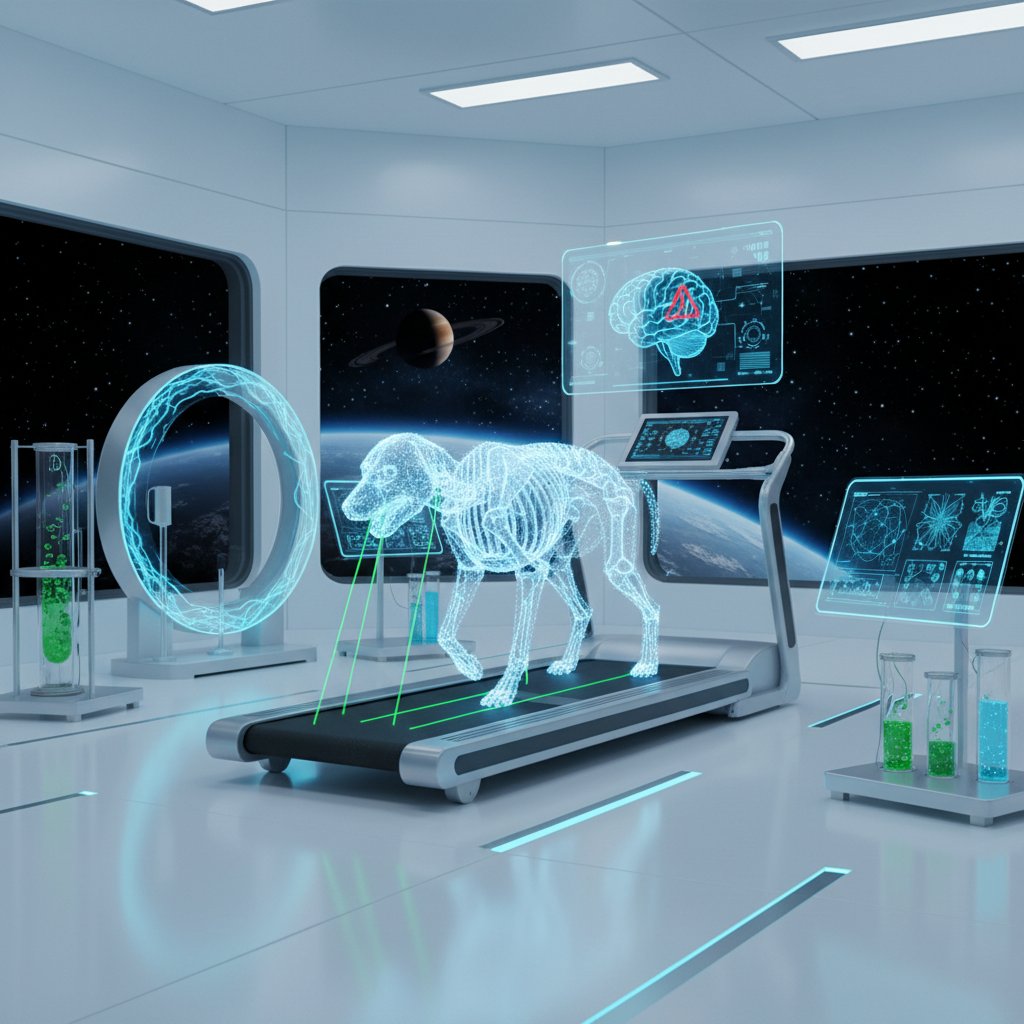
Nobody is talking about this, but the way your senior dog walks might be telling you something far more urgent than just ‘getting old.’ It’s not about gray muzzles or cloudy eyes. It’s about the front legs. Specifically, how short their strides are getting. And the science backing this up is surprisingly robust — for once, that word fits.
Researchers at the University of Montreal and the University of Guelph have been tracking a peculiar pattern in older dogs: their front-leg stride length shrinks as their cognitive function declines. Published in the journal Scientific Reports in 2024, the study followed 64 senior dogs over three years, measuring their gait on a pressure-sensitive walkway and testing their cognitive performance through standardized puzzles and tasks. The results were striking. Dogs whose cognitive scores dropped the most also showed the biggest decrease in front-leg stride length. Their hind legs? Those barely changed.
This isn’t just a curious observation about canine locomotion. It’s a potential early warning system for canine cognitive dysfunction — the dog equivalent of Alzheimer’s disease. And because dogs’ brains age in ways eerily similar to ours, this research might also offer clues about human dementia risks, especially as scientists continue to explore links between brain health and mobility. Think of it as your four-legged friend’s brain sending a signal through its legs, long before you notice it forgetting to sit for a treat.
The Forgotten Measure of Canine Brain Health
Chronological age has been the go-to metric for estimating cognitive decline in both humans and dogs. Your average vet will tell you that a 12-year-old Labrador is ‘old,’ and that ‘old dogs’ just slow down. But this study flips that assumption hard. Age was a poor predictor of stride length. The real predictor was cognitive performance. In other words, a spry 14-year-old dog might outpace a cognitively declining 8-year-old dog — and their stride lengths would reflect that.
The lead researcher, Dr. Alisa Carlson, a PhD candidate in veterinary sciences at the University of Montreal, explained: We found that dogs with higher cognitive testing scores had correspondingly longer front-limb strides. It wasn’t about how old they were. It was about how well their brain was functioning.
This mirrors what’s been documented in humans for over a decade — a reduction in step length, also known as ‘gait speed,’ is an established early marker for mild cognitive impairment and dementia in people. But in dogs, the measurement is simpler: you can just watch them walk.
Why only the front legs? The reason might lie in how the brain controls movement. The neural pathways that regulate the front limbs are more directly connected to the forebrain — the region most affected by Alzheimer’s-like pathology. The hind legs rely more on spinal cord circuits and less on cortical input. So as the forebrain deteriorates, the front-leg stride shortens first. It’s a neurological domino effect that’s hard to miss, if you know what to look for.
And here’s something that might hit close to home: The same sugar-coated nanoparticles researchers are using to target brain cancer could one day be adapted to deliver treatments to dogs with cognitive dysfunction. But for now, early detection is our best weapon.
What This Means for Your Senior Dog — Right Now
So what does this change for the average dog owner? Potentially a lot. Gait analysis is cheap, non-invasive, and something you can roughly assess at home. If you notice your dog’s front steps are getting shorter — almost like they’re taking smaller, more shuffling steps — it’s worth a conversation with your vet. The shift can be subtle. A 10% reduction in stride length over six months might not scream ’emergency,’ but it correlates with measurable cognitive decline.
The study used a specialized pressure-sensitive walkway to get precise measurements, but Carlson says owners can use simple methods: video your dog walking from the side, compare clips over months, or just watch for changes in how they move through doorways or navigate familiar routes. Combine that with known behavioral red flags — staring at walls, getting stuck in corners, forgetting housetraining — and you’ve got a more comprehensive picture of brain health.
Dr. Stephanie Fitzsimmons, a veterinary neurologist at Tufts University who was not involved in the study, is cautious but optimistic: We’ve been wanting a simple, early biomarker for canine cognitive dysfunction for years. Gait analysis might not be the whole answer, but it’s a tangible, observable piece of the puzzle that owners can actually act on. It gives us a window into the brain without an MRI.
Multiple treatments for the condition exist, from dietary supplements to environmental enrichment, and Dr. Fitzsimmons adds: Early intervention significantly improves quality of life.
And here’s where the human parallel gets interesting. Just as the Orion spacecraft’s gait-like navigation adjustments are being refined through tiny course corrections, our dogs’ front-leg strides could become routine health metrics. The technology to measure gait is getting smaller and cheaper. One day, a smart collar or a floor mat might track your dog’s stride length in real time and send you an alert. That’s not science fiction — that’s the next step.
More Than Man’s Best Friend: A Model for Human Dementia
Humans and dogs share more than couch space. We also share about 75% of the same disease-related genes, and canine cognitive dysfunction progresses in a remarkably human-like pattern: accumulation of beta-amyloid plaques, synaptic loss, and behavioral changes. That’s why dogs are becoming valuable models for human neurodegenerative disease research. And now, gait analysis adds another layer of translational value.
A 2023 review in Frontiers in Aging Neuroscience highlighted that step length reduction in humans is one of the earliest predictors of dementia — often preceding memory symptoms by two to five years. The new canine study suggests the same is true for dogs, potentially shortening that predictive window even further. If we can detect cognitive decline in dogs through a simple walk test, we might be able to refine similar protocols for humans, especially older adults who can’t afford expensive neuroimaging.
Dr. James Whitfield, a geriatric neurologist at the University of Edinburgh who specializes in gait disorders, says: What works in dogs often translates to humans because the basic neurobiology is conserved. This study is a solid foundation. The next step — pun intended — is to see if gait-based screening in dogs can predict response to treatment, and then mirror that in clinical trials for human patients.
Already, some geriatric clinics in Europe are incorporating gait speed as a routine vital sign. Maybe your dog’s front legs can help push that trend further.
But there’s an emotional edge to this too. For many of us, our dogs aren’t just data points. They’re family. Watching them slow down is heartbreaking. Having a tool that gives you a heads-up, a chance to act before the confusion sets in, changes the calculus. It turns helplessness into actionable care.
The Science Behind the Stride
Let’s get into the mechanics for a second. The researchers measured dogs walking at their natural pace over a five-foot walkway embedded with pressure sensors. They recorded stride length — the distance from the initial contact of one front paw to the next contact of the same paw. They also tracked cadence, swing time, and stance phase duration. Only front-leg stride length correlated with cognitive test performance. Cadence and other metrics? Not significant. That specificity matters. It suggests a targeted neural mechanism, not just general slowing.
Brain autopsies of some dogs that died during the study confirmed the link: those with shorter front-leg strides had higher densities of beta-amyloid plaques in their prefrontal cortex and hippocampus — classic markers of Alzheimer’s-like pathology. The connection isn’t just statistical; it’s biological. And because the study followed the dogs over three years, it captured the trajectory of decline in real time, not just a snapshot.
This is why the findings are so compelling. They aren’t based on a single measurement. They’re based on repeated, longitudinal data showing that the decline in stride length matches the decline in cognitive scores. That kind of evidence is hard to dismiss.
What’s next? The team is already planning a larger study with hundreds of dogs, including mixed breeds, to validate the findings and refine the thresholds. They’re also collaborating with engineers to develop a home-monitoring system using a simple camera and AI software that can automatically measure stride length from video. No special walkway required. Just your phone.
So look, if your senior dog’s front steps seem shorter than they used to be — maybe they’re shuffling a bit more on the kitchen floor — don’t just chalk it up to age. Pay attention. It might be their brain trying to tell you something. And in a world where we’re racing to catch diseases early, a footstep in the right direction is worth its weight in gold.
The Bigger Picture
This discovery lands at a moment when both veterinary medicine and human neurology are hungry for early biomarkers that don’t cost a fortune or require invasive procedures. Gait analysis fits that bill perfectly. For dogs, it could become as routine as a blood test. For humans, it already is in some circles. The crossover potential is enormous. Imagine a future where your annual physical includes a two-minute walk test, and your dog’s check-up does too. Both results flagged with a single algorithm that learns from millions of steps. We’re not there yet, but the path is getting clearer. And it starts with front legs — the unassuming messengers of brain health.