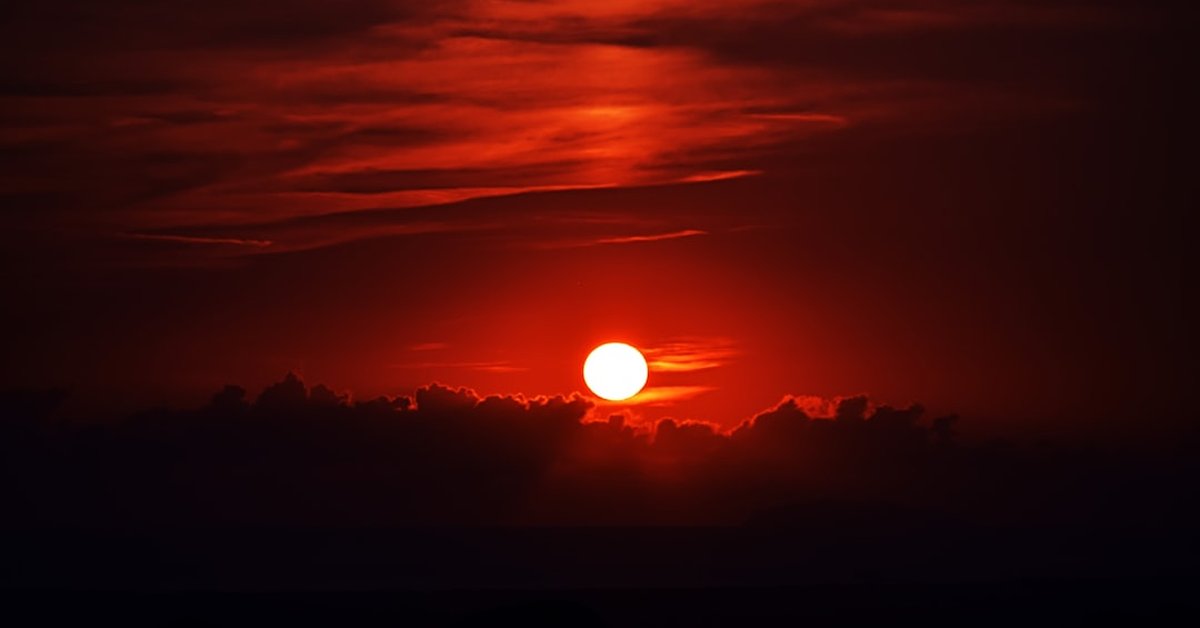
It wasn’t just the smell of campfire hanging over Chicago, Toronto, and Boston last July. It was the color of the threat. The skies didn’t turn grey or white; they took on a murky brown hue that felt different, heavier. According to atmospheric chemists, it was. The culprit was brown carbon—a chemically complex fraction of wildfire smoke that scientists are still decoding—and its dominance during the July 2026 transcontinental smoke event forced a hard reset on how we measure air quality in a warming world.
We’ve all gotten used to the AQI alerts. Code Red. Code Purple. The numbers are driven by PM2.5, fine particulate matter small enough to embed deep in your lungs. But the smoke that drifted from the boreal forests of Western Canada carried an unusually high load of brown carbon. This material absorbs sunlight very differently than the soot (black carbon) from a tailpipe or chimney.
It’s the difference between charcoal and burnt toast.
The chemistry is nastier, more reactive, and frankly, less studied.
The Chemistry of a Brown Sky
So what exactly is brown carbon? Aerosol scientists classify particles into two main camps: black carbon, pure graphitic soot that aggressively heats the atmosphere, and organic carbon, which typically scatters light. Brown carbon sits in the middle. It’s a complex mixture of organic molecules—tars, humic-like substances, polycyclic aromatic hydrocarbons—emitted specifically during the smoldering phase of a fire.
The July 2026 event was uniquely driven by deep-burning peat fires and heavy duff-layer combustion in the Northwest Territories and British Columbia. These fires don’t roar; they smolder. They consume organic soil built up over millennia. Meteorologically, the setup was a classic omega block pattern—a high-pressure system parked over the central US, drawing the smoke south and east, where it aged and cooked in the summer sun. As it aged, the brown carbon’s light-absorbing properties changed, making the sky visibly browner over cities like Detroit and New York.
This connects directly to broader climate patterns. The same high-pressure systems that were choking the UK with drought, as outlined in Britain’s Driest Spell in Decades, are the same synoptic-scale drivers that desiccate the boreal forest and create the conditions for deep, persistent fires. The atmospheric circulation that denies rain to one region often delivers smoke to another.
A Hazard That Doesn’t Show Up on the AQI
Here’s the kicker for anyone who checked their weather app that week: the standard Air Quality Index is a lousy tool for measuring brown carbon. It measures mass, not toxicity. A PM2.5 reading from a prescribed burn is chemically very different from one originating from a boreal peat fire. The latter is loaded with brown carbon, which carries a higher fraction of reactive oxygen species and carcinogenic PAHs.
Public health officials in Ontario and the US Northeast scrambled to update their messaging. The usual advice—close your windows, run your HVAC—was insufficient. Brown carbon particles are stickier and can penetrate standard furnace filters easily. And they hang around. Unlike fluffy grey smoke, brown carbon plumes persist for over a week, reacting with urban nitrogen oxides to create new pollutants right in your breathing zone.
For the average person, the practical takeaway is stark: if the sky looks brown rather than white or grey, the toxic load is likely higher. The EPA’s standard cloth mask advice offered negligible protection. N95 or KN95 respirators weren’t just recommended; for this type of event, they were arguably necessary for anyone spending time outdoors, especially children and the elderly.
The Week That Rewrote the Smoke Playbook
The scientific community scrambled. NASA’s TEMPO instrument, a geostationary air quality monitor, provided unprecedented data on the brown carbon’s lifecycle, tracking it from its source in the Northwest Territories across the border into the US. The data showed something unsettling: the brown carbon didn’t just drift passively. It altered the local meteorology. By absorbing sunlight in the mid-atmosphere, it warmed that layer and suppressed the vertical mixing that usually clears out pollution. The smoke effectively created its own lid, keeping the brown haze trapped near the surface.
Compare this to the infamous June 2023 smoke event in New York City. That was a massive, visible plume, but it was largely a younger, less chemically processed aerosol. The 2026 event was older, darker, and chemically ‘cooked.’ It had the characteristics of what climate modelers call ‘aged biomass burning aerosol.’ The public health impact was felt far from the fire lines. While brown carbon drifted over the rugged coast of Maine, where sandy shorelines are turning jagged due to sea level rise and erosion, the residents faced a double environmental whammy: a changing coastline below and a toxic, chemically active sky above.
The economic impact was equally sharp. Solar energy production across the Great Lakes region dropped by nearly 30% during the peak of the event. Brown carbon preferentially absorbs blue and ultraviolet light, which are precisely the wavelengths that standard silicon solar panels need most to generate electricity. The grid had to compensate with natural gas peaker plants, ironically increasing the very fossil fuel emissions that contribute to the warming driving the fires.
What the Brown Carbon Event Tells Us About the Future
The July 2026 episode wasn’t an anomaly. It was a preview. Climate models consistently project that the boreal forest, which holds more carbon than any other terrestrial ecosystem, will become hotter and drier, leading to deeper, more frequent peat and duff fires. These are the exact conditions that produce brown carbon.
If the fundamental chemistry of wildfire smoke is shifting from black carbon to brown carbon, our entire regulatory framework is outdated. The EPA and Environment Canada regulate PM2.5 as a bulk metric, but they don’t differentiate between a particle that scatters light and one that absorbs it and carries a toxic organic payload. The 2026 event makes a powerful case for real-time chemical speciation in air quality monitoring. Knowing the mass of particles in the air isn’t enough. We need to know what they’re made of.
The research community is pushing hard for this. Labs at NOAA and Environment and Climate Change Canada are developing low-cost optical sensors that can distinguish brown carbon from black carbon in real-time. The goal is to build a ‘Brown Carbon Index’ that could run alongside the classic AQI. Think of it like the UV Index: a specific warning for a specific threat.
But there’s a deeper existential question here. Peatlands and boreal forests are massive natural carbon sinks. When they burn, they release carbon stored for centuries in a matter of weeks. The brown carbon isn’t just a health hazard; it’s a powerful short-lived climate forcer. It warms the atmosphere directly, accelerating the drying of the landscape, which makes the next fire season worse. It’s a climate feedback loop operating on a timescale of weeks, not decades.
For the cities that choked under the brown sky last July, the memory is fading. But the signal from the atmosphere is clear. We have entered an era where the air itself carries a chemical fingerprint of our changing planet—a fingerprint that is browner, more toxic, and harder to ignore with every passing fire season.
Frequently Asked Questions
What is the difference between brown carbon and regular wildfire smoke?
Brown carbon is the organic component of smoke that absorbs sunlight, giving it a brown tint. It’s produced mainly by smoldering peat and duff fires, not hot flames. It contains higher levels of complex toxic compounds like PAHs compared to standard black carbon from flaming fires.
How can I protect myself from brown carbon specifically?
The most effective protection is a well-fitted N95 or KN95 respirator outdoors. Indoors, use a HEPA filter with a high CADR rating for smoke. If the sky has a distinct brown tint, assume the toxic load is higher than the standard AQI suggests, as these sub-micron particles can bypass basic furnace filters.
Does brown carbon affect climate change differently than black carbon?
Yes. Black carbon is a powerful sunlight absorber and a major climate warmer. Brown carbon is weaker but chemically complex. Critically, it absorbs ultraviolet and blue light, affecting ozone chemistry and solar panel efficiency. Its warming effect is significant but poorly represented in current climate models, creating a major uncertainty in projections.