








Look, I get it. You’re busy. The news cycle is a firehose, and somewhere between the political chaos and the latest AI hype, the night sky just… sits there. Quiet. Unbothered. But July 2026 is different. NASA’s skywatching tips for this month reveal a lineup so good it borders on unfair: a predawn planetary summit, a returning comet that might actually deliver, the Milky Way at its most photogenic, and Saturn’s rings showing off a tilt we haven’t seen in years. Nobody is talking about this. But they should be.
Here’s the thing about astronomy: it doesn’t need a headline to be spectacular. It just needs you to look up. And this July, the universe is practically begging for your attention.
The Predawn Planetary Meetup: Jupiter, Mars, Venus, and the Moon
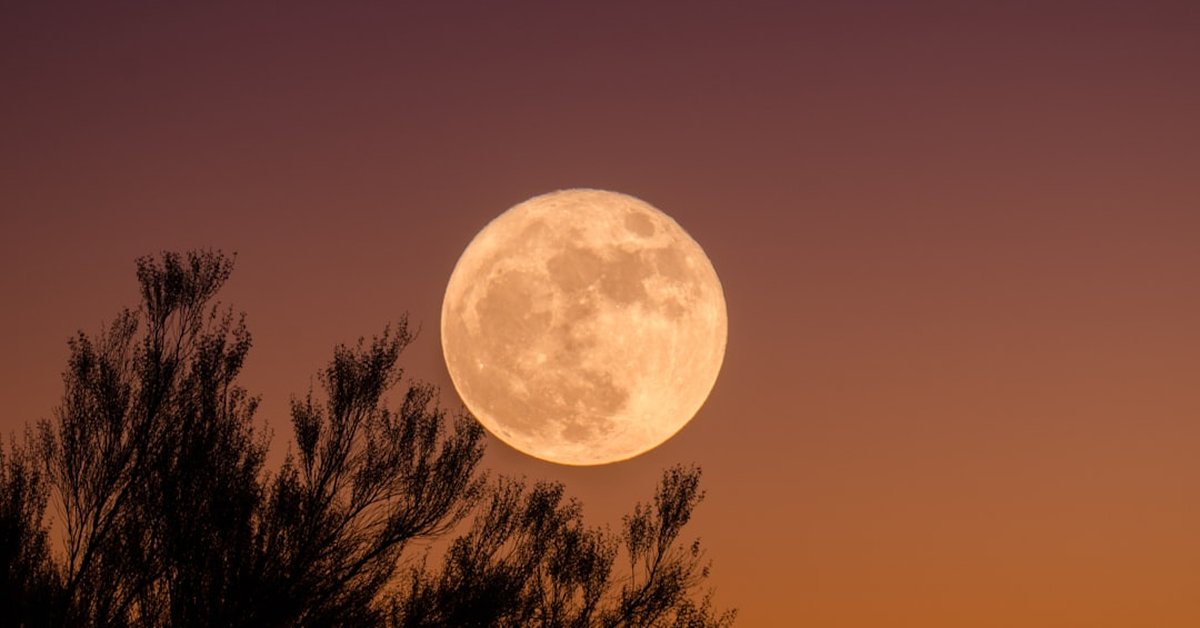
Let’s start with the showstopper. Around July 9–12, 2026, if you drag yourself out of bed about 45 minutes before sunrise—yes, that’s early, I know—you’ll catch a crescent Moon sliding past Jupiter, Mars, and Venus in the eastern sky. Venus will be the brightest, a diamond-hard point of light. Jupiter follows, steady and golden. Mars, smaller and reddish, hangs nearby like a shy cousin. And the Moon? It’ll be a thin crescent, just 2–3 days before new, glowing with Earthshine—that faint, ghostly light reflected off our own planet onto the lunar surface.
This isn’t just pretty. It’s a geometry lesson. These planets are aligning because their orbits are stacking up from our vantage point, something that happens every few years but never quite the same way twice. For the best view, find a spot with a clear eastern horizon—no hills, no trees, no city glow. A pair of binoculars will help you spot Jupiter’s four largest moons (Io, Europa, Ganymede, Callisto) if you steady your elbows on a car roof or a fence post. But honestly, the naked-eye view is enough to make you feel small—in a good way.
And if you miss the peak? Don’t worry. The Moon will keep shifting, and the planets will hang around through mid-July, just rearranged. By July 15, Mars and Jupiter will be creeping closer, and Venus will still be blazing. It’s a slow dance, and you’ve got a front-row seat.
A Comet Returns: Comet 13P/Olbers Pays a Visit
Now, about that comet. Comet 13P/Olbers—discovered in 1815 by the German astronomer Heinrich Olbers (yes, the same guy who pointed out why the night sky is dark, a paradox that still rattles cosmologists)—is making its way back into the inner solar system. It’s a periodic comet with an orbital period of about 69 years. So, if you’re under 70, this is your first—and possibly only—chance to see it.
Olbers is expected to peak in brightness around late June to mid-July 2026. Predictions put it at magnitude 6 to 7, which means it’ll be dim but visible through binoculars or a small telescope. Don’t expect a Hale-Bopp-style show; this is a subtle visitor. But comets are notoriously fickle. They can surprise you. Or they can fizzle. That’s part of the fun.
To find it, look low in the northwestern sky after sunset, near the constellation Ursa Major—the Big Dipper. By mid-July, it’ll be moving through the stars of Leo. Check NASA’s skywatching page for updated charts. And here’s a pro tip: use averted vision—look slightly to the side of where you expect the comet—to see its fuzzy glow more clearly. Our peripheral vision is more sensitive to faint light. Weird, but true.
Why do comets matter? They’re time capsules. Frozen leftovers from the solar system’s formation 4.6 billion years ago. Every time one swings by, it’s like getting a postcard from the beginning of everything. And Olbers, with its 69-year circuit, is a reminder that we’re just passing through, too.
Prime Time for the Milky Way: No Telescope Required
Here’s the low-hanging fruit of July skywatching: the Milky Way. From a dark site—and I mean truly dark, away from city lights by at least 30 miles—the core of our galaxy rises in the south around midnight. It looks like a river of powdered milk, a band of milky white light that spans the sky. But it’s not milk. It’s the combined light of hundreds of billions of stars, so far away they blur together into a haze.
July and August are the best months to see it in the Northern Hemisphere, because the galactic center is highest at night. And 2026 is a good year for it: the Moon is new around July 14, meaning no lunar glow to wash out the faint starlight. So plan a night that weekend—July 11–15, ideally—and drive to a state park, a national forest, or even a friend’s farm. Give your eyes 20 minutes to adapt. No phone screens. No car headlights. Just you and 100,000 light-years of galaxy.
If you can’t get to a dark site, don’t despair. Even from the suburbs, you’ll see the brighter patches of the Milky Way above the southern horizon. And if you want to know what you’re looking at, download a stargazing app (I like Stellarium, which is free) or just use a simple star chart. The constellation Sagittarius, which looks like a teapot, marks the direction of the galactic center. The “steam” from the teapot’s spout is the Milky Way’s core. It’s an old astronomer’s trick, but it works every time.
Saturn’s Rings at a New Angle: The Tilt Is Changing
Finally, Saturn. The ringed planet has been a bit of a letdown lately—its rings have been tilting edge-on to Earth, making them nearly invisible. But 2026 is different. The rings are opening up again, reaching an angle of about 10 degrees by July. That’s enough to see their structure clearly through a small telescope. It’s not the postcard-perfect 27-degree tilt we’ll get in 2032, but it’s a noticeable improvement over the last couple of years.
To spot Saturn, look in the eastern sky after midnight, rising higher as dawn approaches. It’s near the border of Aquarius and Pisces. Through even a modest 60mm telescope, you’ll see the rings as two thin ellipses on either side of the planet. And if the seeing is good—steady air, no turbulence—you might catch the Cassini Division, a dark gap between the A and B rings. It was discovered in 1675 by the astronomer Giovanni Cassini, and seeing it yourself is like shaking hands with history.
Saturn’s ring tilt changes because the planet orbits the Sun at a 26.7-degree axial tilt, similar to Earth’s 23.5 degrees. As it moves along its 29.5-year orbit, we see the rings from different perspectives. In 2025, the rings were nearly edge-on—a so-called “ring plane crossing.” Now they’re opening, and they’ll continue to do so through the late 2020s. So if you’ve been disappointed by Saturn in recent years, give it another shot. It’s back.
And here’s a fun connection: NASA’s new robotic Moon missions, which are paving the way for a 2029 lunar base, are also honing techniques for deep-space navigation—techniques that rely on the same orbital mechanics that make Saturn’s tilt predictable. The same physics that lets us know when a comet will return or when planets will line up is what guides spacecraft to the Moon and beyond. It’s all connected. You can read more about that in our piece on NASA’s new robotic Moon missions.
So there you have it. July 2026 isn’t just another summer month. It’s a window into the solar system’s choreography—planets dancing, comets returning, a galaxy rising, and a planet’s rings tilting into view. You don’t need a PhD to appreciate it. You just need to step outside, look up, and let yourself be amazed.
What’s next? Well, the comet Olbers will fade by August, but Saturn will keep tilting. The Milky Way will stay visible through September. And come October, Jupiter will be at opposition—bright and big—so the show never really ends. Mark your calendar. Set your alarm. And don’t let the noise of the day drown out the quiet brilliance of the night.
Frequently Asked Questions
Do I need a telescope to see the July 2026 sky events?
Not for most of them. The planetary meetup on July 9–12 is visible with the naked eye, though binoculars help. The Milky Way is best seen without any equipment. The comet Olbers and Saturn’s rings do require binoculars or a small telescope—nothing fancy, just a basic setup. A pair of 7×50 binoculars will work for the comet, and a 60mm telescope will show Saturn’s rings.
When is the best time to see the Milky Way in July 2026?
The best window is around the new Moon on July 14. From a dark site, the galactic core is visible from about midnight to dawn, but it’s highest around 1–2 a.m. local time. Avoid nights with a bright Moon—any time after first quarter will wash out the fainter parts. The weekend of July 11–12 is ideal.
Will Comet 13P/Olbers be bright enough to see with the naked eye?
Probably not. Current predictions put it at magnitude 6–7, which is at the edge of naked-eye visibility under perfect dark skies. In practice, you’ll need binoculars or a small telescope. But comets can brighten unpredictably, so keep an eye on NASA’s updates. If it flares up, it could become a faint naked-eye object—worth checking, at least.