







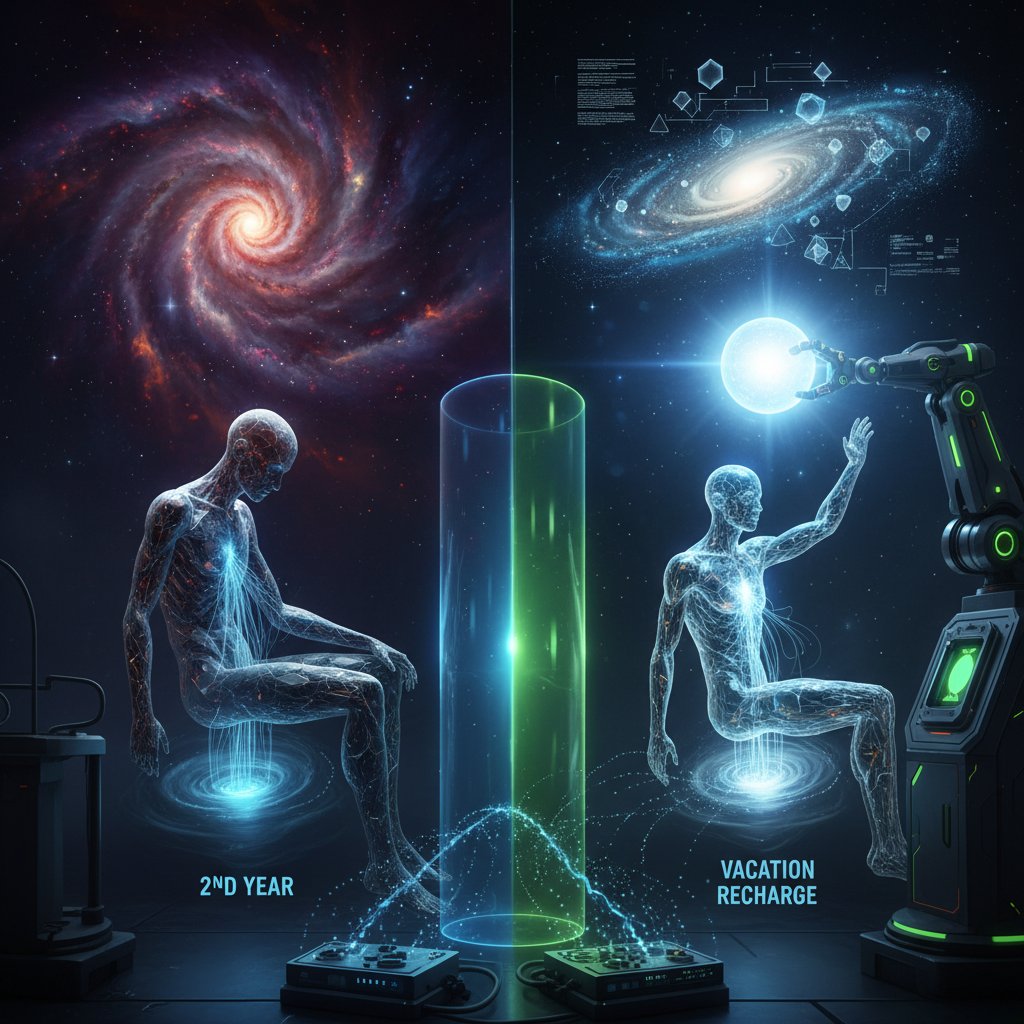
The final exam is turned face-down on the desk. You’ve handed in the last paper, closed the laptop, and now the silence is almost deafening. Your second year of college is over. But instead of relief, there’s a hollow ache—a mental fog that makes even choosing a TV show feel exhausting. If that sounds familiar, you’re not alone. And more importantly, science has a roadmap to help you claw your way back.
Burnout among college students has reached alarming levels. A 2023 survey by the American College Health Association found that over 60% of undergraduates reported feeling overwhelming anxiety during the past year, and nearly 40% said stress had negatively impacted their academic performance. Second year is particularly brutal—the novelty has worn off, the coursework deepens, and social pressures intensify. Your brain is crying uncle.
But here’s the good news: summer break isn’t just a pause; it’s a biological reset button—if you know how to use it. Let’s look at what’s happening inside your skull and how to turn things around.
Why Your Brain Feels Like Mush
Chronic stress triggers a cascade of physiological responses. The hypothalamic-pituitary-adrenal (HPA) axis revs up, flooding your system with cortisol. In small doses, cortisol helps you focus. But months of elevated levels literally shrink the prefrontal cortex—the part of your brain responsible for decision-making, impulse control, and emotional regulation. Meanwhile, the amygdala, your fear center, becomes hyperactive.
“Think of it like overusing a muscle,” explains Dr. Sarah Jennings, a neuroscientist at the University of California, Berkeley, who studies stress and learning. “When you’re constantly under pressure, your brain’s resources are diverted from higher-order thinking to survival mode. The result is cognitive fatigue, irritability, and a feeling of being ‘drained of life,’ as your readers put it.”
This isn’t just a mental state—it’s measurable. Brain scans of chronically stressed students show reduced gray matter volume in the hippocampus and prefrontal cortex. The good news: unlike a broken bone, this tissue can regrow. With the right conditions, neuroplasticity can rebuild what stress tore down.
Step One: Sleep Is Non-Negotiable
During the academic year, sleep is often the first sacrifice. The average college student gets about 6.5 hours per night, far below the recommended 7–9 for young adults. That deficit accumulates into “sleep debt,” impairing memory consolidation, emotional resilience, and even immune function.
“Sleep is when the brain cleans house,” says Dr. Marcus Rivera, a clinical psychologist at the University of Michigan’s Center for Student Mental Health. “During deep sleep, the glymphatic system flushes out metabolic waste, including beta-amyloid, the protein associated with Alzheimer’s. Without enough sleep, that gunk builds up, and your thinking becomes sluggish.”
This summer, prioritize a consistent sleep schedule. Aim for at least 8 hours a night. If you’ve been pulling all-nighters, it may take a week or two to reset your circadian rhythm. Blackout curtains, no screens an hour before bed, and a cool room (around 65°F) can help signal your brain that it’s time to shut down.
Step Two: Move Your Body, Reset Your Mind
Exercise isn’t just about fitness—it’s a direct antidote to the neurochemical effects of stress. Aerobic activity boosts brain-derived neurotrophic factor (BDNF), a protein that supports neuron growth and protects against stress-induced atrophy. A single 30-minute run can elevate mood for hours by releasing endorphins and reducing cortisol.
You don’t need to become a gym rat. Even moderate physical activity—brisk walking, swimming, yoga—has been shown to reduce anxiety and improve cognitive function. A 2022 meta-analysis in JAMA Psychiatry found that exercise was as effective as medication for mild to moderate depression. The key is consistency: aim for 150 minutes per week, broken into manageable sessions.
Dr. Rivera adds a practical note: “Don’t force a routine you hate. The best workout is the one you’ll actually do. Try different activities—hiking, dancing, cycling—until something clicks. Joyful movement is more sustainable than punishment.”
Step Three: Reclaim Your Attention
One reason college drains you is the constant demand for multitasking: lectures, emails, social media, deadlines. Your brain wasn’t built for that. The prefrontal cortex gets exhausted from switching contexts, a phenomenon called “attention residue.” Each unfinished task leaves a mental footprint that interferes with the next one.
Summer is the perfect time to practice deep work. This means carving out blocks of time—even just 45 minutes—where you focus on a single activity without distraction. Read a physical book. Learn to cook a complex recipe. Write in a journal. No phone, no notifications.
Neuroscientist Dr. Amishi Jha at the University of Miami has shown that mindfulness training can improve attention and working memory. Her research on military personnel and students found that just 12 minutes of meditation per day for two weeks significantly reduced mind-wandering and improved cognitive performance. Apps like Headspace or Insight Timer can guide you.
Step Four: Connect Authentically
Loneliness is a silent epidemic on campuses. Many students feel isolated even while surrounded by peers. Social connection is a biological need—lack of it increases cortisol and inflammation, just like chronic stress does.
But quality matters more than quantity. A few deep friendships are more protective than a hundred surface-level acquaintances. This summer, prioritize time with people who make you feel seen and understood. That could be a phone call with a childhood friend, a weekly dinner with family, or joining a local club around a hobby.
“Your brain has a dedicated neural network for social processing,” notes Dr. Jennings. “When you engage in positive social interactions, it releases oxytocin and dopamine, which counteract the stress response. It’s a biological imperative, not just a feel-good activity.”
What This Means for You
Your exhaustion isn’t a sign of weakness—it’s a sign that your mind and body have been working overtime. Recovery is not about doing nothing; it’s about doing the right things. The next few months are a window of neuroplasticity. Use them to rebuild the mental infrastructure that stress eroded.
Start small. Pick one habit from this list and commit to it for the first week of break. Then layer on another. By August, you may find that the fog has lifted, and you’re not just rested—you’re genuinely stronger.
The second year may have drained you, but the third year can be different. Your brain is waiting for you to give it the conditions it needs to heal. Summer is your chance. Take it.