







“This is a pivotal moment for commercial spaceflight. The grounding of Starship isn’t a setback—it’s a necessary pause to ensure that when it flies again, it does so safely and reliably,” says Dr. Emily Hartwell, former NASA propulsion engineer and current aerospace analyst at the Secure World Foundation.
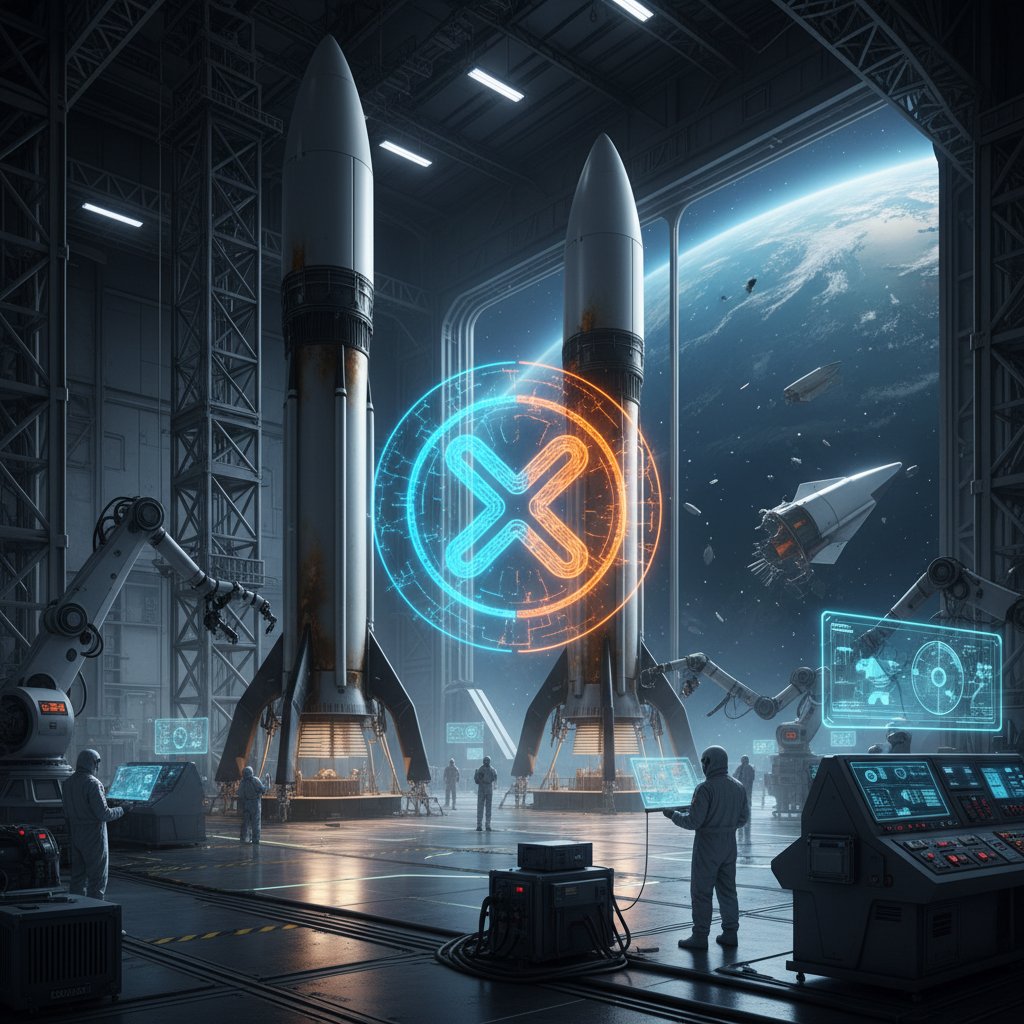
SpaceX’s massive Starship rocket—the largest ever built—has been grounded by the Federal Aviation Administration (FAA) pending a formal mishap investigation following its most recent test flight on March 14, 2025. The flight, which launched from SpaceX’s Starbase facility in Boca Chica, Texas, was the third integrated test of the full Starship stack, comprising the Super Heavy booster and the Starship upper stage.
While the launch itself was a spectacle of raw power—with 33 Raptor engines igniting in a synchronized roar—the mission ended prematurely. Approximately eight minutes after liftoff, the Super Heavy booster attempted a controlled landing burn over the Gulf of Mexico but failed to reignite all necessary engines, resulting in a hard impact and destruction. Starship itself continued into space, reaching an altitude of roughly 150 kilometers, but telemetry data indicated an anomaly during its planned reentry attempt, leading to loss of signal minutes later.
The FAA immediately initiated a formal investigation, a standard procedure for any launch mishap that involves property damage or deviation from the approved flight plan. SpaceX must now work with the agency to identify root causes, implement corrective actions, and receive FAA approval before any future Starship launches can occur. This grounding effectively halts the company’s ambitious 2025 launch manifest, which included at least four more test flights and potential cargo demonstration missions for NASA’s Artemis program.
This isn’t the first time Starship has faced such scrutiny. After its debut integrated test in April 2023, the rocket tore apart its concrete launch pad and created a massive debris field, leading to a six-month grounding. The second test in November 2023 saw the stage separation succeed, but both booster and ship exploded before planned landings. Each incident has prompted detailed investigations, and each has pushed SpaceX to iterate rapidly—but each also underscores the immense challenges of pioneering fully reusable super-heavy lift launch vehicles.
What Went Wrong on Flight 3
Preliminary data, shared by SpaceX during a brief update, points to two separate but possibly related issues. The first involved the Super Heavy booster’s landing burn. All 33 engines performed well during ascent, but during the boostback and landing sequence, several engines failed to relight due to what SpaceX called a “filter blockage” in the liquid oxygen feed system. The remaining engines attempted to compensate, but the thrust was insufficient to slow the booster to a soft water landing.
“The blockage issue is something that can be addressed with redesigned filters and better debris mitigation in the propellant loading process,” explains Dr. Aris Thorne, a propulsion specialist at the University of Colorado Boulder. “But the bigger concern is the anomaly during Starship’s reentry. Telemetry showed unexpected heating on several control surfaces. If those are structural weaknesses, it could require more extensive redesign.”
Indeed, Starship’s upper stage carried a live stream during its fiery reentry, showing a buildup of orange plasma that eventually obscured the camera. Sensors indicated higher-than-expected temperatures on the leeward side of the flaps, and attitude control thrusters struggled to maintain orientation. Contact was lost shortly after, and the vehicle likely broke up over the Indian Ocean. SpaceX had not planned a recovery for this test; the goal was to demonstrate controlled descent and ocean splashdown. That goal was not achieved.
Why This Grounding Matters—and What’s at Stake
The grounding of Starship is not just a regulatory hurdle; it has cascading implications for NASA, the broader space industry, and global ambitions for deep space exploration. NASA has selected Starship as the Human Landing System (HLS) for the Artemis III mission, currently scheduled for 2026, which aims to return astronauts to the lunar surface. Each delay in Starship’s test campaign tightens that already aggressive timeline.
Moreover, SpaceX’s business model depends on rapid reuse to drive down costs. The company has publicly stated it hopes to fly Starship dozens of times per year at scale. But regulators—and the public—demand safety. The FAA’s investigation will likely take several weeks to months, depending on the complexity of the issues. During the first grounding, it took roughly six months. This time, with more data and a slightly more mature vehicle, some analysts predict a faster turnaround—perhaps two to three months—if the fixes are straightforward.
“The pace of innovation at SpaceX is breathtaking, but it sometimes clashes with the slower, methodical processes of government oversight,” says Dr. Hartwell. “That tension is actually healthy. It forces safety to keep pace with ambition. The FAA isn’t trying to stop SpaceX—it’s ensuring that the path forward is built on solid evidence.”
Background: Starship’s Rocky Road to Orbit
SpaceX’s Starship program has always been a study in ambition versus engineering reality. Announced in 2005 and initially developed as a Mars colonization vehicle, Starship evolved through numerous design iterations—from carbon fiber to stainless steel, from methane engines with different bell configurations to the current Raptor 2 design. The vehicle stands 121 meters tall, and its Super Heavy booster generates 74 meganewtons of thrust, roughly twice that of the Saturn V.
Testing began in earnest in 2020 with low-altitude hop tests of prototype Starships, many of which exploded on landing. The high-altitude test flights in 2021 saw successes and failures alike, culminating in the first successful landing of a Starship prototype (SN15) in May of that year. But the integrated system, combining booster and ship, proved far more complex. The first launch in April 2023 ended with a controlled destruction after the vehicle failed to separate. The second launch in November achieved stage separation but ran into issues with both stages during descent.
Each failure has provided invaluable data. SpaceX engineers have famously said that “the only way to fail is to stop trying.” But with each mishap, the regulatory and public scrutiny grows. The FAA’s investigation into the March 2025 flight will examine not just the rocket but the launch site’s environmental impact and flight safety procedures. SpaceX has been working to improve its launch pad infrastructure, including a water deluge system and flame deflector, after the first launch caused significant damage and debris scatter.
Looking Ahead: The Path to Reflight
SpaceX has already begun internal corrective actions. In a statement, the company said it is implementing “immediate upgrades” to the oxygen filter system and has ordered additional inspections of the Starship heat shield and flap hinges. The company has also scheduled static fire tests of a repaired Super Heavy booster at its McGregor, Texas, facility later this month to validate the filter fix. The FAA, however, will require a full corrective action plan before granting a renewed launch license.
What does this mean for the rest of us? It means that the next chapter of human spaceflight—returning to the Moon, sending humans to Mars, and deploying large space telescopes—depends on getting this rocket right. Starship is not just SpaceX’s pet project; it is a linchpin for NASA’s Artemis architecture, for plans to build a permanent lunar outpost, and for the nascent space economy involving in-space manufacturing and large-scale satellite constellations for global internet coverage.
“We are living through the birth of a new era in space transportation,” concludes Dr. Thorne. “The same way early airlines had crashes and groundings, we’re seeing the growing pains of a fundamentally new capability. Starship will fly again, and when it does, it will carry our collective dreams a little higher.”
For now, the investigation continues. SpaceX engineers are sifting through terabytes of telemetry and video data, the FAA is reviewing procedures, and the world watches. The next launch won’t happen until all parties are confident that the vehicle is safer than before. And when that day comes, it will be more than just a test flight—it will be a testament to the resilience of innovation under the unforgiving light of reality.