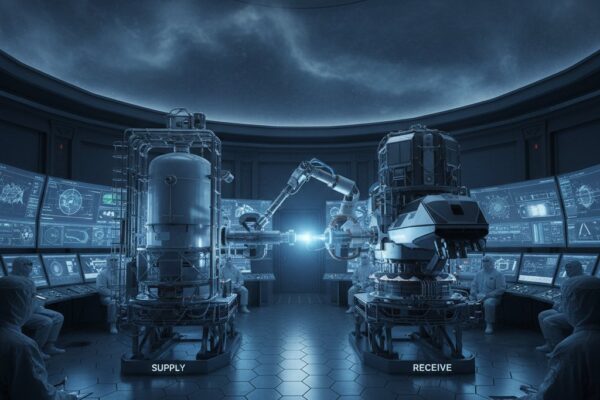
NASA’s Orbital Gas Station: New Refueling Tech Could Transform Deep Space Missions
NASA tests a new orbital refueling nozzle that could let spacecraft fill up in space, cutting launch costs and enabling longer missions to the Moon, Mars, and beyond.

NASA tests a new orbital refueling nozzle that could let spacecraft fill up in space, cutting launch costs and enabling longer missions to the Moon, Mars, and beyond.

NASA’s X-59 QueSST is set to fly faster than sound for the first time, aiming to turn sonic booms into quiet thumps and revolutionize supersonic travel.

UK issues amber heat health alerts as temperatures reach 36°C in southern England. Learn how this heatwave compares to 1976 and what you need to do to stay safe.
Hubble spots spiral galaxy NGC 4654 with one bright arm and one dim arm. Ram pressure stripping and gravitational encounters explain the lopsidedness — and it may preview the Milky Way’s future.

By 2026, human-generated data for AI training may run out. Explore model collapse, synthetic data risks, and the future of machine learning in a post-human-data world.
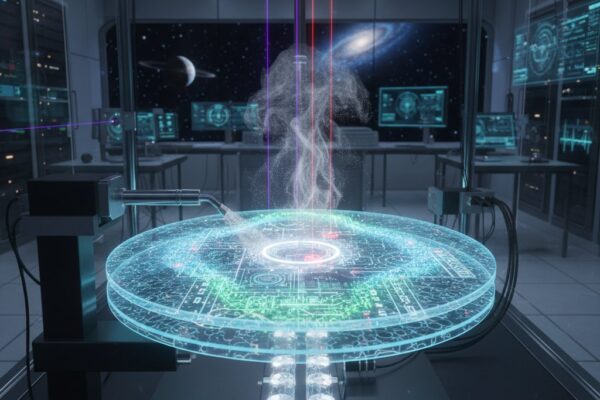
A new optical device uses humidity to hide and reveal data, offering a novel, secure storage method that responds to environmental moisture. Learn how it works.

An 11-year-old Ontario boy died from rabies after a bat touched his face while sleeping. No visible bite marks. Experts urge immediate medical attention for any bat exposure.
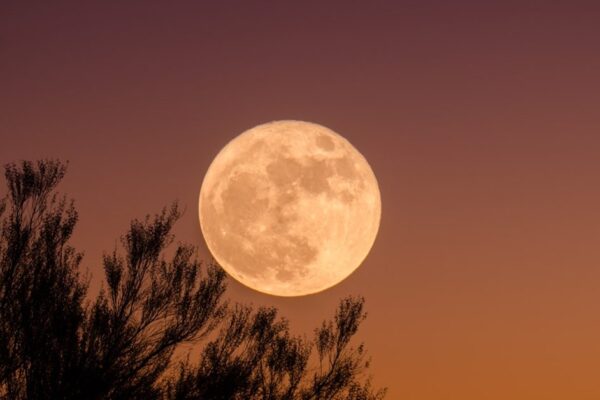
Discover how the August Buck Moon and Belt of Venus reveal Earth’s shadow. Dr. Olivia Grant explains the science behind this stunning celestial duo.
SpudCell, a lab-made cell-like structure that grows, divides, and competes, is challenging the definition of life. Scientists react to its implications for synthetic biology, ethics, and future technologies.

The NIH’s All of Us program launches the world’s largest integrated health database, pairing 500,000 genomes with clinical records and wearable data to revolutionize precision medicine.
NASA’s Hubble captures a stunning crimson nebula NGC 1333, sparkling with white and blue stars. A window into star formation and our cosmic origins.
Dr. Huang Dawei’s new study reveals alarming rates of coral bleaching and reef decline in the Coral Triangle, with economic and ecological impacts for millions.