








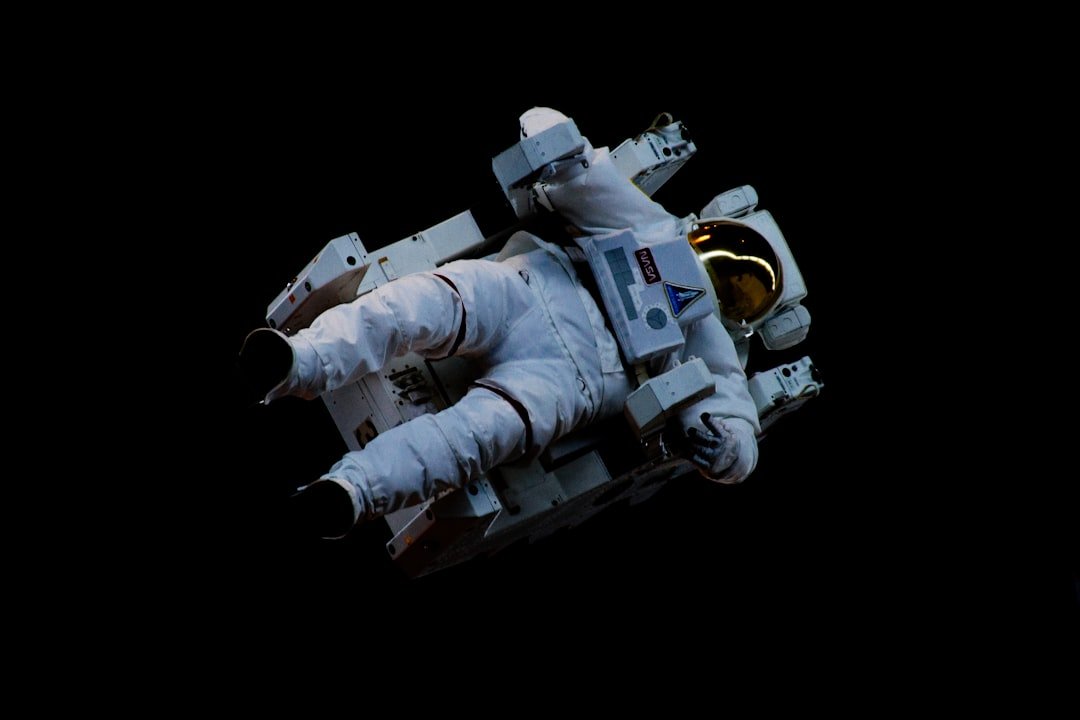
“Getting suited up is like putting on a miniature spacecraft,” says NASA astronaut Chris Williams, standing inside the International Space Station’s Quest airlock on June 23, 2026. Beside him, European Space Agency flight engineer Sophie Adenot methodically checks each seal and connector. It’s a ritual that combines precision, teamwork, and a healthy dose of courage.
The two astronauts spent the afternoon testing Williams’ spacesuit — officially an Extravehicular Mobility Unit (EMU) — for comfort, mobility, and the critical communications and life support systems that will keep him alive during his upcoming spacewalk. “When you’re helping a crewmate suit up, you’re not just zipping up a jacket — you’re verifying every seal, every connection, because their life depends on it,” Adenot explained to ground controllers via video link.
This preparation marks a key milestone for Expedition 74, which has been living and working aboard the International Space Station since April. Williams’ spacewalk, scheduled for early July, will involve replacing a failed data relay unit on the station’s truss structure — a job that could restore full redundancy to the station’s command and control systems.
Why the Suit-Up Matters
A spacesuit is not just clothing — it’s a one-person spaceship. The EMU provides oxygen, removes carbon dioxide, regulates temperature, and shields its wearer from micrometeoroids and extreme temperature swings. Outfitting an astronaut takes hours, and the Quest airlock serves as the final dressing room before the vacuum of space.
On June 23, Williams first donned the liquid cooling and ventilation garment — a snug underlayer threaded with plastic tubing that carries chilled water to prevent overheating. Then came the hard upper torso, the arms, the gloves, and finally the helmet. Adenot watched every step, using a pressure gauge to ensure the suit’s seals held tight.
Dr. Kelli Johnson, a NASA spacesuit engineer based at Johnson Space Center, explained the stakes: “The suit is a personal spacecraft. Every test — from the gloves to the helmet — ensures the astronaut can work safely in the vacuum of space. A single faulty seal can mean loss of pressure, and that’s not something you fix easily 250 miles above Earth.”
Williams himself emphasized the tactile details. “The most important part of the fitting is making sure I can move my fingers. If you can’t feel the tools, you can’t do the job,” he said, flexing his gloved hands inside the airlock. The gloves are notoriously stiff — pressurization inflates them like balloons, reducing dexterity. Astronauts often compare the sensation to trying to perform delicate surgery while wearing oven mitts.
From Test to Reality
Williams’ path to this moment began years ago. Selected as a NASA astronaut in 2021, he completed two years of basic training, then specialized in spacewalk procedures at the Neutral Buoyancy Laboratory in Houston. That underwater pool mimics zero gravity, but it’s not the same as the real thing. “In the pool, you feel the water’s resistance. In space, there’s nothing — you float, and every push sends you drifting,” he noted.
The upcoming spacewalk will be Williams’ first. For Adenot, a former helicopter test pilot, it’s her second time assisting a crewmate in the airlock. The camaraderie is essential. “We trust each other completely. When Chris steps out that hatch, I’ll be monitoring his suit telemetry from inside. It’s not just his spacewalk — it’s ours,” she said.
Spacewalks have been part of human spaceflight since 1965. The first American to step outside, Ed White, called it “the saddest moment of my life” when he had to come back in. Today, more than 250 spacewalks have been conducted from the ISS alone, totaling thousands of hours of extravehicular activity. They’ve built the station, repaired the Hubble Space Telescope, and tested technologies for future Moon missions.
But they’re not routine. “Spacewalking is the most physically and mentally demanding thing an astronaut can do,” says retired NASA astronaut Mike Massimino, who performed two Hubble servicing missions. “You’re breathing pure oxygen, your heart rate spikes, and the view outside can be breathtaking — but you can’t let it distract you from the task.”
It’s a reminder that space never stops surprising us. Just last week, astronomers discovered two planets lighter than cotton candy, a find that challenges our understanding of planetary formation. Williams chuckled when told about it. “Maybe one day we’ll walk on those fluffy worlds. For now, I’m focused on walking on this station’s truss.”
What Comes Next
After final checks, Williams and Adenot will repeat the suit-up procedure one more time on the morning of the spacewalk. A crew of five will be inside the station: two will suit up, three will support from the control deck. NASA will broadcast the spacewalk live, with commentary from mission control. For Williams, the moment of truth comes when he opens the airlock hatch and sees Earth rolling beneath him.
“I’ve been dreaming of that view since I was a kid,” he said. “When I get out there, I know I’ll have a few seconds to just take it all in. Then, it’s back to work.”
That work — data relay replacement — is critical for the station’s research capabilities. Without redundant communications, some experiments have been delayed. Williams’ spacewalk will restore full capacity, enabling studies from cancer drug crystallization to Earth observation. In other words, his suit-up session in the Quest airlock isn’t just about one astronaut’s safety — it’s about the entire scientific mission of the ISS.
As the airlock door sealed after the test, Adenot gave Williams a thumbs-up through the visor. “Ready when you are,” she said. He grinned. “Let’s go fix something.”
Looking ahead, NASA and ESA are already planning for Artemis moonwalks, where astronauts will wear next-generation suits with improved mobility. Williams’ experience on ISS will help shape those designs. The lessons from a single fitting in a metal room 400 kilometers above Earth ripple outward — to the Moon, to Mars, and beyond.
Frequently Asked Questions
How long does a spacesuit fitting take?
A full fit test inside the Quest airlock typically takes four to six hours. That includes donning the suit, pressurizing it, checking each subsystem (oxygen, cooling, communications), and moving through a series of mobility exercises. The astronaut also performs a “suit integrity test” where the suit is isolated and checked for leaks.
Why do astronauts need help putting on the spacesuit?
The spacesuit is bulky and complex. The hard upper torso is a rigid shell that must be carefully aligned over the astronaut’s body, and many connections (hoses, cables, connectors) are behind the back or on the sides — impossible to reach alone. A helper, often a fellow astronaut, verifies every seal and ensures nothing is pinched or twisted before the hatch opens.
What happens if the suit malfunctions during a spacewalk?
The suit has redundant systems — a backup oxygen tank, a secondary communications loop, and emergency power. If any critical system fails, the astronaut can abort the spacewalk and return to the airlock within minutes. Mission control and the crew inside the station constantly monitor suit telemetry and can guide the astronaut through troubleshooting steps.