







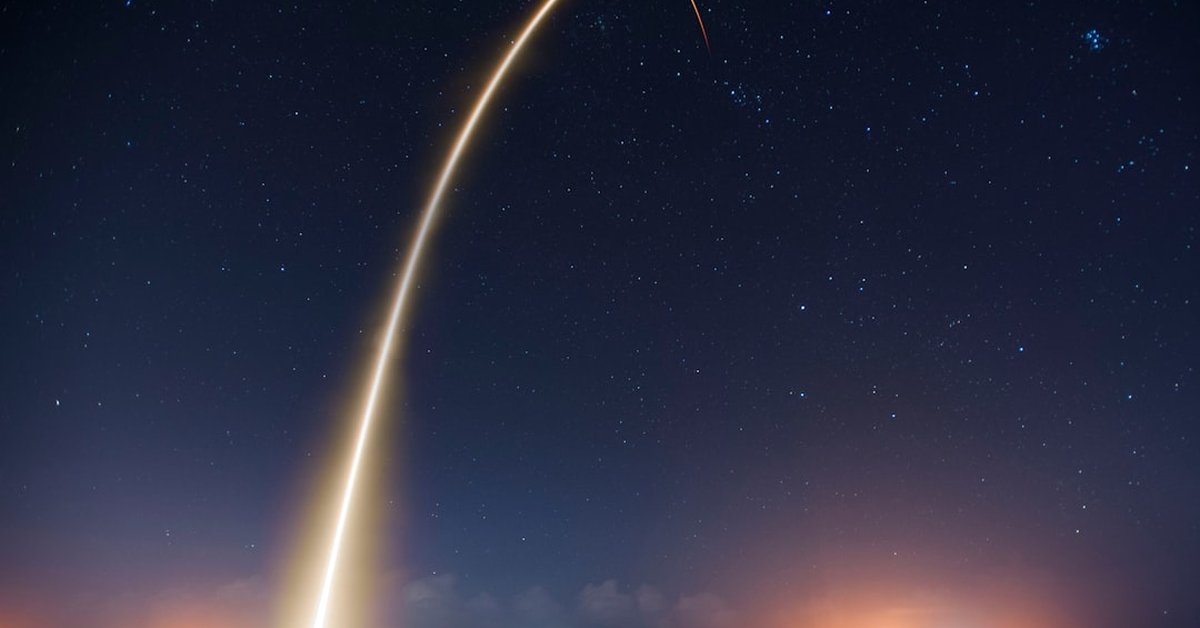
Think of it as a taxi—one that drops off satellites instead of passengers, built by a startup that didn’t exist a decade ago. On Saturday, Skyroot Aerospace, India’s first space-tech unicorn, launched its Vikram-1 rocket from the Satish Dhawan Space Centre on the southeastern coast. The rocket carried a payload of diamonds. Not the kind you’d find in a jewelry store—these were synthetic diamond-based components, designed to test radiation shielding and thermal management in orbit. The launch marked a turning point, not just for Skyroot, but for India’s ambition to commercialize space access beyond the state-run Indian Space Research Organisation (ISRO).
From Chandigarh to the Cosmos: The Birth of Vikram-1
Skyroot Aerospace was founded in 2018 by former ISRO scientists Pawan Kumar Chandana and Naga Bharath Daka. Their pitch was simple: cut the cost of launching small satellites by an order of magnitude. ISRO’s Polar Satellite Launch Vehicle (PSLV) costs roughly $15,000 per kilogram of payload. Skyroot aims to bring that down to under $5,000. But the company’s real innovation is in the manufacturing process. Vikram-1’s first stage uses a 3D-printed carbon composite casing—a technique that slashes production time from months to weeks. The second stage burns a mixture of kerosene and liquid oxygen, a fuel blend that’s both efficient and easier to handle than the solid propellants used in many small rockets. “We’re building rockets like cars,” Chandana said in an interview last year. “Standardized components, modular assembly, and a production line that can ramp up fast.” The launch on Saturday was Vikram-1’s maiden flight, carrying a microsatellite for the Indian Institute of Space Science and Technology (IIST) that will map ocean color for 18 months. The diamonds? They were a secondary payload from a German research institute studying how synthetic diamond films perform under space radiation.
But this isn’t just a story about a rocket. It’s about a shift. For decades, India’s space program was synonymous with ISRO—a publicly funded behemoth that put a probe in Martian orbit on its first try and built satellites that track monsoons. But the private sector has been quietly catching up. In 2020, the Indian government opened the gates, allowing private companies to build and launch rockets, use ISRO’s facilities, and commercialize data. Skyroot was the first to take the plunge. “The government realized that ISRO can’t do everything,” said Dr. Ananya Sharma, a space policy researcher at the Centre for Science and Environment. “Small satellites are exploding—constellations for internet, Earth observation, even agriculture. Private companies need dedicated launches, not shared rides on PSLV.” The math backs her up. According to a 2023 report by the Indian Space Association, the global small satellite launch market will reach $7.1 billion by 2030. India currently captures less than 2% of it. Vikram-1 is a bid to change that ratio.
The ‘Cab to Orbit’ Philosophy—and the Diamond Payoff
Skyroot’s tagline, “cab to orbit,” isn’t just marketing. The rocket is designed to be launched with minimal ground infrastructure—no massive assembly buildings, no weeks-long integration. The whole vehicle arrives at the launch pad in a shipping container. “We’re targeting turnaround times of 72 hours from arrival to liftoff,” said Skyroot’s CEO Pawan Kumar Chandana during a pre-launch briefing. “Compare that to a typical PSLV campaign, which takes 45 days.” That speed matters. Satellite operators hate waiting. A company that wants to refresh its constellation every six months needs launch availability, not launch appointments a year out. Vikram-1 can carry up to 480 kilograms to low Earth orbit—enough for most small satellites. The rocket’s first stage is reusable (it parachutes back to the sea), and Skyroot plans to snag it with a helicopter in future flights. But why the diamonds? The synthetic diamond payload, developed by the Fraunhofer Institute for Laser Technology in Germany, is a test case. Diamond films are excellent heat conductors and radiation blockers—perfect for protecting sensitive electronics in space. “If this test works, we could see diamond coatings on satellite housings, battery packs, even solar cells,” said Dr. Elena Vasquez, a materials scientist at the University of Cambridge. “It’s a disruptive material—lightweight, durable, and it’s produced using chemical vapor deposition, which is already scalable on Earth.” For Skyroot, the diamond payload is a proof-of-concept: they can offer secondary payload slots to researchers for as little as $100,000 per kilogram. That’s a fraction of what NASA or Arianespace would charge for a dedicated smallsat mission.
And if you’re wondering about climate implications—yes, that’s relevant too. Small satellites enable precise monitoring of methane leaks, deforestation, and ocean temperature. The IIST satellite on Vikram-1 carries a hyperspectral imager that can detect phytoplankton blooms from 500 kilometers up. That data feeds into models predicting fishery collapse or coral bleaching. “We’re not just launching metal; we’re launching climate intelligence,” said Dr. Sharma. The irony isn’t lost: rockets burn tons of fuel to put these tools up there. But Skyroot uses a cleaner burning second stage than most, and they’re experimenting with methane-based engines for future iterations. It’s not carbon-neutral—but it’s an improvement over the hypergolic fuels used by many older rockets, which release toxic fumes. “The entire space industry is grappling with its environmental footprint,” said Dr. Vasquez. “Skyroot’s approach—smaller rockets, efficient engines—is a step in the right direction.”
What It Means for India—and the World
India has long punched above its weight in space. ISRO’s missions cost a fraction of NASA’s. But the country’s share of the commercial launch market was anemic—less than 5% of global revenues, according to a 2024 report from the Indian Space Research Organisation. That’s partly because ISRO focused on government science missions: Chandrayaan, Mangalyaan, Aditya-L1. The private sector was an afterthought. Now, Skyroot has changed the script. Within hours of Vikram-1’s successful first stage separation, the company announced a contract with OneWeb (the British satellite broadband company) to launch 12 satellites in 2026. The terms weren’t disclosed, but analysts estimate the deal is worth at least $50 million. “This is a signal to investors: India can compete with Rocket Lab, with Relativity Space, even with SpaceX in the small launch niche,” said Dr. Ananya Sharma. “But they need to move fast. The window for first-mover advantage in small launch is closing—companies like Astra and Firefly are already flying.” The competition is fierce. But Skyroot has a secret weapon: cost. Labor, materials, and launch range fees are cheaper in India. Vikram-1’s estimated launch price of $4.5 million per flight undercuts the $10 million price tag for Rocket Lab’s Electron. “You can’t ignore that price point,” said Dr. Vasquez. “It opens up space access for universities, startups, even high schools with a good science budget.” And then there are the geopolitics. Last year, the US and India signed a joint space cooperation agreement, allowing Indian companies to launch American satellites. But the real prize is the domestic small satellite market—Indian startups like Pixxel and Agnikul are building Earth observation constellations, and they need local launches. “We lost the satellite manufacturing race to China; we can’t lose the launch race too,” said Dr. Sharma.
Meanwhile, NASA’s own structural innovations—like their radical wing design that just passed structural limits tests—are pushing aerospace engineering in parallel. The Roman Space Telescope team is also gearing up for a 2026 launch, promising a revolution in exoplanet science. But for India, the sky isn’t the limit—it’s the starting point. Vikram-1’s next flight, tentatively scheduled for September, will test a methane engine stage. If it works, Skyroot could become the first Indian company to send a payload beyond Earth orbit.
The diamonds returned safely to Earth, parachuting down in the Bay of Bengal. They’ll be analyzed for microscopic damage. If the diamond shells held up, expect a flood of patent filings. And expect Skyroot to announce a Series C round soon—likely north of $100 million. The investors are circling. “We’ve shown we can build,” Chandana said after the launch. “Now we show we can scale.”
Frequently Asked Questions
How does Vikram-1 compare to other small launchers like Rocket Lab’s Electron?
Vikram-1 can carry up to 480 kilograms to low Earth orbit, compared to Electron’s 300 kilograms. It also uses a reusable first stage, which Electron does not. However, Electron has been flying since 2017 and has a proven track record. Vikram-1’s price tag of $4.5 million per launch is roughly half of Electron’s market rate.
Why did Skyroot launch synthetic diamonds on the first flight?
The diamonds are experimental radiation shielding and thermal management materials. They were a secondary payload from the Fraunhofer Institute in Germany to test how synthetic diamond films withstand space radiation. If successful, diamond coatings could protect satellite electronics in future missions.
What does this mean for India’s private space sector?
It’s a major validation. India opened its space sector to private companies in 2020, and Skyroot is the first to launch a private rocket. The success signals to investors that Indian startups can build viable launch vehicles, potentially attracting foreign customers and reducing India’s reliance on foreign launch providers.