







What if the biggest climate cost of World Cups and stadium tours isn’t the concrete poured or the lights blazing, but the fans themselves? That’s the provocative finding from a new University of Cambridge study, which argues that the vast majority of emissions from “mega-events” — think FIFA World Cups, Olympic Games, and global concert tours by the likes of Taylor Swift — come from audience travel. And the solution, researchers say, is surprisingly simple: discount tickets for long-haul fans to reduce the incentive for flying halfway around the planet.
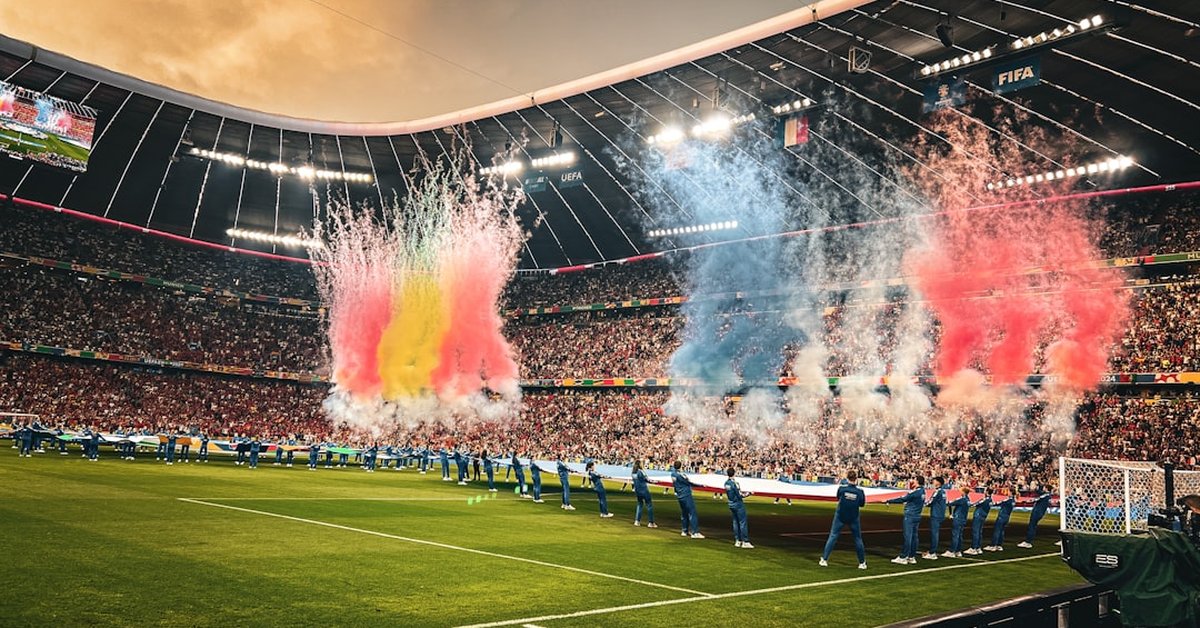
The study, published in the journal Nature Climate Change, analyzed the carbon footprint of several recent mega-events, including the 2022 FIFA World Cup in Qatar and Ed Sheeran’s 2023 tour. The numbers are staggering. For the 2022 World Cup, audience travel accounted for roughly 80% of total emissions — dwarfing everything from stadium construction to broadcasting. Expanding the tournament to 48 teams for the 2026 edition, the researchers estimate, will increase that footprint by nearly 30%, even before a single match is played.
“We’re not saying people shouldn’t attend these events,” says Dr. Emily Hart, lead author of the study and a climate policy researcher at the University of Cambridge. “But we need to be honest about the carbon cost of moving millions of people across continents, and then ask: could we design pricing that encourages local attendance instead?”
The Carbon Elephant in the Stadium
It’s easy to point fingers at the obvious suspects: jet-setting artists, mega-rich footballers, or the thousands of private jets that descend on host cities. But the Cambridge team found that the single biggest contributor is the sheer volume of ordinary fans traveling long distances. For the 2023 Taylor Swift Eras Tour — which generated an estimated 1.2 million tonnes of CO₂ equivalent — two-thirds of that came from audience flights alone. The artist’s own air travel? Less than 5%.
“The audience is the elephant in the room,” says Prof. James Okonkwo, a co-author from the University of Lagos who specializes in sustainable tourism. “And the elephant is flying economy class, often because there’s no other way to get there.”
The study proposes a radical but workable fix: tiered ticket pricing that heavily discounts seats for local residents while charging a premium — or even a carbon levy — on tickets sold to buyers from faraway regions. The idea isn’t to punish international fans, but to change incentives. If a ticket for a local fan costs $50, while a ticket for someone flying in from another continent costs $500 (including a carbon offset fee), the math might push more fans to watch from home or attend a closer event.
And it’s not just about football or pop concerts. The researchers point to the devastating wildfire seasons that have choked North American cities in recent years — a direct consequence of climate change fueled by the very emissions these mega-events contribute to. “We’re literally burning the future to watch a game,” says Dr. Hart. “That’s not sustainable.”
But Would It Work?
Critics will argue that fans won’t stand for being priced out of dream trips to a World Cup final or a once-in-a-lifetime concert. But the Cambridge team notes that the model already exists in smaller forms. Several European football clubs offer reduced away-game ticket prices for local supporters. Music festivals like Glastonbury cap international ticket sales. The key, they say, is transparency and fairness.
“You don’t ban long-distance travel — you just make it more expensive relative to local attendance,” explains Prof. Okonkwo. “The revenue from the premium could fund carbon removal projects or subsidize local tickets. It’s a win-win.”
Of course, the devil is in the details. FIFA, for instance, has a long history of resisting anything that might shrink its global audience. The 2026 World Cup — to be hosted across the US, Canada, and Mexico — is already expected to draw millions of international visitors. The study estimates that the expanded 48-team format will add roughly 3 million tonnes of CO₂ compared to the 2022 event. That’s equivalent to the annual emissions of over 600,000 cars.
“We’re not saying people shouldn’t attend these events. But we need to be honest about the carbon cost of moving millions of people across continents.” — Dr. Emily Hart, University of Cambridge
So, what would it take for FIFA or a pop superstar to adopt such a pricing model? Public pressure, for one. The study’s authors point to the growing trend of carbon labeling on events, similar to what’s appearing on food products. Imagine buying a ticket and seeing: “Your share of this event’s carbon footprint: 0.4 tonnes CO₂.” It might make you think twice about that flight.
The Bigger Picture: Mega-Events in a Warming World
This research lands at a time when the sports and entertainment industries are scrambling to green their image. The International Olympic Committee has pledged to make the 2024 Paris Games “climate positive” through offsets — a claim met with skepticism. FIFA launched a “carbon neutral” World Cup in 2022, but most of the offsets were later found to be dubious.
And it’s not just emissions. Mega-events strain local water supplies, generate mountains of waste, and often displace low-income communities. The IPCC’s latest report warns that the window to avoid catastrophic warming is closing fast. Every tonne of CO₂ counts.
So, could discounting tickets actually make a difference? The Cambridge team ran the numbers. If FIFA introduced a 50% discount for local residents within 500 km of a 2026 World Cup venue, and a 20% surcharge on tickets sold to buyers outside that zone, they estimate emissions from audience travel could drop by up to 25%. That’s roughly 750,000 tonnes of CO₂ avoided — equivalent to taking 160,000 cars off the road for a year.
But here’s the kicker: the study also found that such a pricing scheme would increase overall ticket revenue, not decrease it. The premium paid by distant fans would more than cover the discounts for locals. “It’s economically rational,” says Dr. Hart. “It just requires the will to implement it.”
And the will might be coming. In March 2025, the European Parliament passed a resolution urging major sports leagues and concert promoters to adopt “fair travel pricing” as part of broader climate commitments. A handful of artists, including Billie Eilish and Coldplay, have already experimented with local-only pre-sales and carbon surcharges on tour merchandise.
Look, no one’s pretending this is easy. Telling a fan from São Paulo they can’t fly to London to see their favorite band — or that they’ll have to pay double — feels like a gut punch. But the alternative is worse: continuing to burn through the carbon budget while pretending the sky isn’t changing. The skies themselves are sending signals, from record-breaking fireballs to unprecedented heatwaves. We can either listen, or keep the stadium lights on as the world warms.
Next time you book a ticket halfway across the world for a game or a gig, ask yourself: is this really worth the carbon? The researchers hope that soon, the price tag will help you answer that question honestly.
Frequently Asked Questions
How much of a mega-event’s carbon emissions come from audience travel?
According to the University of Cambridge study, audience travel accounts for roughly 80% of total emissions for events like the FIFA World Cup and major concert tours. This far outweighs emissions from construction, energy use, and artist travel combined.
What exactly is the proposed discount system?
The researchers propose a tiered pricing model where tickets sold to local residents (within a certain radius, e.g., 500 km) are heavily discounted, while tickets sold to distant buyers include a surcharge or carbon levy. The extra revenue can subsidize local tickets and fund carbon reduction projects.
Would this actually reduce emissions, or just make events more expensive?
The study estimates that if FIFA adopted a 50% local discount and 20% long-distance surcharge for the 2026 World Cup, audience travel emissions could drop by up to 25%. The pricing change would also likely increase overall revenue, making it economically viable for organizers.