







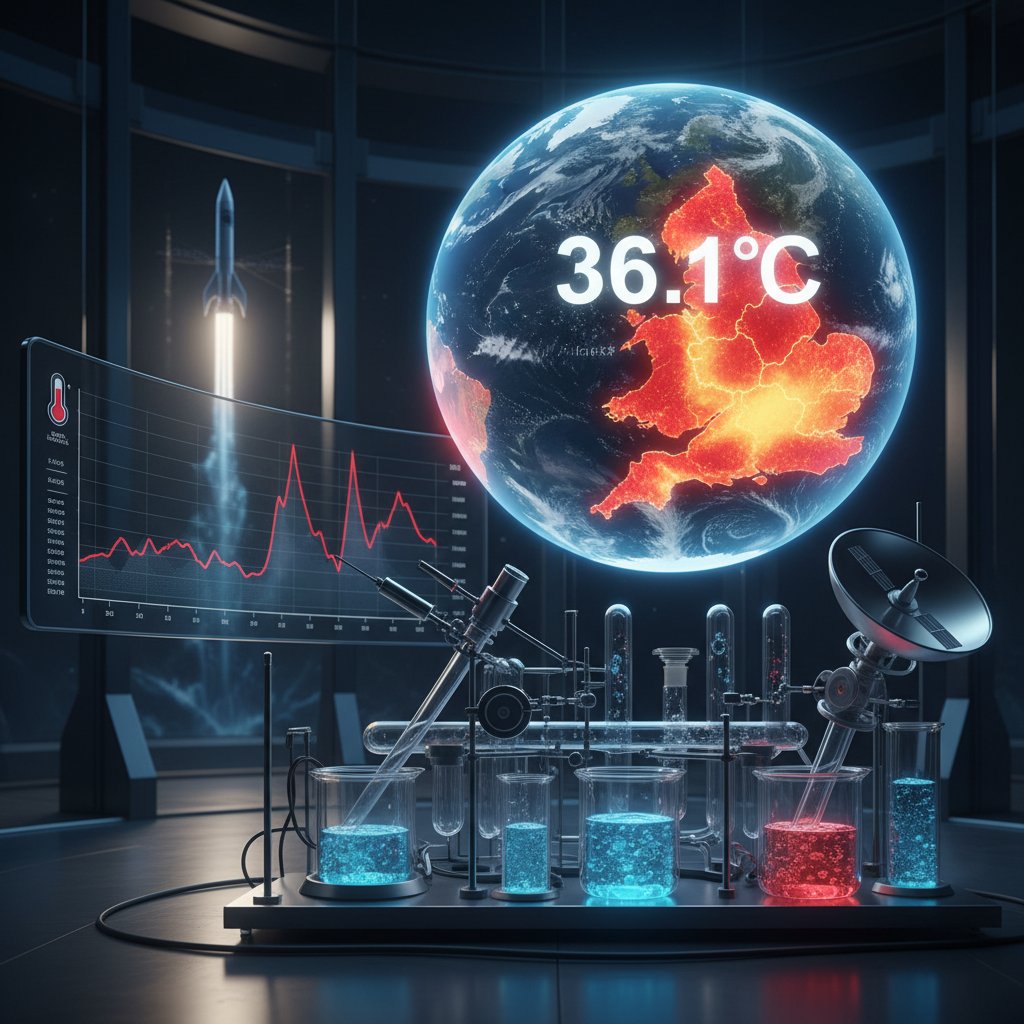
When the mercury hit 36.1 degrees Celsius in Hampshire on Wednesday afternoon, it wasn’t just a new record—it was a warning shot across the bow of what British summers are becoming. The UK has just experienced its hottest June day in recorded history, surpassing the previous high of 35.6°C set in Surrey back in 1976. But this isn’t a one-off scorcher. It’s part of a pattern that’s getting harder to ignore.
The temperature was measured at the Met Office station in Charlwood, near Crawley, and confirmed at sites across southern England. Picture this: a line of sweltering heat stretching from Hampshire through Surrey, with thousands of people cranking up fans they never thought they’d need in June. Schools closed early in some parts, trains slowed down for fear of buckled rails, and the National Grid issued alerts. And if you think this is just a summer of discontent, look at what’s happening in France—the France power grid collapses as record heat wave scorches Europe, proving this isn’t an isolated event.
How Hot Did It Actually Get?
Let’s put 36.1°C in perspective. That’s about 97°F for our American readers—and it’s the kind of heat you’d expect in Barcelona or Cairo, not in a country famous for rain. The previous June record of 35.6°C had stood for nearly half a century, since June 1976 when the UK was enduring a legendary drought. This new figure doesn’t just beat it; it catapults past it by half a degree, which in climate terms is like breaking the marathon record by a full minute.
“It’s significant because June is supposed to be a transitional month,” says Dr. Emily Sanderson, climate scientist at the University of Oxford. “We typically see these extreme temperatures in July or August when the ground has had time to bake. To see 36°C in June means the atmosphere is running ahead of schedule.” And she’s right—the heat dome that settled over southern England on Wednesday was fueled by a combination of high pressure blocking cooler Atlantic air and an influx of hot air from North Africa. This isn’t just weather; it’s the fingerprint of a warming planet.
What This Means for You—and Your Power Bill
For most people, the immediate reaction is simple: stay cool, stay hydrated, and check on elderly neighbors. But there’s a deeper story here about infrastructure. When temperatures break 35°C in the UK, things break. Train tracks expand and bend. Roads get sticky. Power cables sag. Meanwhile, air conditioning use surges, stressing a grid that wasn’t designed for this kind of load.
In a world where why investors reward companies that set climate goals, the business case for adaptation has never been clearer. British utility companies are now racing to harden their systems—but retrofitting an entire nation’s energy infrastructure isn’t cheap or fast. And for the record, the UK’s greenhouse gas emissions are still among the highest per capita in Europe.
“We are entering uncharted territory,” says Professor James Holden, climatologist at the University of Reading. “The fact that this record fell in June, when the sun is still a few weeks from its highest point, suggests we could see even more extreme temperatures later this summer. We need to treat heatwaves like the natural disasters they are.”
How Does This Fit Into the Bigger Picture?
The UK isn’t alone. Across Europe, June 2024 has been a month of shattered thermometers. Spain saw 44°C in parts of Andalusia. Greece closed the Acropolis due to heat. France declared emergency measures. And back in Britain, the Met Office’s own data shows that the nine warmest years on record have all occurred since 2002. This isn’t a blip—it’s a trend line.
Now, here’s where it gets personal: heatwaves kill. According to the UK Health Security Agency, there were around 2,800 excess deaths during the 2022 summer heatwave. And with more records falling, that number could climb. Hospitals struggle with heatstroke cases. Air pollution spikes. Sleep becomes harder. Productivity drops. So when you hear that 36.1°C was recorded in Hampshire, remember: that number has consequences.
What Happens Next?
Forecasters don’t see this extreme heat disappearing overnight. The Met Office has issued an amber warning for much of southern England through the weekend, with temperatures likely to stay above 30°C. Some models suggest another surge next week. But more importantly, scientists are asking whether this June record is a standalone event or part of a new normal.
“Look, I’ve been studying UK climate for 25 years,” says Dr. Sanderson. “When I started, a 35°C day was rare. Now it’s becoming routine. The question isn’t whether we’ll break this record again—it’s when.”
The truth is, the UK is waking up to a reality that many countries in the Global South have dealt with for decades. And while innovations like sugar-coated nanoparticles target deadliest brain cancer show incredible promise in medicine, our climate response remains stubbornly slow. The record in Hampshire is a signpost, not a destination. Where we go from here—as a country, as a continent, as a species—depends on how seriously we take it.
Frequently Asked Questions
What was the previous June temperature record for the UK?
The previous record for the hottest June day in the UK was 35.6°C, set in Surrey on June 28, 1976. The new record of 36.1°C was measured in Charlwood, West Sussex, on Wednesday.
Is this heatwave linked to climate change?
Yes, climate scientists attribute the increasing frequency and intensity of heatwaves to human-caused climate change. While no single event can be solely blamed on global warming, research shows that extreme heat events in the UK are now about 10 times more likely than they were in the 1970s due to rising greenhouse gas emissions.
How can I stay safe during extreme heat?
Stay cool by spending time in air-conditioned or shaded spaces, avoid strenuous outdoor activity during peak heat (11 a.m. to 3 p.m.), drink plenty of water, wear light clothing, and check on vulnerable relatives or neighbors. Never leave children or pets in parked cars. The UK Health Security Agency provides detailed guidance online.