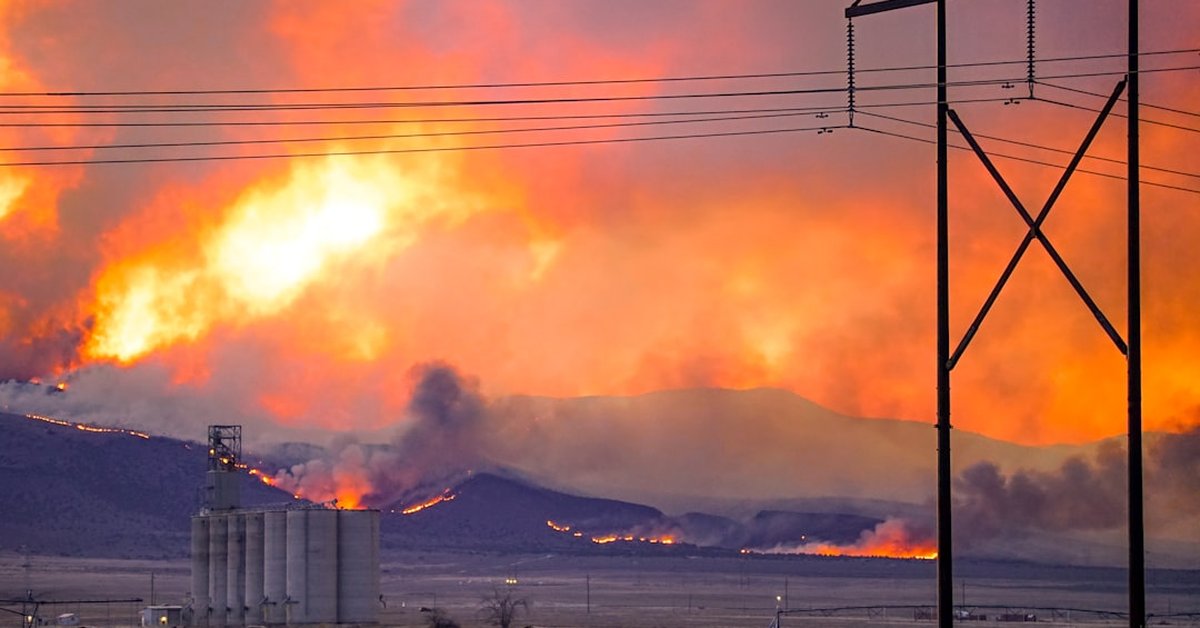
In the span of a single afternoon, the Cottonwood Fire consumed an area larger than the city of Boston. By the time firefighters gained the upper hand, the blaze had scorched more than 150 square miles — 96,000 acres — and swept through parts of a popular ski resort in the Wasatch Mountains. It’s the kind of event that forces you to pause and ask: is this the new normal?
The fire, which began on the afternoon of July 22, 2024, near Cottonwood Canyon in northern Utah, erupted with alarming speed. Driven by gusty winds and tinder-dry vegetation, it jumped from a small brush fire to a major conflagration within hours. Evacuation orders were issued for several communities, including the town of Alta, which sits at the base of the resort.
“We saw flames climbing the slopes faster than any of us expected,” said Dr. Samantha Ortega, a fire ecologist at the University of Utah. “These are not the wildfires our grandparents knew. The fuels are drier, the winds are more erratic, and the season is stretching longer every year.”
Utah’s fire season has been expanding for decades. Data from the National Interagency Fire Center show that the average annual area burned in the state has increased by nearly 300% since the 1980s. But the Cottonwood Fire stands out not just for its size — it’s one of the largest ever recorded in the Wasatch Range — but for its path through a developed ski resort.
A Fast-Moving Inferno
The fire’s rapid spread can be traced to a perfect storm of conditions. The region had been in the grip of a severe drought, with soil moisture levels at record lows. According to the U.S. Drought Monitor, much of northern Utah was classified in extreme drought — the second-highest category — when the fire ignited. Vegetation, from sagebrush to conifer forests, had essentially become kindling.
Winds of up to 40 miles per hour fanned the flames, creating spot fires that leapfrogged ahead of the main front. On the first night alone, the fire advanced 12 miles. By the second day, it had engulfed several chairlifts and maintenance buildings at the resort. “I’ve never seen anything like it in my 20 years on the job,” said Mark Henderson, a fire behavior analyst with the U.S. Forest Service. “The fire created its own weather – a pyrocumulus cloud that dumped embers miles away.”
That phenomenon — a fire-generated thunderstorm — is becoming more common in large wildfires worldwide. It’s a feedback loop: the fire heats the air, which rises and draws in more wind, which spreads the fire further. NASA’s Earth Observatory has documented similar events in California and Australia. And it’s not just a local problem. The smoke from the Cottonwood Fire drifted across several states, degrading air quality as far away as Denver.
Climate and Drought: The Perfect Kindling
Scientists are careful not to attribute any single wildfire to climate change, but the context is hard to ignore. Utah has been warming at twice the global average over the past 50 years, according to NOAA’s National Centers for Environmental Information. Warmer temperatures mean earlier snowmelt, longer dry seasons, and more evaporation — all of which prime the landscape for fire.
Dr. Elena Vasquez, a climatologist at the University of California, Berkeley, notes that the Cottonwood Fire is consistent with larger trends. “What we’re seeing in the Intermountain West is a shift in fire regimes. High-elevation forests that historically burned every 50 to 100 years are now burning every 10 to 20 years. That changes everything — the ecology, the carbon cycle, the water supply.”
Ironically, while parts of the planet face fire, others are experiencing the opposite extreme. In the Arctic, melting ice is opening up new habitats for deep-sea creatures — a surprising boom that researchers are still trying to understand. That story underscores how unevenly climate change is reshaping the world. But for Utah, the immediate challenge is containment and recovery.
Impact on Ski Resorts and Communities
The ski resort that took a direct hit — Alta Ski Area — is one of the oldest and most beloved in North America. The fire destroyed two chairlifts, a maintenance shop, and several miles of groomed trails. “It’s heartbreaking,” said resort spokesperson Kevin Wright. “But we’re already planning for next season. The mountain will recover, and so will we.”
Alta was under mandatory evacuation for nearly a week. Residents returned to find some homes reduced to ash, others untouched. The fire’s patchwork pattern — common in wind-driven wildfires — left a checkerboard of destruction and survival. Local officials are now assessing the risk of post-fire debris flows, as the loss of vegetation on steep slopes can trigger mudslides during summer thunderstorms.
“The fire isn’t the end of the danger,” said geologist Dr. James Patterson of the Utah Geological Survey. “Burned hillsides are vulnerable to erosion. If we get a heavy rain, we could see flash flooding that carries ash and debris into neighborhoods.” That’s a scenario that played out after the 2022 Calf Canyon-Hermits Peak Fire in New Mexico, where subsequent floods caused millions in damage.
For the broader community, the Cottonwood Fire has reignited debates about development in fire-prone areas. The Wasatch Range is a magnet for outdoor recreation, and new homes keep going up despite the growing risk. “You can’t stop people from living where they want,” Henderson said. “But they need to understand that fire is part of this ecosystem. We can’t eliminate it; we can only adapt.”
The Future of Fire in the Wasatch
Firefighters have now contained about 70% of the Cottonwood Fire, but full containment isn’t expected until mid-August. The cost of suppression is already estimated at $45 million. And the scars will remain visible for years, if not decades.
Ecologically, fire can be a natural reset button. Many conifer species in the Rockies, like lodgepole pine, rely on high-severity fires to open their cones and regenerate. But the frequency and intensity of today’s fires may exceed what those species can handle. “There’s a tipping point,” said Dr. Ortega. “If fires come back too quickly, the soil loses its nutrients, and the forest may not return. Instead, you get shrublands or even grass. That’s a fundamentally different ecosystem.”
Looking ahead, state and federal agencies are exploring strategies like prescribed burns, forest thinning, and community fire-proofing. But funding is limited, and public acceptance is mixed. “People hate smoke and they hate restrictions,” Henderson noted. “But they also hate watching their homes burn. We need to choose our poison.”
The Cottonwood Fire is a stark reminder that wildfire knows no boundaries — it doesn’t respect ski resorts, weekend cabins, or even state lines. As the climate continues to warm, places that once seemed immune may find themselves in the crosshairs. The question isn’t whether the next big fire will come, but when.
Frequently Asked Questions
How did the Cottonwood Fire start?
The exact cause is still under investigation, but officials suspect a combination of lightning and dry conditions, though human activity has not been ruled out. The fire began in a remote area of Cottonwood Canyon on July 22, 2024.
Is the ski resort closed for the winter?
Alta Ski Area plans to reopen for the 2024–2025 ski season, but some lifts and trails may remain closed. Repairs are underway, and the resort has stated that it will operate with limited capacity initially.
What makes this fire different from previous Utah wildfires?
The Cottonwood Fire is among the largest to burn directly through a developed ski resort, highlighting the increasing overlap between wildland-urban interfaces and extreme fire behavior. Its rapid growth was fueled by drought, high winds, and a pyrocumulus cloud, a combination becoming more common with climate change.