




Nobody is talking about this. But they should be. Deep inside a synthetic biology lab, something strange is happening. A structure no bigger than a speck of dust is growing, feeding, dividing, and even competing with its neighbors. It’s not a bacterium. It’s not a virus. It’s SpudCell — a lab-made, cell-like entity that’s blurring the line between living and non-living matter. And the scientists who built it aren’t entirely sure what they’ve unleashed.
We’ve seen synthetic biology before: bacteria engineered to produce insulin, yeast that churns out rose oil, even lab-grown hamburgers. But SpudCell is different. It wasn’t designed to perform a specific task. It was built from the ground up to mimic the core behaviors of a living cell. And it’s working — maybe too well.
“We didn’t expect it to be this dynamic. It’s showing emergent behaviors we didn’t program. That’s both thrilling and terrifying.” — Dr. Elena Vasquez, lead researcher at the Institute for Synthetic Life, Cambridge
What Exactly Is SpudCell?
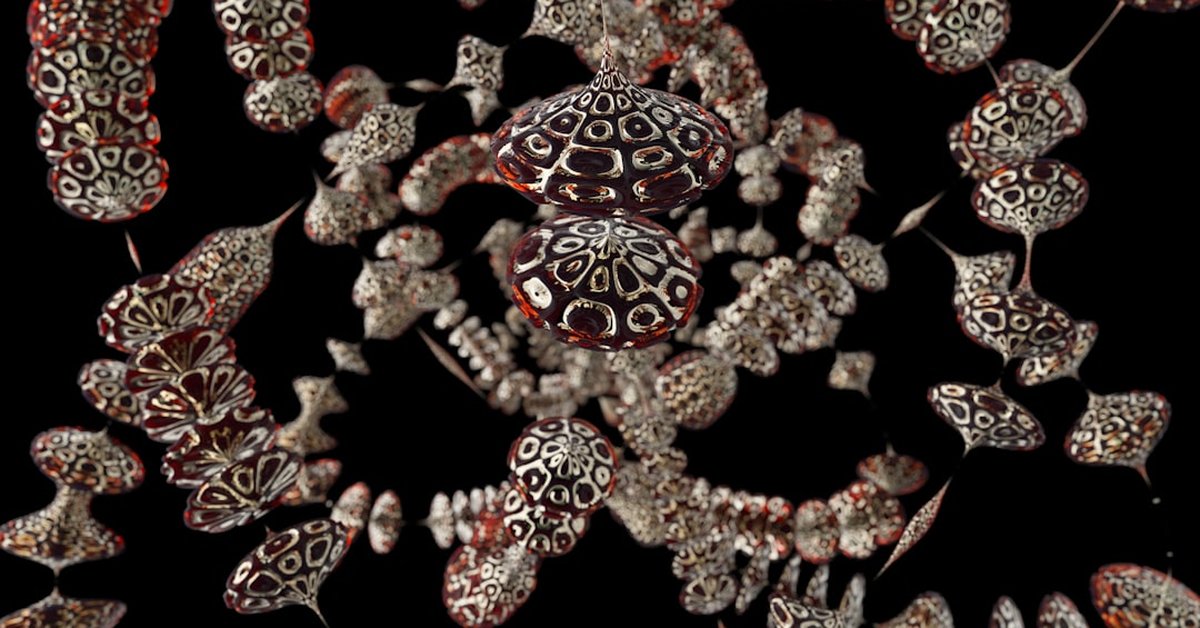
SpudCell is a synthetic vesicle — a tiny bubble of lipids — filled with a minimalist set of molecules that allow it to metabolize simple sugars, grow its membrane, replicate its internal content, and split into two daughters. The team at the Institute for Synthetic Life (ISL) in Cambridge constructed it from scratch using a recipe of just 47 proteins and a handcrafted genome-like RNA strand. The name comes from the potato-starch-derived lipids used in its membrane.
But here’s the kicker: SpudCells can also compete. When placed in a petri dish with limited food, some variants outgrow others, effectively evolving. It’s not Darwinian evolution in the full sense — not yet — but it’s close. Closer than any synthetic system has come before.
A previous article on QuasarPost detailed the initial creation of SpudCell. Now, months later, the implications are sinking in.
The Hallmarks of Life — Almost
Biologists typically define life using a checklist: metabolism, growth, reproduction, response to stimuli, and evolution. SpudCell ticks the first four boxes. It doesn’t fully evolve yet, but it shows variation under selective pressure. “It’s a gray zone,” explains Dr. Marcus Teo, a synthetic biologist at Stanford. “If SpudCell were found on Mars, we’d probably call it life. But we built it — so we have to ask: did we create life, or just a really good counterfeit?”
That’s the philosophical grenade SpudCell tosses into the room. The definition of life has always been fuzzy — viruses, for instance, don’t meet the full criteria. But SpudCell forces us to decide: is something alive if it acts alive, even if it’s entirely man-made?
For context, consider the journey here. In 2010, Craig Venter’s team created the first synthetic genome and booted it up in a bacterial shell. That was a chassis — a natural cell with a synthetic instruction set. SpudCell is different: the shell and the machinery are synthetic. No natural cell was used as a starting point.
Why This Matters Beyond the Lab
Let’s get practical. SpudCells could become tiny factories. Because they’re built from scratch, scientists can program them to produce drugs, biofuels, or even break down plastic waste — without the risk of them escaping and becoming rogue organisms. “They can’t survive outside a very specific nutrient broth,” says Dr. Vasquez. “They’re like a campfire that needs constant feeding.”
But the public has heard that before. Remember the controversy around genetically modified organisms? Synthetic cells raise the same concerns, amplified. If SpudCell-like entities ever escape into the wild — or if someone weaponizes the technology — we’d face a scenario that makes antibiotic resistance look like a scraped knee.
That’s why the ethical conversation needs to start now. Not later. And it’s not just about risk. It’s about how we value life when we can manufacture it. As Dr. Teo puts it: “If a synthetic cell suffers damage, do we have any moral obligation to repair it? These are questions we’ve never had to answer before.”
Meanwhile, the research is accelerating. The ISL team has already shared their recipe with labs in Japan and Brazil. The Nature paper describing SpudCell has been downloaded over 200,000 times. And the BBC reported that defense agencies are quietly funding similar work — for both medicine and surveillance.
The Definition of Life — Time for an Update
So, where does this leave us? In 2023, the National Academies of Sciences hosted a workshop on redefining life in the age of synthetic biology. No consensus emerged. SpudCell may force the issue. If we can’t say whether a lab-made thing is alive, can we even agree on what life is?
Perhaps life is not a binary switch but a spectrum. A dimmer dial. Some things are 90% alive, others 40%. SpudCell might be at 80%. And that’s fine — as long as we acknowledge it. Because the closer we get to creating a truly living synthetic organism, the more we need to know what we’re doing.
“We’re not gods. We’re apprentices. And SpudCell is our first wobbly chair. It holds weight, but we don’t yet know its breaking point.” — Dr. Vasquez
Look, I’m not saying we should hit pause. Far from it. The potential — personalized medicine, environmental cleanup, even terraforming tools — is breathtaking. But we need to build the guardrails while we build the cars. SpudCell is a wake-up call. And nobody is talking about it. Yet.
Frequently Asked Questions
Is SpudCell alive?
It depends on your definition. SpudCell exhibits key life-like behaviors: growth, division, metabolism, and limited competition. However, it lacks full evolutionary capacity and requires a specific artificial environment to survive. Most scientists describe it as a ‘near-living’ or ‘semi-living’ entity, prompting debate on updating the definition of life.
Could SpudCell escape and cause harm?
Very unlikely. SpudCell is extremely fragile and depends on a precise nutrient broth unavailable in nature. It cannot survive outside the lab. Researchers have also engineered failsafe ‘kill switches’ into its genetic recipe. Still, future versions may be more robust, so containment protocols are being developed proactively.
What are the practical applications of SpudCell technology?
SpudCell-like structures could be programmed to produce medicines, biofuels, or chemicals without using living organisms. They could also serve as biosensors for pollutants or diseases. Because they are fully synthetic, they offer a safer platform than engineered bacteria. Research is still early, but commercialization could begin within 5-10 years.