







The morning sun cast long shadows across the Caltech campus in Pasadena, California, as staff and students gathered near the iconic Millikan Library. A new era began quietly, without fanfare, but with palpable anticipation. Ray Jayawardhana, a renowned astrophysicist and science communicator, stepped into his office today as the 10th president of the California Institute of Technology.
Jayawardhana, 56, arrives from Cornell University, where he served as the Harold Tanner Dean of the College of Arts and Sciences. His selection by Caltech’s board of trustees, announced on January 6, 2025, was the culmination of a global search that drew interest from dozens of candidates across academia, government, and private industry. He now holds the Sonja and William Davidow Presidential Chair and a professorship in astronomy.
From Exoplanet Hunter to University Leader
Jayawardhana’s career reads like a masterclass in scientific range. Born in Sri Lanka, raised in Canada, he earned his PhD from Harvard in 2000, studying the birth of stars and planets. He went on to lead major exoplanet detection surveys using the Gemini and Keck telescopes in Hawaii and Chile. In 2013, his team directly imaged a young gas giant planet orbiting the star HR 8799—a feat that made international headlines.
But he’s not just a lab-bound researcher. Jayawardhana is the author of two popular science books, Star Factories and Strange New Worlds, and has hosted documentaries for PBS and the BBC. He’s won awards for mentoring underrepresented students in STEM. At Cornell, he oversaw a $1.2 billion budget and helped launch the Cornell Climate Action Plan, aiming for net-zero emissions by 2035.
“Ray brings an unusual combination: deep research credibility, administrative skill, and a genuine gift for public engagement,” said Dr. Priya Natarajan, a professor of astronomy and physics at Yale, who has collaborated with Jayawardhana on exoplanet studies. “Caltech is betting that he can foster the same kind of bold, interdisciplinary work that defined its golden age.”
A Changing of the Guard at a Critical Moment
Jayawardhana succeeds Thomas Rosenbaum, who stepped down after 11 years. Rosenbaum oversaw the launch of the Caltech-led James Webb Space Telescope program and expansion of the campus’s sustainability initiatives. But challenges remain. Federal funding for basic research faces political headwinds, and China’s rapid advances in quantum computing and AI are intensifying competition.
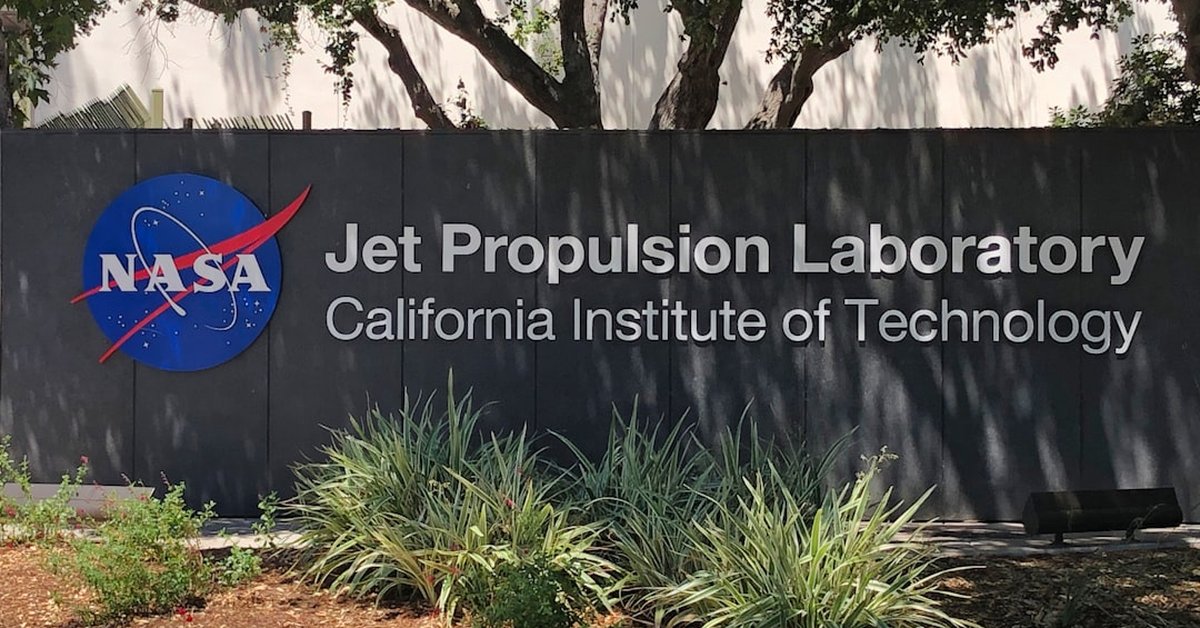
Caltech, despite its tiny undergraduate enrollment of around 1,000 students, produces an outsized share of Nobel laureates and patents. Its Jet Propulsion Laboratory (JPL), which it manages for NASA, is a linchpin of American space exploration. Jayawardhana inherits a portfolio of mega-projects: the NASA’s New Robotic Moon Missions Pave Way for 2029 Lunar Base (QuasarPost), the Laser Interferometer Gravitational-Wave Observatory (LIGO), and the Thirty Meter Telescope (TMT) project, still mired in legal battles over its planned site on Mauna Kea.
“Caltech isn’t just another university. It’s a national asset,” said Dr. Michael Turner, a cosmologist at the University of Chicago and former assistant director at the White House Office of Science and Technology Policy. “Jayawardhana will need to defend that role while also pushing the institution to be more accessible and diverse. It’s a tightrope.”
What Jayawardhana Brings to the Table
In his inaugural address, delivered to a small audience in the historic Beckman Auditorium, Jayawardhana struck a tone both humble and ambitious. “Science is a conversation across generations,” he said. “The questions we ask today were seeded by those who came before us. My job is to make sure that conversation continues, and that it includes voices we haven’t heard enough.”
He outlined three priorities: accelerating research into climate solutions, expanding public-private partnerships in space technology, and strengthening Caltech’s commitment to equity—especially for women and minorities in STEM. Caltech currently enrolls about 30% women in its undergraduate programs, a figure Jayawardhana wants to raise to 50% by 2030.
He also hinted at a more aggressive push into the growing field of astrobiology. “We’ve discovered thousands of exoplanets. Now we need to figure out which ones might harbor life. Caltech is uniquely positioned to lead that search,” he said. That mission could involve new collaborations with JPL, which is already planning missions to Jupiter’s moon Europa and Saturn’s moon Enceladus—both prime targets in the hunt for extraterrestrial life.
But Jayawardhana’s style is not all serious science. Known for his sharp wit, he once quipped during a lecture: “Discovering a planet is like finding a needle in a haystack. Except the haystack is the size of the galaxy, and the needle is moving.” That ability to translate complex ideas into everyday language may prove crucial as Caltech seeks to maintain public support for big-ticket research.
Challenges Ahead: Funding, Politics, and the TMT
Perhaps the most immediate test facing Jayawardhana is the Thirty Meter Telescope. The $2.4 billion project, which would give astronomers a view 10 times sharper than Hubble, has been stalled for years by Native Hawaiian activists who consider Mauna Kea a sacred site. Caltech is a key partner, and Jayawardhana has already signaled he’ll seek a negotiated solution—though he hasn’t offered specifics.
“The TMT situation is a microcosm of a larger tension in science: we want to push boundaries, but we have to do it in a way that respects communities and their histories,” said Dr. Keolu Fox, a geneticist at the University of Hawai’i who studies indigenous rights in science. “Jayawardhana seems genuinely open to dialogue. Whether that translates into action remains to be seen.”
Then there’s the money. Federal R&D spending, adjusted for inflation, has declined by about 15% over the past decade. Caltech’s endowment, while healthy at $4.5 billion, is dwarfed by rivals like Stanford ($36 billion) or MIT ($24 billion). Jayawardhana will need to court private donors and international partners without compromising Caltech’s independence.
He’s also stepping into a political minefield. Some members of Congress have questioned whether university research grants should prioritize “national security” over basic discovery. Jayawardhana, a naturalized U.S. citizen, has argued that “the most transformative discoveries—from the internet to CRISPR—came from curiosity-driven research. We cannot afford to shortchange that.”
And let’s not forget the internal culture. Caltech is famously intense: students joke that the campus motto is “work, rest, repeat.” The pressure cooker environment has raised concerns about mental health, especially after several high-profile student suicides in recent years. Jayawardhana has promised to invest in counseling services and to reduce the stigma around seeking help. “A brilliant mind needs a healthy one,” he said, a line that drew applause at the ceremony.
Looking Ahead: The First 100 Days
Jayawardhana’s immediate agenda includes meeting with faculty from all six academic divisions, visiting JPL for a briefing on the Europa Clipper mission, and hosting a town hall for students. He’s also planning a trip to Washington, D.C., to lobby for increased funding for the National Science Foundation.
Back in his new office, surrounded by unpacked boxes and a framed photo of the HR 8799 planetary system—the one he helped discover—Jayawardhana smiled when asked about his hopes. “I want every student who walks through these gates to feel they can change the world,” he said. “Because they can. And they will.”
Frequently Asked Questions
Who is Ray Jayawardhana?
Ray Jayawardhana is an astrophysicist and the 10th president of Caltech. He previously served as dean of the College of Arts and Sciences at Cornell University and is best known for his work directly imaging exoplanets. He holds a PhD from Harvard and has written popular science books.
What are Jayawardhana’s top priorities for Caltech?
His three key priorities include accelerating climate research, expanding public-private partnerships in space technology (such as supporting NASA’s New Robotic Moon Missions), and increasing diversity in STEM—particularly raising female undergraduate enrollment to 50% by 2030.
What challenges does Caltech face under new leadership?
Caltech must navigate declining federal R&D funding, the stalled Thirty Meter Telescope project on Mauna Kea, and student mental health concerns. Jayawardhana will also need to maintain Caltech’s influence as a leader in space exploration and basic research amid rising global competition.