







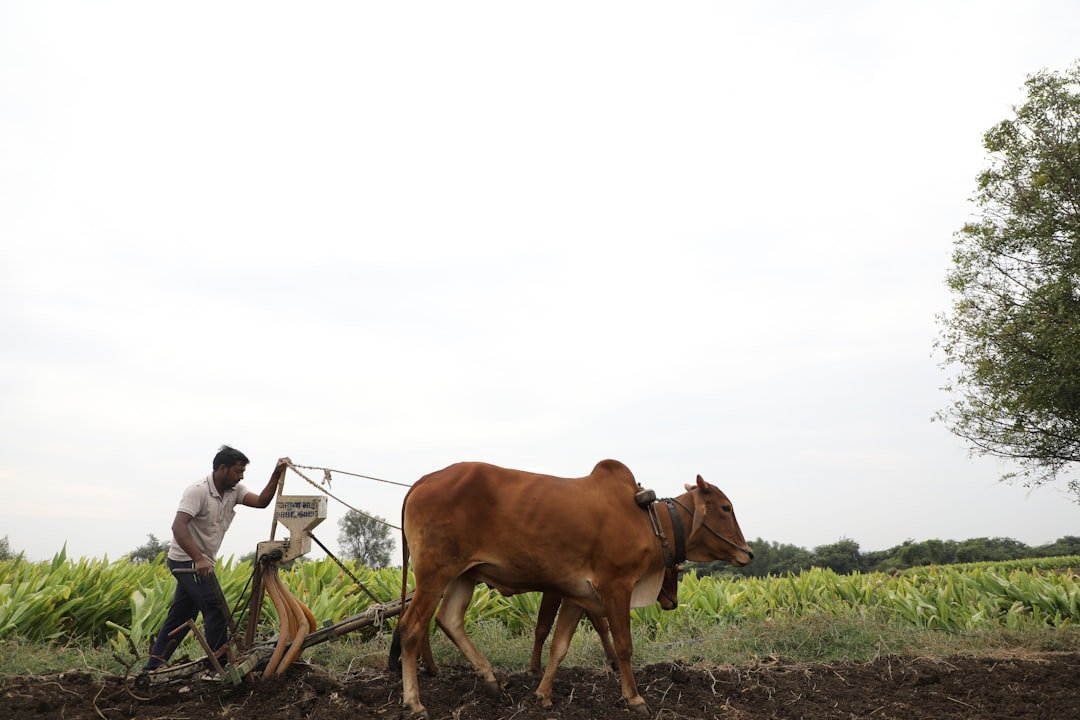
…it’s not just the heat. Across the vast, fertile plains of India, farmers are staring at a sky that’s refused to deliver. India just recorded its driest June in over a decade, and for a nation where nearly half the workforce depends on agriculture, that’s not just a weather footnote — it’s a potential crisis brewing under a relentless sun.
The India Meteorological Department (IMD) confirmed that June 2024 saw rainfall 11% below the long-period average, the weakest for the month since 2014. The monsoon, that life-giving seasonal shift that typically drenches the subcontinent from June through September, arrived late and then stalled. Parts of central and western India — key regions for crops like cotton, soybeans, and groundnuts — got less than half their normal rain. The result? Sown acreage for summer crops is down sharply. According to government data released in early July, the area planted with rice, pulses, and oilseeds was roughly 20% lower than at the same time last year.
Now, here’s the thing about Indian agriculture: it’s a high-stakes gamble every year on the monsoon. As Reuters reported, the government estimates foodgrain output for the first half of 2024 dropped by about 2% compared to the previous year. But the real worry is what happens next. The monsoon is the irrigation system for over half of India’s farmland. When it fails, farmers scramble for groundwater, diesel for pumps, and alternative seeds — all of which cost money they often don’t have.
A Patchwork of Pain: Which Crops Are Hurting Most?
Let’s break it down region by region. The northwestern states of Punjab and Haryana, India’s breadbasket, saw decent early rains, but the central and southern belts — think Maharashtra, Karnataka, and Madhya Pradesh — got scorched. These aren’t just any states; they’re the heartland for cash crops and staples.
Soybean, a key source of edible oil and animal feed, is planted in central India. Sowing was down 26% in late June compared to normal. Cotton, planted in Gujarat and Maharashtra, was off by 14%. And sugarcane, notorious for its thirst, is facing water stress in parts of Uttar Pradesh. Dr. Rakesh Singh, an agricultural economist at the Indian Agricultural Research Institute in New Delhi, put it bluntly: “We’re looking at three to four weeks of critical growth window. If rain doesn’t come by mid-July, we could see significant yield losses, especially for soybeans and pulses.”
Smallholder farmers — the backbone of Indian agriculture — are feeling the pinch hardest. They lack the capital to invest in drip irrigation or deep borewells. For them, a bad monsoon isn’t just a bad season; it’s a slide into debt. And with input costs for fertilizer and fuel already high, any drop in output squeezes margins dangerously thin.
But let’s not paint a picture of absolute doom just yet. The Indian government has been here before — many times, actually. And they’ve stockpiled grain like it’s an Olympic sport. The Food Corporation of India holds buffer stocks of rice and wheat that are well above the mandated norms. As of July 1, 2024, central grain reserves stood at about 70 million tonnes, roughly double the strategic reserve requirement. That’s a lot of rice and wheat — enough to feed the country for several months if things go sideways.
Stockpiles as a Shield, Not a Sword
The government’s message has been consistent: don’t panic. Agriculture Minister Narendra Singh Tomar assured Parliament in early July that the country has “adequate stocks” to handle any shortfall and that the Public Distribution System — which provides subsidized grain to 800 million people — won’t be disrupted. Fair enough. But grain stocks can’t fix everything. They can’t replace lost income for a farmer in Vidarbha who’s staring at withered soybean plants.
And here’s where the climate plot thickens. India isn’t just dealing with a delayed monsoon; it’s dealing with a changing one. Data from the IMD shows that the frequency of ‘normal’ monsoons has declined, while extreme rain events — flash floods followed by prolonged dry spells — have increased. That’s a double whammy. Farmers can’t plan because they get either too little water or too much, all at once.
Dr. Meera Gupta, a climate scientist at the Indian Institute of Tropical Meteorology in Pune, explained: “What we’re seeing is a shift in monsoon behavior. June 2024 is part of a pattern: weaker early rains, stronger later bursts. But the problem with a weak June is that it sets back kharif (summer) crop planting. Even if July and August bring heavy rain, the damage to the crop calendar is done.”
The global context doesn’t help. The World Meteorological Organization warned that the ongoing El Niño, which typically suppresses monsoon rainfall in India, is expected to persist through at least the early autumn of 2024. That means the reprieve, if it comes, might be short-lived.
What This Means for Your Dinner Plate (and Your Wallet)
For consumers, the immediate impact might be on your grocery bill. India is the world’s largest exporter of rice and a major producer of sugar and cotton. A drop in output here can ripple through global markets. Already, the government has tightened export restrictions on certain types of rice to keep domestic prices under control — a move that’s been widely reported. If the monsoon doesn’t recover, expect more curbs, and expect food inflation to stay elevated.
But there’s another layer: fodder for livestock. India’s dairy sector, the world’s largest, depends heavily on rain-fed feed crops. A poor monsoon means less fodder, which could spike milk prices. And with cereal inflation already stubbornly high in many parts of India, this is not just a farmer’s problem — it’s a consumer problem too.
Look, we’ve been here before — in 2002, 2009, and 2015, India faced severe monsoon deficits that hit agriculture hard. Each time, the government’s buffer stocks and the resilience of farmers pulled the country through. But as climate change accelerates those deficits, the margin for error shrinks.
In some ways, this is a stress test for India’s policy framework. Can the country shift toward more climate-resilient agriculture? Can it improve irrigation coverage — currently only about 50% of farmland — fast enough? The answers aren’t just academic; they determine whether millions of families eat, whether rural economies hold, and whether India can keep feeding itself.
And while it’s tempting to focus solely on the gloom, there are innovations worth watching. Precision agriculture and climate forecasting tools are getting better. For instance, AI demand forecasting technology, originally developed for industries like textiles, is being adapted to predict crop yields and optimize water use in Indian farms. It’s early days, but the potential to help farmers make smarter decisions about when and what to plant is real.
Meanwhile, the Indian Space Research Organisation’s satellite-based monitoring of crop health and soil moisture is improving early warning systems. These are the quiet, unglamorous tools that might just make the difference between a crisis and a manageable setback.
So, will the monsoon recover in July and August? No one can say for sure. But one thing is clear: India’s farmers are used to playing a high-stakes game with the weather. This year, the dice rolled against them in June. The question is whether the rest of the season deals them a better hand — one they can still win.
Frequently Asked Questions
Why is the June monsoon so important for Indian farming?
The June monsoon (the onset of the southwest monsoon) is critical because it determines the timing and extent of planting for kharif (summer) crops like rice, cotton, soybeans, and sugarcane. These crops are rain-fed across large areas. A weak June delays sowing, reduces the growing window, and can lower overall yields even if later rains improve. It also depletes soil moisture, affecting crop establishment during the early growth phase.
Does India have enough food to avoid a crisis despite the poor monsoon?
Yes, currently. The government holds significant buffer stocks of rice and wheat, roughly 70 million tonnes as of July 2024, which is well above the mandated strategic reserves. The public distribution system (PDS) covering 800 million people is unlikely to face disruption. However, grain stocks cannot compensate for the loss of farm income or higher input costs faced by millions of smallholders, nor can they prevent potential price increases for vegetables, pulses, and dairy products.
What can farmers do to protect their crops in a weak monsoon?
Farmers can adopt several strategies: use drought-tolerant seed varieties, shift to less water-intensive crops (like maize instead of paddy), improve water conservation through micro-irrigation, and utilize real-time weather advisory services. Government schemes like the Pradhan Mantri Fasal Bima Yojana (crop insurance) provide some financial cover, though claims processing can be slow. Longer-term solutions include expanding irrigation access and adopting precision agriculture techniques.