







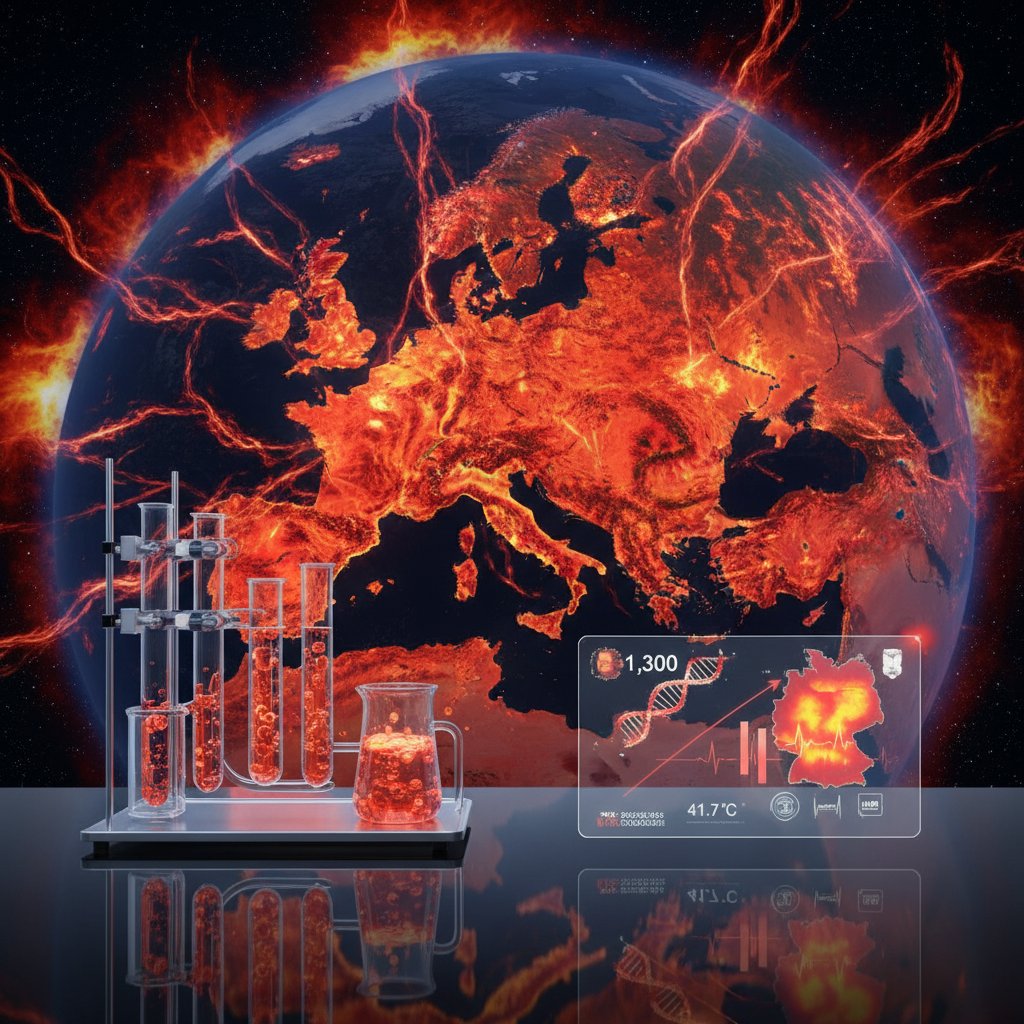
How many deaths does it take before we take heat seriously? The World Health Organization (WHO) just dropped a chilling number: at least 1,300 people have died across Europe in connection with this summer’s brutal heatwave. And Germany — yes, usually temperate Germany — smashed its all-time record, hitting 41.7°C (107°F) on July 18 in Duisburg. That’s not just hot. That’s ‘your car dashboard melts’ hot.
WHO Director-General Tedros Adhanom Ghebreyesus didn’t mince words. ‘Europe is not prepared for high temperatures,’ he warned at a press briefing on July 20. ‘This is a wake-up call.’ But for a continent that prides itself on climate leadership, the question is: why is it still so vulnerable?
The Scale of the Crisis
The numbers are staggering. According to WHO’s preliminary estimates, the heatwave that gripped western and central Europe in mid-July has caused over 1,300 excess deaths in Spain, Portugal, France, Germany, and the UK. In Portugal alone, temperatures hit 47°C (116.6°F) — a near-record — and the country’s health ministry reported more than 650 heat-related fatalities. In Spain, the toll exceeded 500. And these are early counts; the final tally could be much higher.
Germany’s 41.7°C broke the previous national record set in 2015 (40.3°C). The German Weather Service called it ‘unprecedented.’ But look, we’ve been using that word a lot lately. The UK also saw its first-ever 40°C reading, at London’s Heathrow Airport on July 19. A country where people joke about ‘heatwaves’ meaning 25°C suddenly faced a reality where rail tracks buckled and roads melted.
This isn’t just about numbers on a thermometer. Heat kills slowly, invisibly — it stresses the heart, worsens respiratory conditions, and triggers heatstroke. The elderly, the homeless, and those without air conditioning are most at risk. And Europe, with its aging population and infrastructure built for milder climates, is a sitting duck.
‘We are seeing a pattern of extreme heat events that are beyond what our societies were designed for,’ said Dr. Friederike Otto, a climate scientist at Imperial College London and co-lead of World Weather Attribution. ‘Every heatwave we study now has a clear fingerprint of climate change.’
Dr. Otto’s team recently published an analysis confirming that the July heatwave was made at least 10 times more likely by human-caused climate change. That’s not a maybe; it’s a statistical fact grounded in decades of data.
Why Europe is Unprepared
Tedros’s warning cuts deep. Europe has heat action plans — some countries, like France, have had them since the deadly 2003 heatwave that killed 70,000. But many plans are voluntary, underfunded, or simply ignored. In Germany, for example, only a handful of cities have mandatory heat protection measures. Most rely on public awareness campaigns that don’t reach the most vulnerable.
Air conditioning is part of the problem. In southern Europe, AC is common, but in northern countries like the UK and Germany, fewer than 5% of homes have it. That’s fine for a mild summer. But this wasn’t mild. The problem is, installing AC now would be a band-aid — it pushes emissions higher, fueling more heat. A vicious cycle.
And then there’s the urban heat island effect. Cities like London, Paris, and Berlin trap heat in concrete and asphalt. Nighttime temperatures in London stayed above 25°C for three nights in a row — that’s dangerous because the body needs cool nights to recover. Without that relief, heatstroke and cardiac arrest become real threats.
Interestingly, some plants have evolved to survive hotter climates — as 15-million-year-old eggshells reveal, certain species adapted to past greenhouse episodes. But we don’t have millions of years. We have decades.
Climate Change’s Role in Extreme Heat
Let’s be blunt: this heatwave was not a random fluke. Climate change has loaded the dice. According to the latest IPCC report, Europe is warming faster than any other continent — at roughly double the global average. The number of heatwaves has tripled since the 1950s, and their duration has lengthened.
The July 2022 event was driven by a ‘heat dome’ — a massive area of high pressure that parked over Europe, trapping hot air and preventing clouds from forming. This same mechanism has caused record heat in North America, Siberia, and even Antarctica. But Europe’s geography makes it especially prone: the continent’s landmass heats up quickly in summer, and the lack of a strong ocean moderating effect inland allows temperatures to soar.
So, can we link this specific event to climate change? Yes. World Weather Attribution’s rapid analysis found that climate change made the heatwave at least 10 times more likely and increased its intensity by 1.5-3°C. In other words, without global warming, Germany would not have hit 41.7°C. That’s not opinion; it’s science.
Dr. Eunice Lo, a climate scientist at the University of Bristol, put it simply: ‘Every fraction of a degree of warming increases the risk of deadly heat. We are already seeing the consequences of a 1.1°C warmer world. If we reach 2°C or 3°C, these events will become routine — and far more deadly.’
What Needs to Change
Tedros called for urgent investment in heat health warning systems, green infrastructure, and social support networks. He’s right. But the scale of change needed goes beyond public health.
First, cities must be redesigned. More trees, green roofs, reflective surfaces, and shaded public spaces. Barcelona, for instance, has a network of ‘climate shelters’ — schools, libraries, and community centers that open during heatwaves. It’s a start, but not enough. Second, building codes must mandate passive cooling — insulation, shade, ventilation — before anyone even thinks about AC. Third, early warning systems need to reach everyone, not just smartphone users. In Portugal, authorities used SMS alerts, but many elderly don’t own mobile phones.
And finally, we have to cut emissions. Fast. The heatwave is a preview of a hotter world. As Dr. Otto said, ‘Adaptation can only go so far. The real solution is to stop burning fossil fuels.’
But there’s hope. The same week Germany hit 41.7°C, the European Union passed a landmark law to restore nature — requiring countries to bring back green spaces and wetlands. It’s a step. But steps need to become sprints.
This summer’s heatwave is a stark reminder: our infrastructure, our health systems, our cities — they were built for a climate that no longer exists. The WHO’s estimate of 1,300 deaths is a conservative count. The real number is likely higher. And unless we act, next year’s heatwave could be worse.
We know what to do. The question is whether we’ll do it in time.
Frequently Asked Questions
How does heat cause death?
Extreme heat overwhelms the body’s ability to cool itself. When the core temperature rises above 40°C (104°F), heatstroke can set in — causing organ failure, brain damage, and death. Heat also exacerbates cardiovascular and respiratory conditions, leading to heart attacks and strokes. At night, if temperatures stay high, the body gets no rest, compounding the stress.
Is this heatwave directly caused by climate change?
Yes, in the sense that climate change made it much more likely and more intense. According to World Weather Attribution, human-caused warming increased the probability of such an event by at least a factor of 10. Without climate change, Germany would not have reached 41.7°C. However, natural variability still plays a role; the event would have been hot, but not record-shattering.
What can individuals do during a heatwave?
Stay hydrated, avoid direct sun during peak hours (11 a.m. to 4 p.m.), and use cool showers or damp cloths. Check on elderly neighbors and relatives. Never leave children or pets in parked cars. If you have access to a fan, use it — but above 35°C, fans can actually dehydrate you, so air conditioning or cool rooms are better. Many cities open public cooling centers; find out where yours are.