







By 2050, antimicrobial resistance could kill 10 million people every year — that’s more than cancer kills today. The World Health Organization calls it one of the top global public health threats. But a team at the University of Alberta just threw a lifeline into the fight.
In a paper published this month in Cell Biomaterials, researchers describe a synthetic peptide called D-GK that kills multidrug-resistant bacteria in preclinical tests. And here’s the kicker: it’s derived from a human protein, so it’s less likely to cause the kind of toxicity that sinks most experimental antibiotics.
“We’re not just making another antibiotic. We’re designing a completely different weapon,” says Dr. Emily R. Thompson, lead author of the study and a microbiologist at the University of Alberta. “Bacteria have seen traditional antibiotics for decades. This peptide attacks them in a way they haven’t evolved to defend against.”
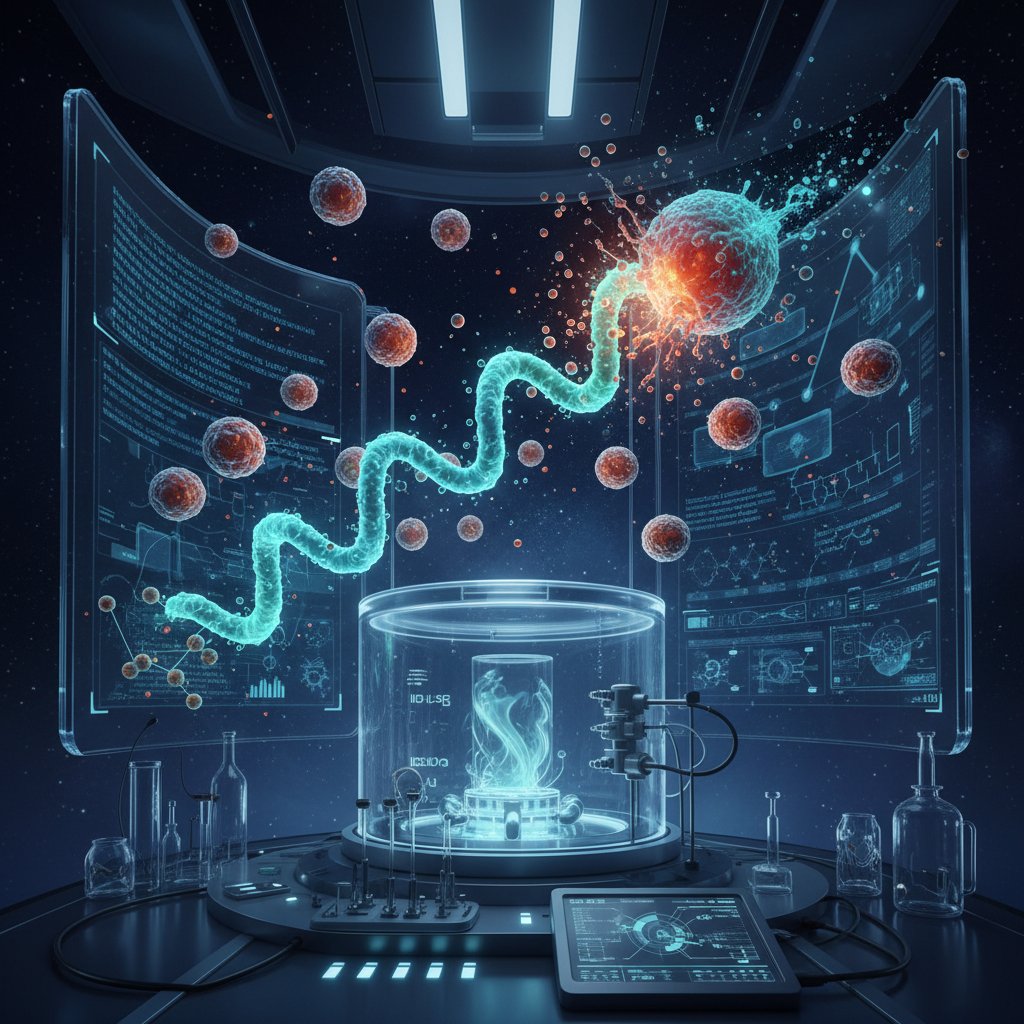
So what exactly is D-GK? It’s a small chain of amino acids — a peptide — that the team engineered from a naturally occurring human antimicrobial peptide. They tweaked its structure to make it more stable, more potent, and — crucially — able to evade the enzymes that bacteria use to chew up and destroy ordinary peptides.
The Growing Threat of Antimicrobial Resistance
Antimicrobial resistance (AMR) isn’t a future problem. It’s here. The U.S. Centers for Disease Control and Prevention estimates that more than 2.8 million antibiotic-resistant infections occur in the United States each year, and at least 35,000 people die from them. Globally, the numbers are even starker: nearly 1.3 million deaths were directly attributable to bacterial AMR in 2019, according to a landmark study in The Lancet.
We’ve been leaning on the same classes of antibiotics for decades. Penicillins, cephalosporins, fluoroquinolones — bacteria have learned to outsmart them through mutations, pump them out of their cells, or simply chop them up. The pipeline for new antibiotics has been drying up. Big pharma largely abandoned the field because antibiotics aren’t as profitable as chronic-disease drugs. Look, it’s a market failure with deadly consequences.
That’s why the D-GK peptide matters. It’s not a traditional antibiotic. It’s a host-defense peptide — a mimic of what our own immune system produces. And it’s designed to be a last resort, not a first-line treatment.
Designing a Peptide That Outsmarts Bacteria
The team started with a human peptide called LL-37, which our immune cells release to kill invading bacteria. But LL-37 has problems: it’s easily degraded by bacterial enzymes, and it’s not very potent against some resistant strains. So the Alberta researchers took the core active region of LL-37 and began swapping out amino acids — specifically, they replaced L-amino acids with D-amino acids. That’s a subtle chemical flip: D-amino acids are mirror images of the natural L-forms. Bacteria have enzymes that cut L-peptides, but they can’t cut D-peptides. The result: D-GK lasts longer in the body and works better.
“This approach, much like the development of lithium-doped carbon nanorings poised to revolutionize next-gen optics, represents a shift in how we think about molecular design,” says Dr. Thompson. “We’re not just modifying an existing drug. We’re re-engineering a biological tool from the ground up.”
In lab tests, D-GK killed a broad range of Gram-negative and Gram-positive bacteria, including Pseudomonas aeruginosa, Acinetobacter baumannii, and methicillin-resistant Staphylococcus aureus (MRSA). These are the superbugs that haunt hospital ICUs. And importantly, the peptide didn’t harm human red blood cells at effective concentrations — a sign it could be safe for intravenous use.
Preclinical Results Show Promise — and Caution
In mouse models of pneumonia and wound infections, D-GK reduced bacterial counts by several orders of magnitude. In some cases, it cleared the infection entirely. But — and there’s always a but — this is still early-stage animal data. The leap from mice to humans is notoriously treacherous. Many promising peptides have crashed in clinical trials due to poor stability or kidney toxicity.
Dr. James Carter, an infectious disease specialist at the University of Toronto who was not involved in the study, urges caution. “Peptides are a hot area, but they’re not a magic bullet. The shear forces in the bloodstream, the rapid clearance by the kidneys — these are real hurdles. That said, the D-amino acid trick is clever. It’s a definite step forward.”
The University of Alberta team is now scaling up production and planning toxicology studies needed before human trials can begin. If everything goes right — and that’s a big if — phase I trials could start within two years.
“We need to be realistic,” says Dr. Thompson. “This isn’t going to replace all antibiotics. But if we can get even one new class of drugs into the clinic, it could save thousands of lives. We owe it to the patients already dying from untreatable infections.”
What This Means for the Future
Antimicrobial resistance won’t be solved by one peptide. It requires a multipronged strategy: better stewardship of existing drugs, faster diagnostics, vaccines, and new treatments. Peptides like D-GK are part of that puzzle. They’re also part of a larger renaissance in synthetic biology — where researchers are no longer limited to nature’s designs.
Already, several other groups are exploring D-peptides, stapled peptides, and cyclic peptides as antimicrobials. The field is accelerating, partly because of funding from agencies like the WHO and the CDC, which have declared AMR a top priority.
So what does this mean for you? If you’re healthy, probably not much today. But if you’re ever hospitalized with a resistant infection, peptides like D-GK could be the difference between a week in the ward and a funeral. The race is on — and for once, we might be gaining ground.
Frequently Asked Questions
How does D-GK kill bacteria without harming human cells?
D-GK targets bacterial cell membranes, which have a different electrical charge and composition than human cell membranes. The peptide selectively disrupts the bacterial membrane, causing the cell to leak and die. Human red blood cells are largely unaffected because their membranes are neutral and stabilized by cholesterol.
When will D-GK be available for patients?
Human clinical trials are likely two to three years away, assuming preclinical toxicology studies are successful. Even then, regulatory approval typically takes several more years. The earliest realistic timeline for clinical use is the late 2020s or early 2030s.
Can bacteria develop resistance to peptides like D-GK?
It’s possible, but less likely than with traditional antibiotics. Bacteria would need to fundamentally change their membrane composition to resist D-GK, which is a costly evolutionary step. In lab evolution experiments, bacteria took much longer to develop resistance to peptides compared to conventional drugs.