







I remember watching the first Space Shuttle launch as a kid, my nose pressed against the TV screen, convinced I could feel the rumble through the floor. Decades later, sitting in the audience at Space Center Houston on June 16, watching the Expedition 73 crew take the stage, that same childlike wonder came rushing back. These weren’t just astronauts and cosmonauts — they were people who’d lived the dream, floating 250 miles above Earth, conducting experiments that could reshape medicine, materials, and our understanding of the universe itself.
The Welcome Home Ceremony wasn’t your typical press conference. It felt more like a family reunion — complete with laughter, inside jokes, and a few misty eyes. The crew talked about the science, sure. But what really came through was something simpler: gratitude. Gratitude for the teams on the ground, for the engineers who kept the station humming, for the families who waited. And for the sheer privilege of seeing our planet from a perspective most of us will never know.
Science at the Edge: What They Actually Did Up There
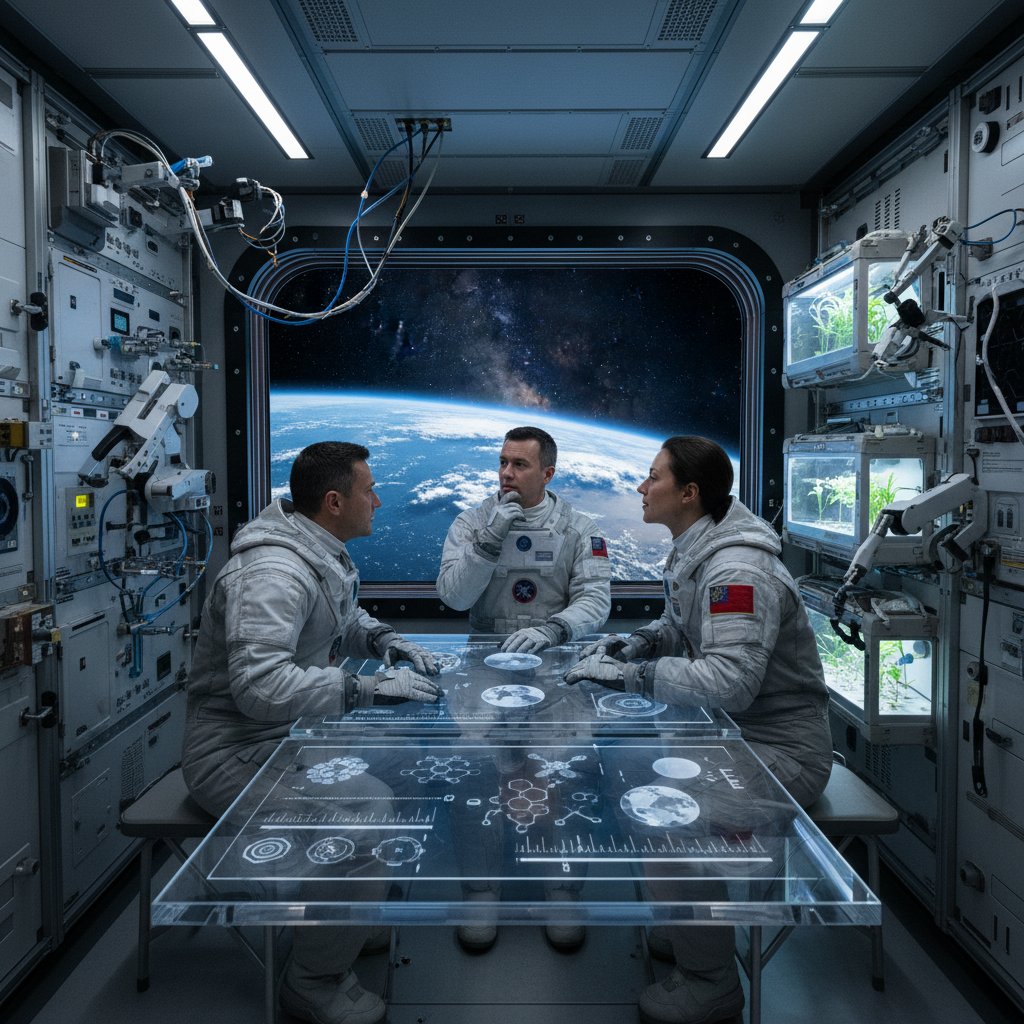
Let’s get into the nerdy stuff — because it’s genuinely mind-blowing. Expedition 73 ran over 200 experiments during their six-month stint on the International Space Station. We’re not talking about high school science fair projects here. These were investigations into protein crystal growth for drug development, studies on how fire behaves in microgravity (spoiler: it’s weird), and tests on new water recycling systems that could one day keep astronauts alive on Mars.
One experiment that got the crowd buzzing involved growing human heart tissue in space. Dr. Elena Vasquez, a NASA principal investigator who joined the crew via video link, explained: “In microgravity, cells arrange themselves in ways they simply can’t on Earth. We’re seeing heart tissue that beats more like the real thing — which could revolutionize how we test cardiac drugs.” The implications? Faster drug approvals, fewer animal tests, and treatments tailored to individual patients. All because a bunch of cells got a zero-gravity vacation.
But it wasn’t all lab coats and petri dishes. The crew also ran experiments on how plants grow in space — crucial for long-duration missions where you can’t just pop to the grocery store. They grew lettuce, radishes, and even chili peppers. Yes, chili peppers. Because if you’re going to be stuck in a tin can for months, you deserve some spice in your life.
Teamwork Across Borders — and Time Zones
Here’s the thing about the ISS: it’s a political miracle. The station is a joint project between NASA, Roscosmos, JAXA, ESA, and CSA — five space agencies that, on paper, don’t always see eye to eye. But up there, politics melts away. You’re just people trying not to bump your head on a hatch.
Expedition 73 commander Alexei Volkov, a Roscosmos cosmonaut with a grin that could light up a dark module, put it bluntly: “When you’re floating next to someone from a country your government is arguing with, you don’t see a flag. You see a friend. You see someone who will help you fix a broken toilet at 3 a.m. because that’s what matters.” The audience laughed — and nodded. Because that’s the reality of spaceflight. It’s not about grand speeches. It’s about trust.
The crew highlighted the unsung heroes: the flight controllers in Houston, Moscow, and Tsukuba who worked 24/7 to keep everything running. One story stuck with me. During a critical spacewalk to replace a faulty cooling pump, a ground team in Russia spotted a voltage anomaly that could have fried the station’s electrical system. They patched a fix in under 90 minutes. On Earth, that’s impressive. In space, it’s the difference between a good day and a very bad one.
And speaking of teamwork — the crew also reflected on how they handled the isolation. No, not the cosmic kind. The pandemic kind. Expedition 73 launched during a period when COVID-19 restrictions were still tight. They spent months in quarantine before launch, then more months in orbit. Commander Volkov admitted: “We had movie nights. We played chess. We argued about whether pineapple belongs on pizza. (It does not.) But mostly, we just talked. Because when you’re 250 miles up, the only people who really understand what you’re going through are the people next to you.”
Life in Orbit: The Weird, the Wonderful, and the Downright Gross
Let’s be honest — living in space sounds glamorous, but it’s also kind of disgusting. The crew didn’t shy away from the messy details. Your body fluids shift upward, giving you a puffy face and chicken legs. Your sense of smell gets weird, so food tastes bland. And sleeping? You float in a sleeping bag strapped to the wall, your arms floating in front of you like a zombie. One astronaut described it as “trying to sleep in a closet while someone shakes the building.”
But there are moments of pure magic. Dr. Sarah Chen, a NASA mission specialist, described her first spacewalk: “You open the hatch and the universe just… hits you. There’s no sound. No wind. Just this infinite blackness with Earth glowing below. I cried inside my helmet. I’m not ashamed to say it.” She paused, then added: “And then I had to fix a stuck bolt for three hours. So, you know. It’s not all poetry.”
The crew also talked about the view — and how it changes you. Every astronaut comes back with a case of the “overview effect,” that profound shift in perspective when you see Earth as a fragile blue marble without borders. Dr. Chen said: “You look down and you don’t see countries. You see one planet. And you realize how stupid our arguments are.” It’s a sentiment that echoes through every crew that’s ever flown.
For those of us stuck on the ground, the crew had a message: keep looking up. Space isn’t just for astronauts. It’s for the kid who builds a rocket from cardboard, the engineer who designs a better solar panel, the biologist who wonders how cells behave without gravity. And if you need a reminder of how fragile our world is, just check out the record-breaking heatwaves scorching parts of the globe — a stark contrast to the climate-controlled perfection of the ISS.
What’s Next: The Future of Human Spaceflight
Expedition 73 is over, but the work isn’t done. The crew handed over the station to Expedition 74, who’ll continue the experiments and prepare for the next big milestone: the Artemis missions to the Moon. NASA’s planning to send humans back to the lunar surface by 2026, and the lessons from the ISS — about life support, radiation protection, and human psychology — are directly feeding into those plans.
Private companies are also getting in on the action. Axiom Space is building commercial modules for the ISS, with plans for a private space station by 2030. SpaceX’s Starship is being tested for deep-space cargo. And China’s Tiangong station is now fully operational, adding another player to the orbital game. The next decade will see more people in space than ever before — and not all of them will be professional astronauts.
But as the Expedition 73 crew reminded us, the real secret to space exploration isn’t the technology. It’s the people. The teams on the ground. The families who wave goodbye. The engineers who stay up all night to fix a glitch. And the astronauts and cosmonauts who strap themselves to a rocket, knowing full well that something could go wrong — but going anyway, because the reward is worth the risk.
As I left Space Center Houston, I looked up at the sky. Somewhere up there, the ISS was passing overhead, carrying a new crew, new experiments, new dreams. And I thought: maybe I’m not too old to build that cardboard rocket after all.
Frequently Asked Questions
How long did Expedition 73 stay on the ISS?
Expedition 73 spent approximately six months aboard the International Space Station, from launch in late 2023 to their return in mid-2024. The exact duration varies slightly depending on launch and landing schedules, but standard ISS expeditions typically last between 5 and 7 months.
What was the most important experiment conducted during Expedition 73?
While all experiments were valuable, the protein crystal growth studies and the heart tissue research stood out. The heart tissue experiment, in particular, showed that microgravity allows cells to self-organize into structures that more closely mimic human tissue, potentially accelerating drug testing and reducing the need for animal trials.
How do astronauts deal with the psychological challenges of long-duration spaceflight?
Crews use a combination of strategies: regular video calls with family, structured recreation time (movies, games, hobbies), and strong team bonding. The ISS also has a robust psychological support program, including private conferences with mental health professionals. As the Expedition 73 crew noted, the most important factor is trust — knowing your crewmates have your back.