







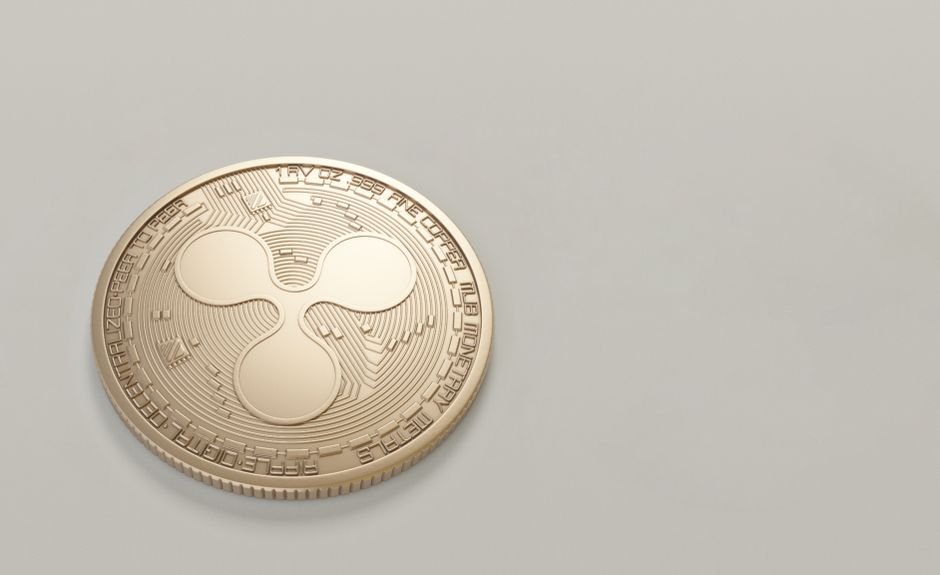
So you’ve heard about Bitcoin and Ethereum. But XRP? That’s the one that’s been quietly eating the financial world’s lunch. Not with the chaotic volatility of meme coins, but with something far more radical: actual utility.
Ripple’s native digital asset isn’t trying to replace your bank account. It’s trying to become the plumbing behind it. Think SWIFT, but faster, cheaper, and running on a blockchain that doesn’t need to burn through a small country’s electricity bill every day. And after a years-long legal battle with the SEC, XRP just got a massive green light. This isn’t hype — it’s a real-world shift in how money moves across borders.
The Technology Behind XRP’s Speed
Bitcoin takes about 10 minutes to confirm a transaction. Ethereum, depending on congestion, can take seconds to minutes. XRP? Three to five seconds. And the cost is fractions of a cent. That’s not just fast — that’s faster than most credit card networks.
How? XRP doesn’t use proof-of-work or proof-of-stake. It uses the XRP Ledger Consensus Protocol — a unique mechanism where a set of trusted validators compare transactions until they reach agreement. No mining, no staking pools, no energy arms race. The XRP Ledger is designed to settle transactions in near real-time, making it ideal for the high-volume, low-margin world of cross-border payments.
And here’s the kicker: the ledger can handle 1,500 transactions per second right now, with plans to scale to tens of thousands. Compare that to Bitcoin’s ~7 TPS and Ethereum’s ~15 TPS. For context, Visa processes about 1,700 TPS on average, but can peak much higher. XRP is already in that league.
“XRP is not a store of value — it’s a bridge currency. It solves the liquidity problem that has plagued correspondent banking for decades.” – David Schwartz, CTO of Ripple
The implications for anyone sending money abroad are huge. Traditional wire transfers take 1–5 days and eat 5–10% in fees. XRP-powered transfers settle in seconds and cost near zero. For the millions of migrant workers sending remittances home, that’s not just convenience — it’s a financial lifeline.
A Legal Victory That Changed Everything
If you followed crypto news in 2023, you know the SEC vs. Ripple case was the Super Bowl of regulatory drama. In July 2023, Judge Analisa Torres ruled that XRP is not a security when sold on public exchanges to retail investors. That single ruling sent XRP’s price soaring over 70% in hours.
But the fight isn’t entirely over. Institutional sales of XRP — those made directly to hedge funds and banks — were deemed securities. Ripple was fined $125 million in 2024, far less than the SEC’s initial ask of nearly $2 billion. The company has said it will pay the fine from its balance sheet. No token dilution, no bankruptcy — just a check and a clear path forward.
Why does this matter for the average reader? Because legal clarity unlocks institutional adoption. Banks and payment processors don’t touch assets that might be classified as securities. Now that XRP is partially clear, major financial players are flooding in. Reuters reported in October 2024 that Bank of America had signed on to use Ripple’s payment network for cross-border transactions.
Look, regulation is boring — until it’s the difference between your crypto being a tulip bulb and being a legitimate tool for global finance. XRP just crossed that line.
Why Banks Are Actually Using It
Let’s be real: most cryptocurrencies still struggle to find a use case beyond speculation. But Ripple has been signing banking partnerships since 2015. Over 300 financial institutions in 40+ countries now use RippleNet, the company’s payment network. And many of them use XRP as the bridge currency for settlement.
Here’s how it works: A bank in Tokyo wants to send dollars to a bank in London. Instead of holding pre-funded nostro accounts in multiple currencies (which ties up billions in liquidity), they use XRP as a temporary bridge. The Tokyo bank buys XRP, sends it to the London bank in seconds, which then sells it for dollars. The whole process takes 3–5 seconds, and the bank only holds XRP for that brief window. Currency risk? Minimal. Liquidity freed up? Massive.
This is not theoretical. Santander, Standard Chartered, and SBI Holdings are live users. The Asian Development Bank has piloted XRP for cross-border payments in Southeast Asia. And in 2024, the National Bank of Kuwait expanded its partnership with Ripple for instant payments in the Gulf region.
And here’s the part that gets finance geeks excited: XRP’s energy consumption is negligible. A single XRP transaction uses about 0.0079 kWh — enough to power a lightbulb for about five minutes. A single Bitcoin transaction uses the equivalent of a US household’s monthly electricity. For ESG-conscious banks, that’s a screaming green light.
“XRP offers a rare combination: speed, low cost, and environmental sustainability. That trifecta is why central banks and commercial banks are taking it seriously.” – Dr. Jemima Kelly, fintech researcher at the University of Cambridge
What’s Next for XRP?
The SEC case might be winding down, but the real test is adoption. Ripple launched its RLUSD stablecoin in late 2024, pegged to the US dollar and built on the XRP Ledger. That gives banks a stable option for settlements while still using XRP for cross-currency bridging.
There’s also talk of an XRP ETF. The same firms that launched Bitcoin ETFs — BlackRock, Fidelity — are reportedly eyeing XRP. If approved by the SEC under the new administration? The floodgates could open. Analysts at Standard Chartered have projected XRP could reach $5–$8 in a bull case scenario within three years. But even if price doesn’t spike, the technology is already embedding itself into the backbone of global finance.
And that’s the real story. We’ve spent years arguing whether crypto is a bubble. Meanwhile, XRP has been quietly connecting banks, reducing settlement times from days to seconds, and proving that blockchain doesn’t have to be a rebel — it can be a bridge.
So keep an eye on the courtroom drama if you want. But the future of XRP won’t be written by judges. It’ll be written in the transaction logs of banks from Tokyo to London to Kuwait City. And it’s happening right now.
Frequently Asked Questions
Is XRP the same as Ripple?
No, but they’re deeply connected. Ripple is the company that created the XRP Ledger and holds a large amount of XRP tokens. XRP is the digital asset that runs on that ledger. Think of Ripple as the car manufacturer and XRP as the fuel.
Can I buy XRP on major exchanges?
Yes. After the partial legal victory in 2023, most major US exchanges relisted XRP, including Coinbase, Kraken, and Gemini. It’s also available globally on Binance, Bitstamp, and many others.
How is XRP different from Bitcoin?
Bitcoin is designed as a decentralized store of value and uses proof-of-work (energy intensive). XRP is designed for fast, low-cost payments and uses a consensus protocol that’s thousands of times more energy efficient. XRP also has a fixed supply of 100 billion tokens, while Bitcoin’s supply is capped at 21 million.