






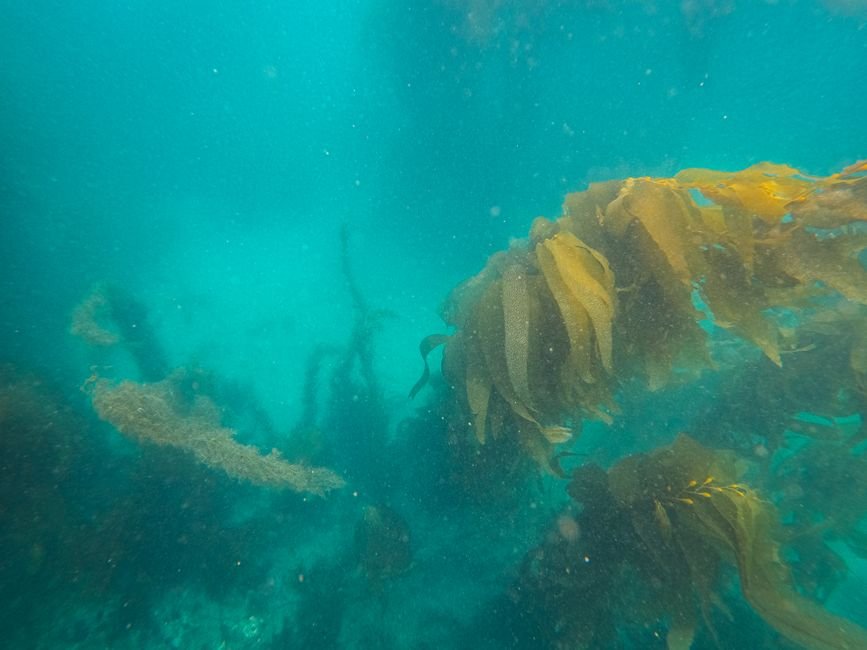
Picture this: you’re floating above a kelp forest off the coast of Tasmania, and the water is eerily clear. No thick brown canopy shading the seafloor, no fish darting through the stalks. Just bare rock, urchins, and silence. That’s the before picture—the one that’s become all too common. But there’s an after picture too, and it’s starting to emerge in places where scientists, fishers, Indigenous groups, and coastal communities decided they weren’t going to let their underwater forests disappear without a fight.
A global review published this month in Nature Sustainability has confirmed something that probably won’t surprise you: the most successful kelp restoration projects are not the ones with the biggest budgets or the fanciest tech. They’re the ones built on partnerships—messy, improbable, beautiful partnerships between people who often don’t see eye to eye. The study, led by Dr. Aaron Eger of the University of New South Wales, analyzed 259 restoration initiatives across 35 countries. And the headline is clear: communities are the secret ingredient.
The Quiet Crisis Beneath the Waves
Kelp forests are the rainforests of the ocean—minus the oxygen hype. They cover less than 1% of the global seafloor, but they support an estimated 25% of marine biodiversity. They absorb carbon, buffer coastlines from storms, and sustain fisheries worth billions of dollars. But they’ve been vanishing at a rate of roughly 2% per year worldwide. That’s faster than tropical rainforests.
The causes aren’t mysterious: warming waters, marine heatwaves (like the “Blob” that fried the Pacific from 2014–2016), overfishing of predators, nutrient pollution, and the relentless explosion of sea urchins. In some places, urchins have turned kelp forests into barrens—essentially underwater deserts—that can persist for decades. Look, it’s grim. But it’s not hopeless.
“Kelp restoration has historically been treated as a technical problem: how do we plant more kelp faster?” says Dr. Sarah J. Smith, a marine ecologist at the University of California, Santa Cruz, who wasn’t involved in the review. “But the review shows that the technical fix is only half the story. The other half—the bigger half—is building social buy-in and creating economic incentives for local communities to become stewards.”
Unlikely Alliances: Fishers, Scientists, and Indigenous Knowledge
So what does a successful community-led restoration project actually look like? In Japan’s northeastern coast, the Nori fishing cooperative has worked with marine ecologists to restore Ecklonia kelp beds using a simple, low-tech method: divers attach small mesh bags of urchin-smashed limestone to the seafloor, giving kelp spores a foothold. It’s cheap. It’s labour-intensive. It works, partly because the fishers have a direct stake in the health of the forest—more kelp means more abalone, more sea cucumber, more income.
In British Columbia, Canada, the Heiltsuk First Nation has been leading a project to restore bull kelp in the Central Coast. They aren’t just consulting with scientists—they’re running the show, using traditional ecological knowledge passed down for millennia. The Heiltsuk know that kelp thrives in areas with strong currents and that removing certain urchins (for food, not waste) can tip the ecosystem back into balance. Their work has become a model for the entire region.
And then there’s the case of Norway, where a partnership between the Norwegian Institute for Water Research (NIVA) and local dive clubs has restored over 20 hectares of Laminaria hyperborea by sending teams of recreational divers to manually remove urchins. It sounds simple—and it is. But it’s also scalable. “The real innovation isn’t the method,” says Dr. Eger. “It’s the infrastructure of trust and shared purpose that makes those dives happen year after year.”
These aren’t isolated feel-good stories. The global review found that projects involving community participation had a 73% higher survival rate for transplanted kelp after three years, compared to projects that were entirely top-down. That’s a staggering difference.
A Blueprint for Restoration
Okay, so communities matter. But what does this mean for policy? The review offers a clear blueprint: don’t just drop kelp spores in the water and hope for the best. Invest in long-term relationships. Create marine protected areas that allow kelp to recover naturally. And—this is the crucial bit—help communities build economies around healthy kelp forests, not around exploiting them.
That last point is huge. In Portugal, for example, fishing communities have been transitioning from commercial fishing to kelp farming and ecotourism, supported by government grants and NGO training. The kelp doesn’t just return; it becomes an asset. Similarly, in southern Australia, the Great Southern Reef Restoration Project has linked kelp restoration directly to the abalone fishery, paying fishers to help monitor and replant areas where kelp has vanished. The result? Fishermen who once saw kelp as just background scenery now patrol their local reefs like national park rangers.
“We need to stop thinking of kelp restoration as a charity project and start seeing it as an investment in natural capital,” says Dr. Carlos Mendez, a marine economist at the University of Tasmania who studies community-based conservation. “Communities will protect what they depend on for their livelihood. The trick is making the connection visible and immediate.”
What It Means for the Rest of Us
You don’t need to be a diver or a marine biologist to care about this. Kelp forests are a global carbon sink—they can absorb CO₂ up to 20 times faster than terrestrial forests per unit area. When they die, that carbon doesn’t just disappear; some of it gets released back into the water, accelerating ocean acidification. So the loss of kelp exacerbates climate change, and climate change exacerbates the loss of kelp. It’s a vicious cycle—but one that community-led restoration can break.
And here’s the part that gets me excited: these projects are cheap. Most of the successful ones cost less than $50,000 per hectare, which is a fraction of the cost of restoring a coral reef or a mangrove forest. For the price of a single seawall, you could restore an entire network of underwater forests along a coast, providing habitat, food, and carbon storage for decades.
Of course, it’s not all smooth sailing. “Scaling up is the next frontier,” says Dr. Smith. “We can restore a hectare here and there, but to reverse the global decline we need to think about hundreds of thousands of hectares. That means we need national policies that support community-led restoration at scale—and that’s not easy.” But the momentum is building. In 2022, the UN Decade of Ecosystem Restoration listed kelp forests as a priority habitat. Several countries—including the UK, Australia, and Norway—have launched national kelp restoration strategies. And the Nature Sustainability review provides the evidence base that governments need to invest in communities, not just in labs.
So what’s next? More pilots, more partnerships, and—if we’re lucky—a cultural shift in how we see the ocean. The kelp forests won’t come back by themselves. But with fishers, indigenous groups, and dive clubs leading the charge, they just might come back better—resilient, diverse, and tied to the people who live beside them. That’s a future worth diving into.
Frequently Asked Questions
Why are kelp forests disappearing so fast?
Global kelp forests are declining at roughly 2% per year due to a combination of warming ocean temperatures, marine heatwaves, overfishing of species that control sea urchin populations, and nutrient pollution from agriculture and urban runoff. In many areas, urchins have overgrazed the kelp, creating barren zones that can persist indefinitely without active intervention.
How can I get involved in kelp restoration if I don’t live near the coast?
Even if you’re landlocked, you can support organizations like the Kelp Forest Foundation, SeaTrees, or the Great Southern Reef Foundation. You can also reduce your carbon footprint—every ton of CO₂ we avoid helps slow the ocean warming that stresses kelp forests. And if you eat seafood, choose sustainably sourced options that don’t contribute to overfishing of kelp-forest predators.
Do kelp restoration projects actually work long-term?
Yes—when done with community involvement. The global review found that community-led projects have a 73% higher survival rate for transplanted kelp after three years compared to top-down approaches. However, long-term success requires ongoing management, monitoring, and climate mitigation. Kelp restoration buys time, but it’s not a substitute for reducing greenhouse gas emissions.