








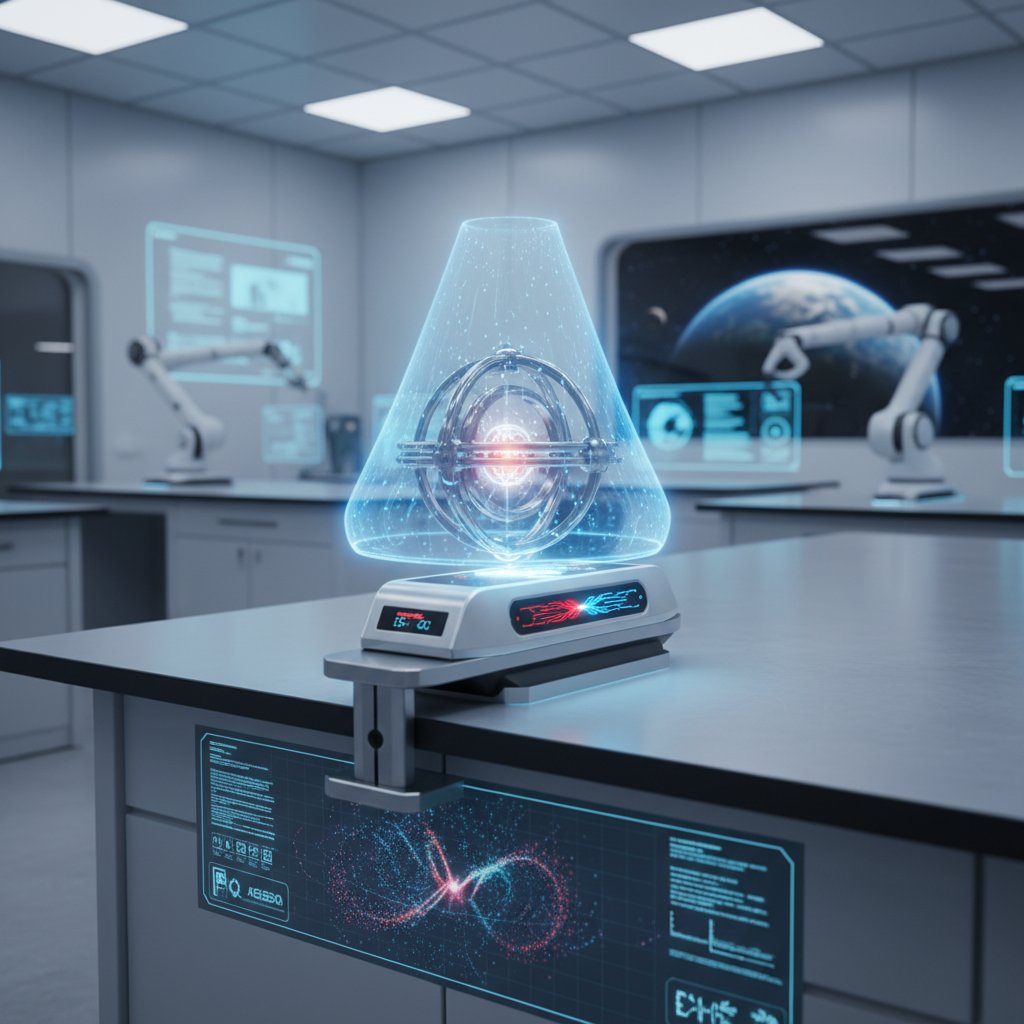
Imagine designing a magnetic table clamp that can hold a robotic arm steady, a camera rig in place, or a delicate experiment secure—all without touching a single piece of metal. A new interactive simulation, released by a team of engineers at the University of Bristol, is turning that fantasy into a virtual reality, and it’s reshaping how students, hobbyists, and professionals approach mechanical design.
This isn’t just another physics toy. The simulation, called MagGrip Sim, allows users to tweak magnetic strength, clamp geometry, and material properties in real time, then watch as the virtual clamp either holds firm or fails catastrophically. For anyone who’s ever struggled with a wobbly workbench or a slipping camera mount, this tool could be a game-changer.
“We wanted to democratize the design process,” says Dr. Elena Torres, lead researcher on the project at the University of Bristol’s Department of Mechanical Engineering. “Instead of building a dozen prototypes and wasting materials, you can test hundreds of configurations in minutes. It’s like having a physics lab in your browser.”
From Classroom to Workshop: How the Simulator Works
The simulation, built using WebGPU and open-source physics libraries, models the complex interplay between magnetic fields, friction, and structural loads. Users start by selecting a clamp shape—from a simple C-clamp to a multi-jointed articulating arm—then adjust parameters like neodymium magnet grade (from N35 to N52), contact surface area, and the weight of the object being secured.
As you tweak the settings, a real-time 3D visualization shows magnetic field lines, stress distributions, and even thermal buildup. The simulator calculates the holding force in newtons and compares it to the applied load, flagging potential failures with a red warning. It’s intuitive enough for a high school student but powerful enough for an engineering firm.
“The real breakthrough is the accuracy,” explains Dr. Marcus Chen, a computational physicist at MIT who reviewed the simulator. “They’ve incorporated real-world data from magnetic material tests, so the predictions are within 5% of physical prototypes. That’s unprecedented for a browser-based tool.”
Why This Matters for Everyday Science and Tech
Magnetic clamps are everywhere. They hold cameras on film sets, secure sensors on drones, and keep robotic arms stable on factory floors. But designing them has always been a mix of guesswork and over-engineering. Too weak, and your equipment falls. Too strong, and you risk damaging surfaces or making adjustments impossible.
The simulation addresses this head-on. For educators, it offers a hands-on way to teach electromagnetism, statics, and material science without expensive lab equipment. For hobbyists building custom 3D printer mounts or telescope rigs, it slashes the trial-and-error phase. And for professionals, it could reduce prototyping costs by up to 60%, according to early tests by the Bristol team.
The tool also has surprising implications for safety. “We’ve already seen cases where a poorly designed clamp caused injury in a workshop,” says Dr. Torres. “By letting people visualize failure modes—like a magnet shearing off under side load—we’re helping prevent accidents before they happen.”
Behind the Code: Open Science and Future Plans
The MagGrip Sim is built on open-source principles. The team released the full source code on GitHub last month, inviting contributions from the global maker community. Within two weeks, developers had added features like parametric optimization (the simulator suggests the best clamp design for a given load) and export options for 3D printing.
This collaborative approach is central to the project’s mission. “Science and engineering should be accessible,” Dr. Torres emphasizes. “If a teenager in rural Canada can design a better clamp than a professional, we’ve succeeded.”
Looking ahead, the team plans to expand the simulation to include electromagnets, temperature effects, and even time-dependent loads like vibration. They’re also working with a major hardware retailer to integrate the tool into their product configurator, so customers can test a clamp before buying it.
For now, the simulator is free to use at maggripsim.bristol.ac.uk. Whether you’re a seasoned engineer or just curious about how magnets work, it offers a rare glimpse into the future of interactive design. As Dr. Chen puts it: “This isn’t just a simulator. It’s a portal to a new way of thinking about physics—where you can touch the invisible forces that shape our world.”
“The days of building and breaking are numbered. We’re entering an era where simulation isn’t a supplement to physical prototyping—it’s the primary tool.” — Dr. Marcus Chen, MIT
The implications ripple far beyond clamps. Similar simulations could transform how we design everything from magnetic levitation trains to medical implants. For now, though, this tool gives anyone with a laptop the power to hold the world together—one magnetic bond at a time.