







The universe’s adolescence was a chaotic, violent place. But until this week, we could barely see the party. The European Space Agency’s Euclid space telescope has just pulled back the cosmic curtain, revealing 31 of the most ancient quasars ever discovered. Two of these galactic beacons — powered by black holes so massive they defy easy explanation — are the earliest yet observed, shining with the light of a trillion suns when the universe was a mere adolescent, less than a billion years old.
This isn’t just a new record. It’s a fundamental rewrite of how we think about the first billion years. For decades, we assumed supermassive black holes took their sweet time to grow, slowly gorging on gas and stars over cosmic eons. Euclid is telling us: Nope. They grew up fast, and they grew up big.
Ancient Light, Modern Optics
Euclid launched in July 2023 with a primary mission to map the dark universe — to understand dark energy and dark matter by charting the shapes and positions of billions of galaxies. But like any good space telescope, it’s a cosmic hoarder, picking up unexpected treasures along the way. During its early survey, the telescope’s powerful infrared eyes caught something unusual: distant points of light that were impossibly bright for their redshift.
“We were not even looking specifically for quasars,” said Dr. Valeria Pettorino, Euclid Project Scientist at ESA, in a press release. “The fact that Euclid detected them so early in its mission is a testament to its unprecedented sensitivity and wide-field imaging capability.” And she’s right — Euclid can scan huge swaths of sky in a single pass, something Hubble or JWST can’t do efficiently. It’s the difference between searching for needles in a haystack with a magnifying glass versus a metal detector.
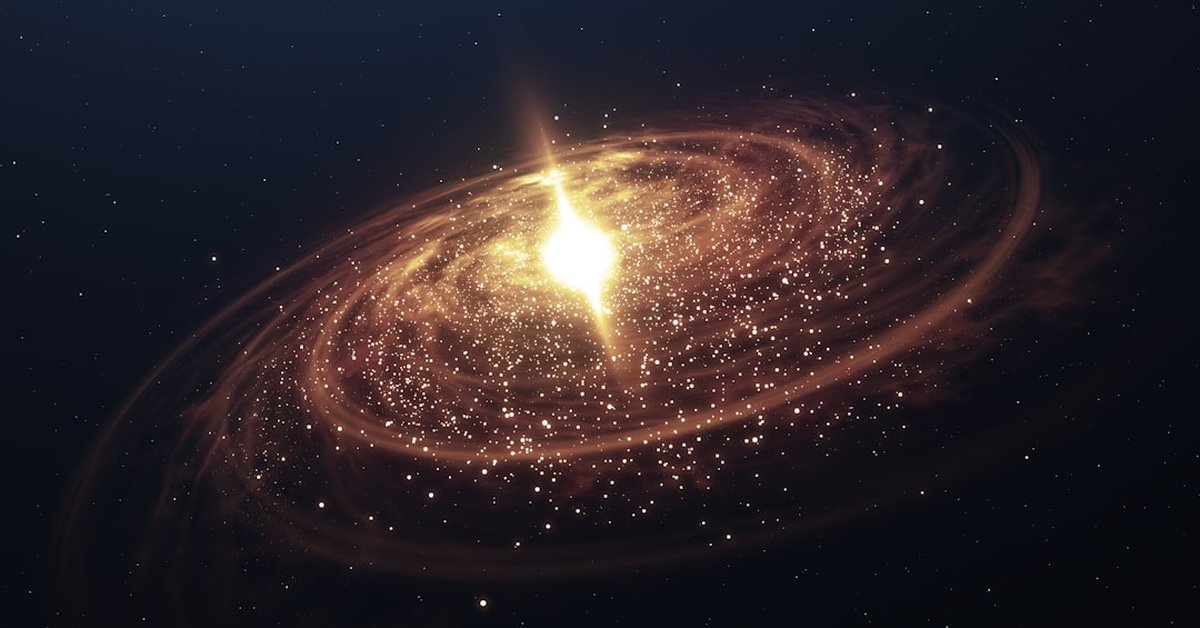
The two most extreme quasars, designated QSO-001 and QSO-002, date back to roughly 750 million years after the Big Bang. That’s young — in cosmic terms, it’s like finding a fully grown adult in a kindergarten class. These objects are not just bright; they are powered. Each quasar is a galactic core where a supermassive black hole billions of times the mass of our Sun is actively feeding, shredding stars and gas into a superheated accretion disk. The resulting energy output — a trillion suns’ worth — literally outshines its entire host galaxy.
How Do You Grow a Monster That Fast?
Here’s where things get uncomfortable for theorists. Standard models of black hole growth suggest that a black hole starts as a stellar-mass seed — maybe 100 solar masses — and grows by swallowing material. Even if it eats non-stop at the theoretical maximum (the Eddington limit), reaching a billion solar masses in under a billion years is borderline impossible. “We are seeing black holes that should not exist according to classical growth models,” said Dr. Roberto Maiolino, an astrophysicist at the University of Cambridge who was not involved in the study. “Either they started much larger — so-called ‘direct collapse’ black holes with masses of 10,000 to 100,000 solar masses — or they experienced bursts of super-Eddington accretion. Euclid is forcing us to consider options we previously dismissed as exotic.”
That’s the scientific goldmine here. These quasars provide a direct observational test for black hole seed theories. If Euclid and follow-up telescopes like JWST can measure the mass and accretion rate of these ancient monsters, we can finally begin to rule out some models and validate others. It’s like a cold-case homicide investigation: the evidence (light from 13 billion years ago) is finally being examined with modern forensic tools.
And the implications ripple beyond black hole physics. Quasars are thought to regulate galaxy formation through feedback — their immense radiation can blow away the gas needed to form new stars, effectively shutting down growth in the host galaxy. Finding them so early means this feedback mechanism was operating much sooner than expected. It may explain why some of the earliest galaxies we see with JWST appear surprisingly ‘dead’ — already finished forming stars.
For a deeper look at what happens at the calm center of these violent storms, check out our piece on An Island of Calm at the Violent Heart of the Galaxy — it explores the strange quiet zones found inside the roiling cores of active galaxies.
What This Means for You (Yes, You)
You might be thinking: Great, more distant blobs of light. How does this affect my commute? Fair question. But here’s the thing — understanding the universe’s earliest epochs is understanding where we come from. The atoms in your body — the carbon, oxygen, iron — were forged in stars that lived and died billions of years ago. The supermassive black holes Euclid is now seeing likely orchestrated the formation of those stars. They are the puppet masters of galactic evolution. By studying them, we learn the rules of the cosmic game that produced our Solar System, our planet, and us.
Moreover, Euclid’s technique for finding these quasars — scanning vast areas with sensitive infrared detectors — is exactly the same technology that will be used in future missions to search for biosignatures on exoplanets. The tools that unlock deep time also unlock near space.
Dr. Jason Rhodes, a senior research scientist at NASA‘s Jet Propulsion Laboratory who works on Euclid, put it succinctly: “Every time we think we understand the early universe, nature throws us a curveball. Euclid is showing us that the early cosmos was far more dynamic — and far more violent — than our computer simulations predicted. That’s exciting. That’s where discovery happens.”
So what’s next? ESA has already triggered follow-up observations with the Very Large Telescope in Chile and the Keck Observatory in Hawaii to measure the exact masses of these black holes. And Euclid is just getting started — its primary survey will cover one-third of the entire sky over the next six years. If it found 31 ancient quasars in its first few months, the final tally could be in the thousands.
The cosmos, it turns out, has been hiding its adolescence in plain sight. Euclid just handed us the yearbook.
Frequently Asked Questions
How does Euclid find quasars that are so far away?
Euclid observes in near-infrared light, which is crucial because the ultraviolet and visible light emitted by distant quasars gets stretched — redshifted — into the infrared by the expansion of the universe. Euclid’s huge field of view (much wider than Hubble or JWST) allows it to survey large areas of sky efficiently, identifying candidate quasars by their extreme brightness and red color. Follow-up spectroscopy from ground-based telescopes then confirms their distance and nature.
Could these quasars be something else — like a weird type of galaxy?
It’s possible a few could be false positives, but the combination of extreme brightness, point-like appearance (indicating a compact core), and specific spectral features (like broad emission lines from ionized gas) makes the quasar interpretation very robust. The two oldest candidates have been confirmed with multiple telescopes, so the identification is solid.
Will Euclid find even older quasars?
Yes, almost certainly. The two oldest quasars announced so far are from about 750 million years after the Big Bang. But Euclid’s survey can theoretically detect quasars from as early as 500 million years — or even younger. And with JWST now able to perform detailed follow-up, the race is on to find the very first quasars, the ones that turned on when the universe was just 300–400 million years old. That would push our understanding of black hole formation to its absolute limit.