





What happens when NASA’s most stunning Earth and space visualizations meet the people who connect communities to knowledge? You get the ALA Hyperwall — a can’t-miss event at the American Library Association’s Annual Conference in Chicago, June 25-29, 2026.
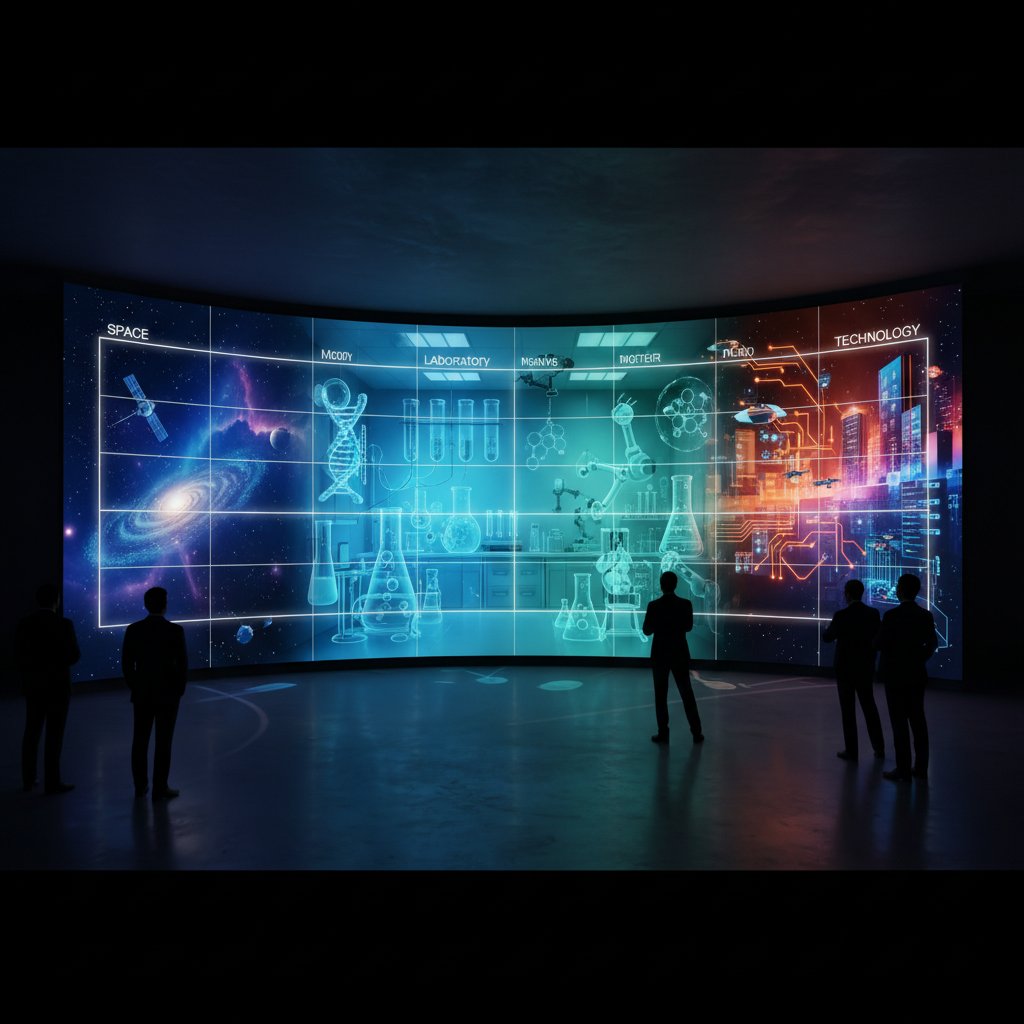
NASA is setting up shop at Booth #2243 in the Exhibit Hall, and it’s not just another booth with brochures. They’re bringing the Hyperwall, a massive, high-resolution video wall that turns complex science into jaw-dropping visual stories. Think of it as a planetarium without the dome — or a supercharged IMAX screen that fits in a convention center. And the best part? It’s free for all ALA attendees.
But here’s the real hook: this isn’t a passive display. NASA experts will be on hand for live “Hyperwall Storytelling” sessions — 15-to-20-minute talks where they walk you through everything from hurricanes spinning over the Atlantic to the latest images from the James Webb Space Telescope. For librarians, this is pure gold: a chance to get the inside scoop on NASA’s latest missions, ask questions, and bring fresh, authoritative content back to their patrons.
“The Hyperwall is one of NASA’s most powerful tools for science communication, and we’re thrilled to bring it to the library community,” says Dr. Emily Fischer, NASA’s Hyperwall Program Lead. “Librarians are the bridge between the public and scientific discovery. Our goal is to give them the visuals and the stories they need to inspire curiosity in their communities.”
And it’s not just about pretty pictures. The Hyperwall sessions are designed to be practical for librarians — offering ready-to-use content for programs, displays, and educational outreach. Whether you’re a young adult librarian looking for space-themed summer reading ideas or a reference librarian fielding questions about climate change, there’s a session for you.
The Full ALA Hyperwall Schedule — Your Guide to the Cosmos
NASA has packed four days with presentations covering the full spectrum of their work. Here’s the lineup:
Friday, June 26 — The conference officially opens with a focus on Earth science. Expect sessions on the Landsat 9 satellite and how it’s tracking deforestation and urbanization in real time. Also: a deep dive into the Atmospheric Waves Experiment (AWE), which studies how weather on Earth affects space weather. (Yes, weather in space is a thing.)
Saturday, June 27 — This is the big day for space exploration fans. Presentations cover the Artemis program’s progress toward returning humans to the Moon, including the latest on the Orion spacecraft and the lunar Gateway outpost. There’s also a session on the James Webb Space Telescope’s recent discoveries about exoplanet atmospheres — the kind of stuff that makes you feel small in the best way.
Sunday, June 28 — Climate science takes center stage. Topics include the Surface Water and Ocean Topography (SWOT) mission, which is mapping Earth’s water with unprecedented detail. Plus: a look at how NASA’s Earth-observing satellites are helping communities prepare for wildfires, floods, and hurricanes. For librarians in climate-vulnerable areas, this is essential information.
Monday, June 29 — The final day offers a mix of heliophysics and technology. Sessions cover the Parker Solar Probe’s daring journey to “touch” the Sun, and a presentation on NASA’s open-source data tools that librarians can use to create their own visualizations. It’s a perfect wrap-up: big ideas plus practical take-aways.
Why Librarians Should Care — And Why NASA Does, Too
Libraries aren’t just book warehouses. They’re community hubs for learning, especially in rural and underserved areas where access to museums and science centers is limited. That’s why NASA has been partnering with ALA for years — through programs like the NASA@ My Library initiative — to put real space and Earth science into the hands of librarians.
“When a librarian can show a kid a live feed from the International Space Station or explain how we measure sea level rise using satellites, that’s transformative,” says Mark Rivera, a science librarian at the Chicago Public Library and a former NASA solar system ambassador. “The Hyperwall sessions give us the language and the visuals to make science accessible. It’s not dumbing it down — it’s opening it up.”
But it’s not just about inspiration. NASA’s data is increasingly critical for local decision-making. Librarians help patrons navigate everything from disaster preparedness to tracking air quality. The Hyperwall presentations connect the dots between satellite data and everyday life — and that’s a service libraries can’t afford to miss.
And here’s a twist: the same technology that lets scientists study black holes is also helping us understand earthquakes. In fact, recent research featured on Hidden Seismic Clues Reveal When Big Quakes Will Strike uses satellite-based radar to detect subtle ground movements before major quakes. That kind of cross-disciplinary science — from space to seismology — is exactly the kind of story the Hyperwall tells best.
What to Expect at Booth #2243
Booth #2243 isn’t just a screen. It’s a mini-immersion center. The Hyperwall itself is a tiled array of 4K monitors that can display up to 32 million pixels — enough resolution to see individual trees in a satellite image of the Amazon. NASA experts switch between datasets in real time, layering information like a DJ mixing tracks.
One moment you’re watching a simulation of a hurricane’s cloud tops. The next, you’re looking at a 3D flyover of Mars’ Jezero Crater, where the Perseverance rover is searching for signs of ancient life. The transitions are seamless, and the narration is live — no canned videos here.
Each session lasts about 15-20 minutes, and the schedule repeats so you can catch everything over the course of the conference. The booth also has handouts with QR codes linking to NASA’s open data portals and educational resources — perfect for librarians who want to build lesson plans or host viewing parties.
And if you’re wondering about the vibe: it’s surprisingly intimate. The Hyperwall draws crowds, but the experts are happy to hang out afterward for Q&A. Bring your toughest questions.
The Bigger Picture: Why This Matters
ALA 2026 comes at a pivotal moment. NASA’s Artemis mission is on track for a crewed lunar landing later this decade. The James Webb Space Telescope is rewriting textbooks on galaxy formation. And Earth-observing satellites are providing real-time data on climate change — data that communities need to adapt.
Librarians are on the front lines of this information revolution. They’re the ones who help people separate fact from fiction, especially in an age of misinformation. By partnering with NASA, ALA is giving its members the tools to become trusted science communicators in their own right.
“We’re not just showing off pretty pictures,” says Dr. Fischer. “We’re giving librarians a toolkit for lifelong learning. When a patron asks, ‘Is climate change real?’ a librarian can point to the satellite data. When a kid asks, ‘Can we live on Mars?’ a librarian can show them the actual rover images. That’s powerful.”
So mark your calendars. Whether you’re a NASA superfan or just curious about what’s happening in the cosmos, the Hyperwall at Booth #2243 is the place to be. And who knows — you might leave with a new story to tell your community.
Frequently Asked Questions
Do I need a special pass to visit the NASA Hyperwall at ALA 2026?
No. The Hyperwall is located in the Exhibit Hall (Booth #2243), which is accessible to all ALA Annual Conference attendees with a full conference pass or an exhibit hall-only pass. Sessions are free and first-come, first-seated. No registration is required.
Can I download or access the Hyperwall presentations after the conference?
Yes. NASA often makes its Hyperwall presentations available online after events through the NASA Scientific Visualization Studio. Many sessions are also recorded and posted to NASA’s YouTube channel. Ask the booth staff for specific URLs during the conference.
Is the Hyperwall content suitable for children or public library programs?
Absolutely. The presentations are designed for a general audience, including teens and adults. Librarians can use the visuals and storylines directly in their own programs — from summer reading events to STEM clubs. NASA provides companion educational resources at the booth.